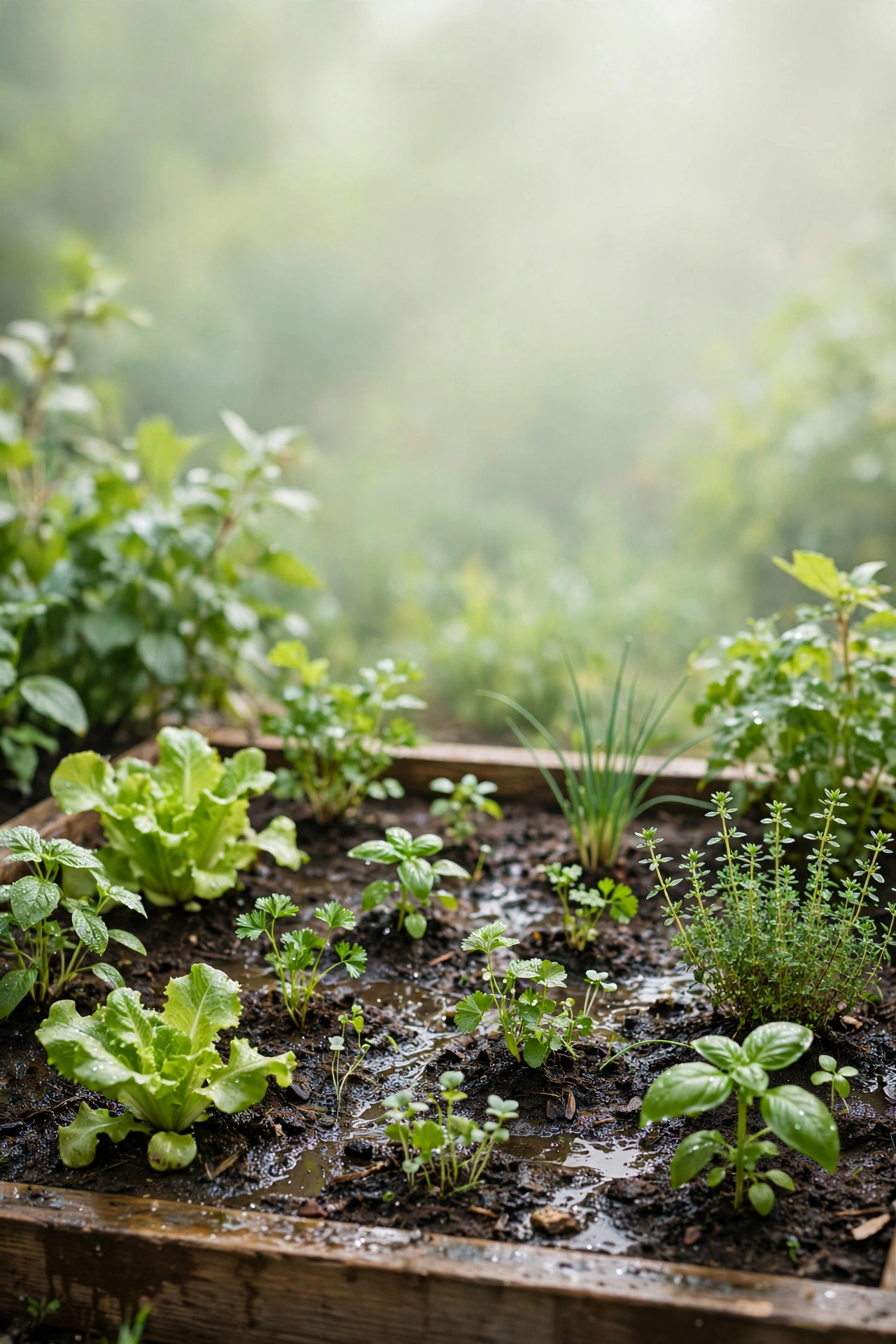
How often should you water your garden beds? It is one of the most common garden questions, and also one of the hardest to answer with a single number. Water too little and plants wilt, grow slowly and produce less. Water too much and roots can rot, leaves can turn yellow, and the soil can stay wet enough for mould and pests.
The good news is that you do not need a strict schedule. You need a simple routine: check the soil, water deeply when it is dry, and let the top layer dry out again before the next watering. This guide explains that routine step by step, so you can water with confidence in any weather.
Why There Is No One Right Answer
Garden beds do not all dry out at the same speed. A bed in full sun dries faster than a shaded bed, sandy soil dries faster than clay, and young plants need water more often than deep-rooted plants. Weather changes the answer too: a hot, windy week dries beds quickly, while a cool, cloudy week may mean no watering at all. That is why a fixed rule like ‘water every two days’ fails so often. The soil, not the calendar, should decide.
- Soil type. Sandy soil drains fast and needs water more often. Clay soil holds water for longer, so it needs water less often. If you are not sure what soil you have, try the simple test in our guide to telling if your soil is too sandy, too clay or just right.
- Weather. Hot sun and wind dry the soil quickly. Rain, cloud and cool air slow drying down. Always check the soil after rain before you water again.
- Plant type and age. Seedlings and young plants have shallow roots and dry out fast. Large, well-rooted plants can reach deeper moisture and wait longer between waterings.
- Mulch and shade. A layer of mulch slows evaporation and keeps the soil moist for longer. Beds in shade also dry more slowly than beds in full sun.
- Bed depth and drainage. Raised beds and pots dry faster than beds at ground level. Beds with good drainage dry faster than beds where water sits.
The Finger Test: The Simplest Way to Check Soil Moisture
The finger test is the most reliable way to know if a bed needs water. Push your index finger into the soil up to the second joint, about 5 cm deep. If the soil feels moist at your fingertip, wait and check again tomorrow. If it feels dry, it is time to water.
For deeper beds, use a wooden stick or a screwdriver instead. Push it 15 to 20 cm into the soil and pull it out: if the lower part is damp and dark, the deeper soil still has water. Check in two or three spots, because one corner of a bed can be much drier than another. Make the finger test part of your routine, and you will soon learn how fast your beds dry out.
A Simple Moisture Routine: Step by Step
Follow this routine instead of watering on a fixed schedule. It works for most beds in most weather, and you can adjust it as you learn your soil.
- Check the soil first. Do the finger test in two or three spots. Water only if the top 5 cm is dry. If it is still moist, wait a day and check again.
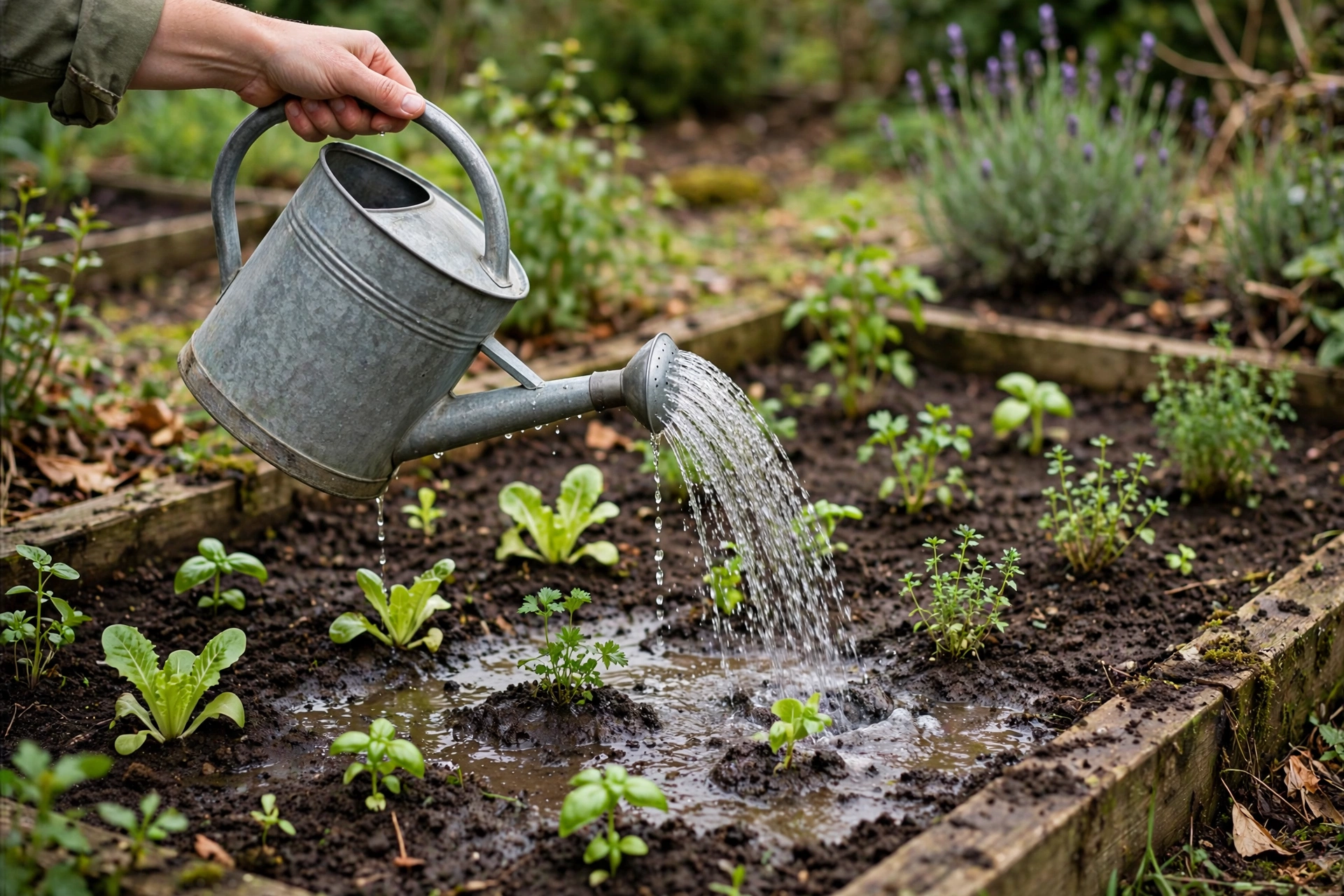
- Water deeply and slowly. Give the bed a good soak so water reaches 15 to 20 cm down, where the roots are. Water slowly so it sinks in instead of running off the surface. A deep watering every few days builds strong, deep roots.
- Water at the base of the plants. Aim the water at the soil, not at the leaves. Wet leaves dry slowly and can develop spots and disease, while water on the soil goes straight to the roots.
- Water in the morning when you can. Morning watering gives plants water before the heat of the day, and any drops on the leaves dry quickly in the sun. If mornings are not possible, water in the early evening instead. For a closer look at timing, see our guide to morning vs evening watering.
- Mulch the surface. Spread a 5 to 8 cm layer of mulch over the bed, keeping it away from plant stems. Mulch slows evaporation, keeps the soil cooler, and means you water less often.
- Watch the plants and adjust. Leaves that droop in the heat of the day but recover by evening usually need no extra water. Leaves that stay wilted, turn yellow, or drop may mean the watering is wrong, so check the soil again and change the routine.
Keep this routine for a few weeks and it will become a habit. You will learn how many days your beds usually go between waterings, and you will only need the finger test when the weather changes.
How Much Water Do Garden Beds Need?
A good watering soaks the soil to a depth of about 15 to 20 cm, where most roots grow. A light sprinkle only wets the top few centimetres, which dries out in hours and teaches roots to stay near the surface. Deep roots are stronger and cope better with dry spells, so watering deeply matters more than watering often.
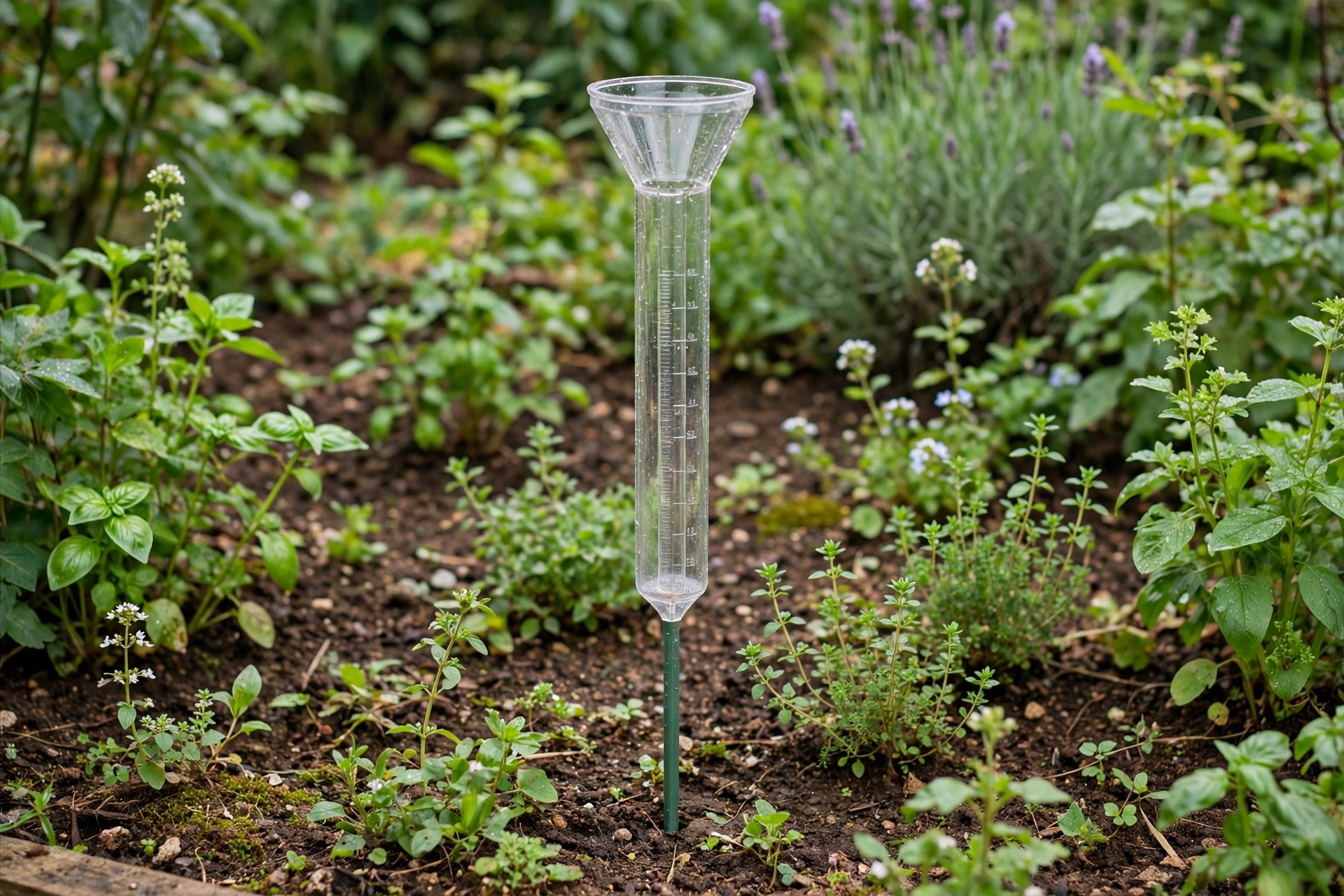
A rain gauge or a straight-sided container placed in the bed helps you measure how much water you give. About 2 to 3 cm of water in the gauge is a good deep watering for most beds. After rain, check the gauge before you water: if it already holds enough, skip the watering that day.
Common Mistakes to Avoid
These mistakes are easy to make, and they waste water while making plants weaker.
- Watering a little every day. Light daily watering keeps the surface wet but never reaches the deep roots. The result is shallow roots that suffer at the first dry spell. Water deeply and less often instead.
- Watering on a fixed schedule. The same schedule cannot work in hot sun and cool rain. Always check the soil first, and skip watering after rain.
- Watering the leaves instead of the soil. Water on the leaves does little for the roots, and wet leaves can develop disease. Aim the water at the base of each plant.
- Watering in the heat of the day. Water evaporates fast in strong sun, so less of it reaches the roots. It can also scorch wet leaves. Water in the morning when you can.
- Ignoring the signs of overwatering. Yellow leaves, wilting in wet soil, and a sour smell from the soil all mean the bed is getting too much water. If you see these signs, let the soil dry out and check how often you water. Learn the signs you are watering too much so you can catch the problem early.
Signs You Are Watering Too Much or Too Little
Too much water: leaves turn yellow, growth slows, the soil smells sour, and plants wilt even though the soil is wet. The surface may grow white mould or green algae.
Too little water: leaves droop and do not recover overnight, leaf edges turn brown and crisp, and the soil pulls away from the edges of the bed. Young plants suffer first, so check them often in hot weather.
If you see the signs of too much water, stop watering and let the bed dry out. If you see the signs of too little, water deeply at once, then go back to the routine. The finger test will tell you which problem you have.
Frequently Asked Questions
How often should I water garden beds in hot weather?
Check the soil every day in hot weather, and water when the top 5 cm is dry. Most beds need a deep watering every two to three days in a hot spell, but beds with mulch and shade may go longer. The finger test is more reliable than any fixed number of days.
Should I water my garden beds every day?
Usually no. Daily watering keeps the surface wet and encourages shallow roots. Most beds do better with a deep watering every two to four days, with the gap depending on soil, weather and mulch. Water only when the finger test says the soil is dry.
How do I know if I watered enough?
Push a finger or a stick into the soil after watering. The soil should feel moist 15 to 20 cm down. If only the top few centimetres are wet, water more slowly so it can sink in. A rain gauge in the bed also helps you measure each watering.
Is it better to water in the morning or the evening?
Morning is usually best, because plants get water before the heat of the day and wet leaves dry quickly. Evening watering also works, but leaves stay wet overnight, which can encourage disease. Avoid watering in the heat of the day, when most of the water evaporates before it reaches the roots.
Can I use a hose or sprinkler to water my beds?
Yes, but aim the water at the soil, not over the leaves. A sprinkler wets the leaves and loses water to the air, while a hose or watering can at the base puts the water where the roots are. Soaker hoses and drip lines are even better, because they water the soil slowly and evenly.
Save This Guide for Later
Pin this guide so you can find the routine again whenever the weather changes or a new bed needs watering.