
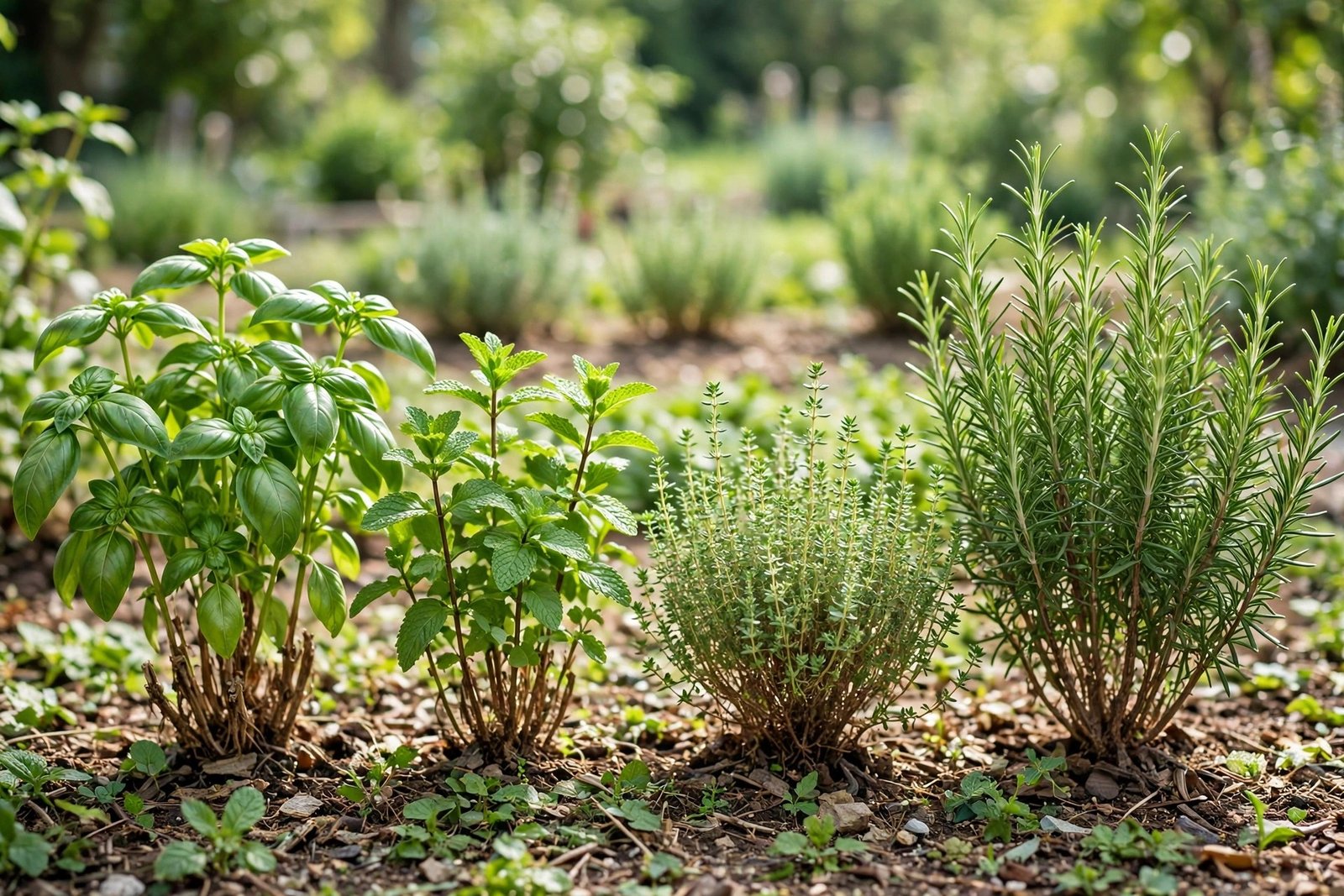
You planted basil, rosemary, or mint with dreams of fresh, soft leaves for every meal. At first, everything looked perfect. Then, slowly, the stems turned hard and brown, the leaves became small and tough, and the flavour changed from fresh and sweet to sharp and bitter. If this sounds familiar, you are not alone. Herbs turning woody and bitter is one of the most common problems for home growers, and the good news is that it is almost always fixable.
Woody stems and bitter leaves are not a disease. They are your plant’s natural response to age, stress, and the way it is being picked. Once you understand what causes the change, a few simple habits – regular picking, the right watering, and timely pruning – can keep your herbs soft, leafy, and full of flavour for months.
What “Woody and Bitter” Actually Means
When we say a herb has gone woody, we mean the soft green stem has hardened into a brown, bark-like stem. The plant is turning its stem into wood so it can support more growth and survive longer. This is normal for perennial herbs such as rosemary, thyme, and sage, but it becomes a problem when it happens too early or spreads through the whole plant.
Bitter flavour is a separate but linked problem. When a herb is stressed – by heat, dry soil, or being left unpicked – it produces more of the strong-tasting compounds that protect it from insects and grazing animals. The result is leaves that taste harsh instead of fresh. In basil and mint, bitterness often appears together with flowering: once the plant starts to flower, it puts its energy into seeds instead of leaves, and the leaves turn bitter fast.
Why Herbs Turn Woody and Bitter
1. The plant is getting old
Every herb has a natural life cycle. Annual herbs such as basil and coriander live for one season, then flower, set seed, and die. As they age, their stems harden and their leaves lose flavour. Perennial herbs such as rosemary and thyme naturally develop woody stems as they grow older — a two-year-old rosemary bush will always have woodier stems than a young plant.
2. You are not picking often enough
This is the most common cause, and the easiest to fix. Herbs are designed to be picked. When you leave a plant untouched, it grows tall, flowers, and turns woody. Regular picking tells the plant to make new soft shoots instead. A basil plant that is never picked will flower within weeks; a basil plant picked every few days stays bushy and leafy.
3. The plant is flowering
Flowering changes everything about a herb’s flavour. Once basil, mint, coriander, or dill starts to flower, the leaves become bitter and the stems harden. Many growers pinch off flower buds the moment they appear, which keeps the plant in leaf-making mode for much longer.
4. Too much sun and heat
Herbs love sun, but extreme heat stresses them. In very hot weather, leafy herbs such as basil and parsley lose water fast, grow tough leaves, and bolt — shoot up a flower stalk — much earlier than normal. Mint and coriander are especially quick to bolt in heat.
5. Not enough water, or watering that swings wildly
Herbs that dry out completely and then get flooded produce tough, bitter leaves. Basil wilts dramatically when thirsty, and repeated wilting makes the leaves smaller and harsher. On the other hand, soil that stays soggy rots the roots, and a plant with damaged roots cannot make soft new growth.
6. Poor soil and lack of food
Herbs grown in tired, compacted soil struggle to make new leaves. Without enough nutrients, the plant stops producing soft shoots and the old stems harden. Over-feeding is just as bad: too much fertiliser, especially high-nitrogen feed, makes soft growth that tastes weak and watery, so balance matters.
7. The wrong herb for the spot
A sun-loving herb in deep shade grows weak and leggy, while a shade-tolerant herb baking in full sun all day turns tough and bitter. Matching the herb to the spot is half the battle.
Step-by-Step Fix: Bring Your Herbs Back to Leafy

Step 1: Cut the plant back hard
Do not be afraid to prune. For a woody basil or mint plant, cut the stems back by about one third, cutting just above a pair of healthy leaves. New shoots will sprout from the leaf joints within a week or two. For woody rosemary or thyme, trim back the soft green tips and remove any dead, brown stems, but never cut into old bare wood — those parts rarely regrow.
Step 2: Remove all flowers and flower buds
Pinch off every flower head you can see. For basil, pinch the top flower spike and the pair of leaves below it. This redirects the plant’s energy back into leaves and delays bitterness. Check for new buds every few days during warm weather.
Step 3: Fix the watering routine
Water deeply, then let the top few centimetres of soil dry before watering again. A simple finger test works: push your finger into the soil up to the second knuckle. If it feels dry, water. If it feels damp, wait. Watering in the morning is best, because wet leaves at night invite disease. If you are unsure how often to water, our guide on how often to water garden beds explains a simple moisture routine that works for herbs too.
Step 4: Improve the soil around the plant
Spread a thin layer of compost around the base of the plant and gently work it into the top layer of soil. This feeds the plant slowly and helps the soil hold moisture evenly. If your soil is very heavy or very sandy, read our guide on how to tell if your soil is too sandy, too clay or just right before you try to fix it.
Step 5: Move the pot or add shade if needed
If your herbs sit in blazing sun all day and wilt every afternoon, move the pots to a spot with morning sun and afternoon shade, or rig up a simple shade cloth during the hottest part of the day. Potted herbs are easy to move, and a small change of position can transform their flavour.
Step 6: Start picking little and often
From now on, pick a few leaves or small stems every few days, even if you do not need them for cooking. Always pick from the top, just above a leaf joint, so the plant branches out instead of growing tall and thin. Regular picking is the single most effective way to keep herbs leafy.
Step 7: Replace annual herbs that are past saving
If a basil or coriander plant is mostly brown wood with a few sad leaves, the kindest fix is to replace it. Pull it out, refresh the soil with compost, and sow or plant a new one. A fresh plant will give you soft leaves within weeks, while an old woody one will never fully recover.
Common Mistakes That Make Herbs Woody and Bitter

- Leaving the plant untouched for weeks. Herbs need regular picking to stay young. If you only pick when you cook, set a reminder to pinch the tops every few days.
- Letting flowers open. Once flowers open, bitterness spreads through the leaves. Pinch buds early, before they open.
- Cutting only the leaves and leaving long bare stems. Always cut the stem back to a leaf joint, or the plant becomes tall, thin, and woody.
- Watering a little every day. Shallow daily watering keeps roots near the surface and the plant stressed. Water deeply and less often instead.
- Growing herbs in the same tired pot soil year after year. Old potting soil loses nutrients and structure. Refresh it with compost each season, or repot.
- Feeding with strong chemical fertiliser. Too much fast fertiliser pushes weak, flavourless growth. A little compost is usually enough for herbs.
- Ignoring the seasons. Annual herbs naturally finish their life as the season changes. Planting a fresh batch every few weeks keeps a steady supply of young, soft leaves.
FAQ
Can woody herbs be saved, or should I start again?
It depends on the herb. Soft herbs such as basil, mint, and parsley often recover well from a hard cut-back if their roots are healthy. Woody perennials such as rosemary and thyme will regrow from green tips, but old bare wood will not sprout again. If more than half the plant is brown wood, starting fresh is usually faster and gives better flavour.
Are bitter herb leaves safe to eat?
Yes, bitter leaves are safe to eat — they just taste unpleasant. Bitterness is the plant’s natural defence, not a sign of poison. You can still use bitter basil or mint in cooked dishes, where heat softens the harsh flavour, but for salads and fresh garnishes, pick young leaves instead.
Why did my basil turn bitter so suddenly?
Sudden bitterness in basil almost always means the plant has started to flower or has been stressed by heat or drought. Check for tiny flower buds at the stem tips and pinch them off. Then water deeply, give the plant some afternoon shade if it is very hot, and wait a week — new leaves should taste fresh again.
How often should I pick my herbs to keep them leafy?
Pick a little every three to four days during the growing season. Take the top few centimetres of stem, just above a leaf joint, and never remove more than one third of the plant at once. If you grow herbs that keep dying despite your care, our guide on growing herbs that keep dying covers the light, water, and soil mistakes behind it.
Which herbs go woody fastest?
Rosemary, thyme, sage, and lavender go woody naturally as they age — that is normal for them, and you manage it by regular light pruning. Basil, mint, and coriander go woody and bitter fastest when they are neglected, because they flower quickly. Parsley and chives stay soft the longest if they are picked often and kept well watered.
