
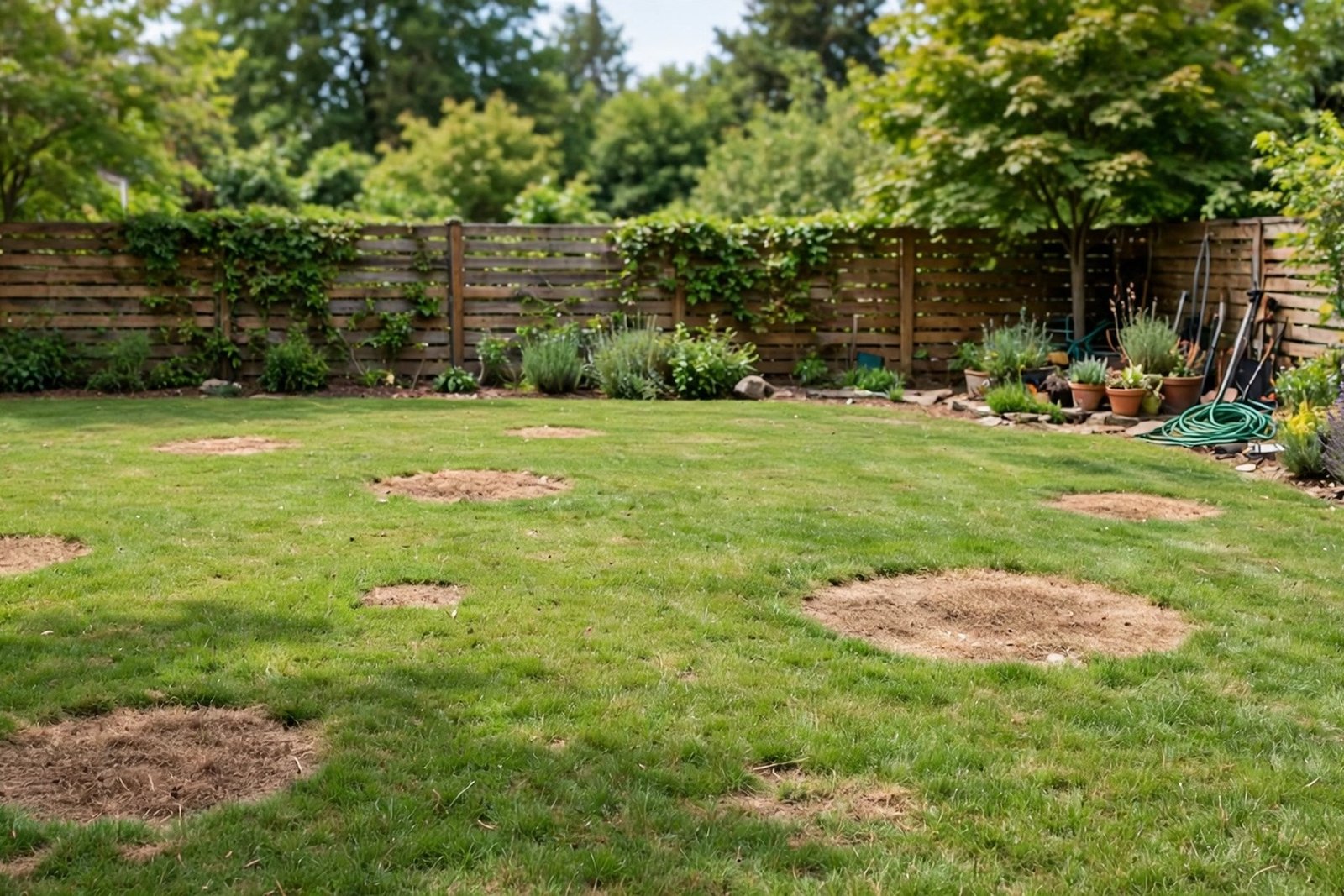
Brown circles are one of the most frustrating lawn problems. One week the grass looks even and green, and the next week round brown patches appear out of nowhere. They can be as small as a coin or as wide as a dinner plate.
The good news is that brown circles are almost always fixable. The bad news is that there is no single cause: a fungus needs a very different fix from dog urine, grubs, or dry soil, and treating the wrong cause will not help. This guide will help you find the real cause and fix it step by step.
How to Read the Pattern of Brown Circles
Look closely at the circles first. Their size, shape, and position often point straight to the cause.
Check the size first. Coin-sized circles often point to a fungal disease called dollar spot. Circles 15 to 30 centimetres across are common with brown patch fungus. Very large rings, sometimes a metre wide, with dark green grass around a dead centre, are often fairy rings.
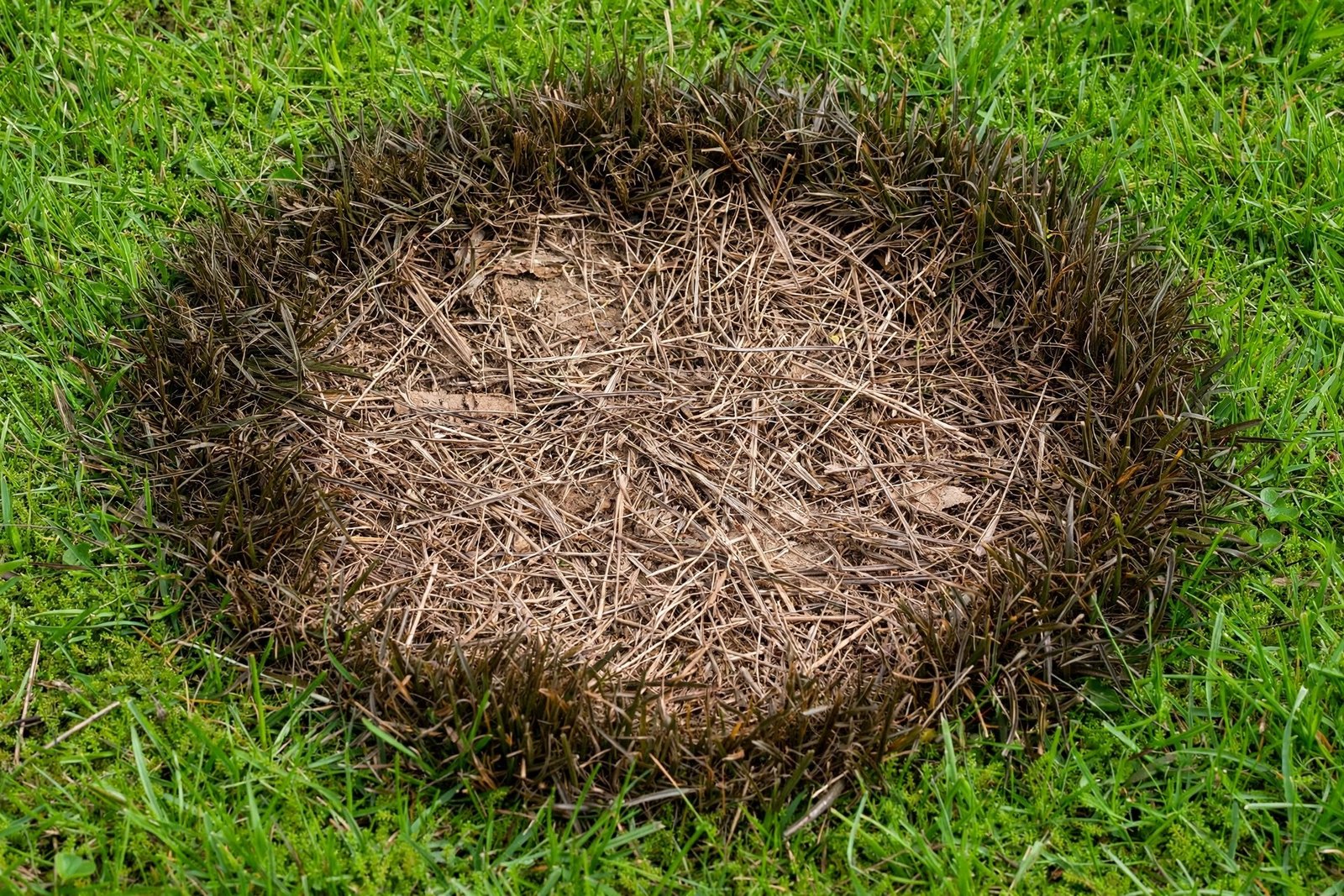
Next, check the edges. Fungal patches often have a sharp edge between brown and healthy grass. Dog urine often leaves a dead brown centre with a ring of extra-green grass around it, because the urine acts like a strong fertiliser at the edges. Dry patches usually have soft, fading edges.
Also check where they are: a low, damp corner suggests fungus; the dog’s usual route suggests urine; the same place every year suggests something buried under the soil, like an old tree stump or a stone.
Finally, pull gently on the brown grass. If it comes away easily, like a loose carpet, grubs may have eaten the roots. If it stays firmly attached, the problem is more likely a leaf disease, dryness, or scorch.
The Most Common Causes of Brown Circles
1. Lawn fungus
Fungal diseases are the most common cause, especially in warm, humid weather. Brown patch fungus creates large, round brown areas, often with a darker ring at the edge. Dollar spot creates smaller pale circles, and fairy rings create large rings of dead or dark green grass, sometimes with mushrooms. Fungus loves lawns that stay wet, so evening watering, poor air flow, and a thick layer of thatch all make it more likely. Thatch holds moisture against the grass, and a spongy lawn usually has too much of it. If your lawn feels spongy, read our guide on why a lawn feels spongy and what thatch does to it: spongy lawn guide
2. Grubs eating the roots
White grubs are the young form of beetles. They live in the soil and eat grass roots, so the grass above turns brown in round patches and the turf can be rolled back like a carpet. Grub damage usually appears in late summer, after the adult beetles have laid eggs. If you lift the brown grass easily and see small white C-shaped grubs in the top few centimetres of soil, grubs are the cause.
3. Dog urine
Dog urine is very rich in nitrogen and salts. A small amount acts like fertiliser, but a full dose burns the grass, leaving a round brown patch, often with a ring of bright green grass around it where the urine was weaker. Damage is worst on dry lawns and in hot weather.
4. Dry soil and buried objects
Some brown circles are simply dry patches. Soil under a tree, near a wall, or above a buried stone dries out faster than the rest of the lawn, and watering evenly does not help, because the water runs off or the roots cannot reach it. Compacted soil causes the same problem: if people walk across the same spot every day, the soil becomes hard and water cannot soak in.
5. Fertiliser burn
Too much fertiliser, or fertiliser spread unevenly, can burn the grass in round or striped patches. This often happens when a spreader drops a pile of granules in one place, or when fertiliser is applied to dry grass in hot sun and not watered in. The grass turns brown within a day or two.
6. Mowing too short
Cutting grass too short stresses the whole lawn, but the damage often shows first where the grass was thinnest. Short grass has short roots, dries out quickly, and is an easy target for fungus and heat. If the circles appeared soon after a very low cut, mowing height is part of it.
How to Find the Cause Step by Step
Work through these checks in order. You only need a few minutes and a small hand trowel.
Step 1: Look at the pattern. Note the size, edge, and location of the circles, as described above. Take a photo so you can compare it later.
Step 2: Do the pull test. Grip a handful of brown grass and pull gently. If it lifts away easily with no roots attached, suspect grubs.
Step 3: Dig a small plug. Cut a small square of turf, about 10 centimetres across, from the middle of a brown circle and lift it. More than five white grubs in one plug means grubs are the problem. If the soil is bone dry even after watering, the cause is dryness or compaction. If it is wet and smells sour, the cause is probably fungus or poor drainage.
Step 4: Check the timing. Did they appear after a rainy, humid week? Think fungus. After a hot, dry week? Think dryness or urine. Within a day or two of fertilising? Think fertiliser burn.
Step 5: Check for animals. If the circles sit along the dog’s usual route, or birds are pecking at the lawn in the same area, animals are involved. Birds often peck at grub-damaged turf.
Once you have an answer, treat that cause only. Treating a fungus with grub killer, or a dry patch with fungicide, will not help.
Step-by-Step Fix for Each Cause
Fixing fungal circles
Water early in the morning, not in the evening, so the grass dries during the day. Mow higher and remove the clippings while the patch is active, so the fungus does not spread. Rake out dead grass to let air reach the soil, and reduce thatch if it is thicker than about 2 centimetres. Water deeply but less often, so the surface dries between waterings. Only use a fungicide if the patch keeps growing after two weeks, and follow the label exactly. For most home lawns, fixing the moisture problem is enough.
Fixing grub damage
Water the area well, then apply a grub treatment. Biological controls such as beneficial nematodes work well and are safe for pets and children; apply them in the evening on damp soil. After treatment, press the loose turf back down, keep it watered, and reseed any area that does not recover within three weeks. For a full repair method, see our guide on fixing bare patches in a lawn so grass actually grows back: bare patches guide Next season, watch for adult beetles in early summer and treat early, before the grubs grow large.
Fixing dog urine patches
Flush the spot with a bucket of water as soon as you see it, to dilute the urine. Rake out the dead grass, sprinkle a thin layer of soil or compost over the patch, and reseed. Water daily until the new seed grows. Train the dog to use one corner of the garden, or water the lawn lightly after the dog has been out.
Fixing dry or compacted circles
Push a garden fork into the patch and wiggle it to make holes about 10 centimetres deep. Spread a thin layer of compost over the patch, brush it into the holes, and water slowly so it soaks in instead of running off. If the patch sits above a buried stone or stump, dig it out if you can; if you cannot, add extra soil to give the roots more depth. Reseed with a mix that suits the conditions, such as a shade-tolerant mix under trees.
Fixing fertiliser burn
Water the burnt area heavily for several days to wash the salts out, and do not add more fertiliser until the grass recovers. Rake out dead grass and reseed if the patch stays bare. Next time, spread fertiliser evenly, water it in right away, and never fertilise dry grass in hot sun.

Common Mistakes to Avoid
Watering every evening. Wet grass overnight is the perfect home for fungus. Water in the morning instead.
Mowing too short. Cutting more than one third of the grass height at once shocks the plant. Keep the mower higher, especially in hot weather.
Spraying fungicide before you know the cause. Fungicides only help fungal problems. On a dry patch or a grub problem they do nothing, and they can harm helpful organisms in your soil.
Over-fertilising a stressed lawn. A brown patch is a stressed patch. Adding strong fertiliser often burns it further. Fix the cause first, feed the lawn later.
Ignoring the patch until it spreads. Small circles are easy to fix; large ones take weeks. Check your lawn once a week in the growing season and act while a circle is still small.
Letting weeds move in. Bare brown patches are open ground for weeds. Once the cause is fixed, reseed quickly so grass fills the gap before weeds do. If weeds are already a problem, see our guide on getting rid of lawn weeds without killing the grass: lawn weeds guide
FAQ
How long do brown circles take to disappear?
Small circles from dog urine or dryness often recover in two to three weeks once the cause is fixed. Fungal circles take three to six weeks. Grub damage takes longest, because the roots must regrow first. If a circle has not improved after six weeks, the cause is probably still active, so repeat the diagnosis steps.
Do brown circles in a lawn spread?
Fungal circles can spread, especially in warm, wet weather, so treat them early. Circles from urine, dryness, or fertiliser burn do not spread on their own, but new ones can appear elsewhere if the cause continues.
Is a brown circle always a fungus?
No. Fungus is the most common cause, but dog urine, grubs, dry soil, buried objects, and fertiliser burn all create round brown patches. Always check the pull test and the soil first.
Should I water a brown circle more or less?
It depends on the cause. Dry and compacted circles need more water, given slowly so it soaks in. Fungal circles need less surface water and morning watering only. Watering a fungal patch every evening will make it worse, so diagnose first.
