
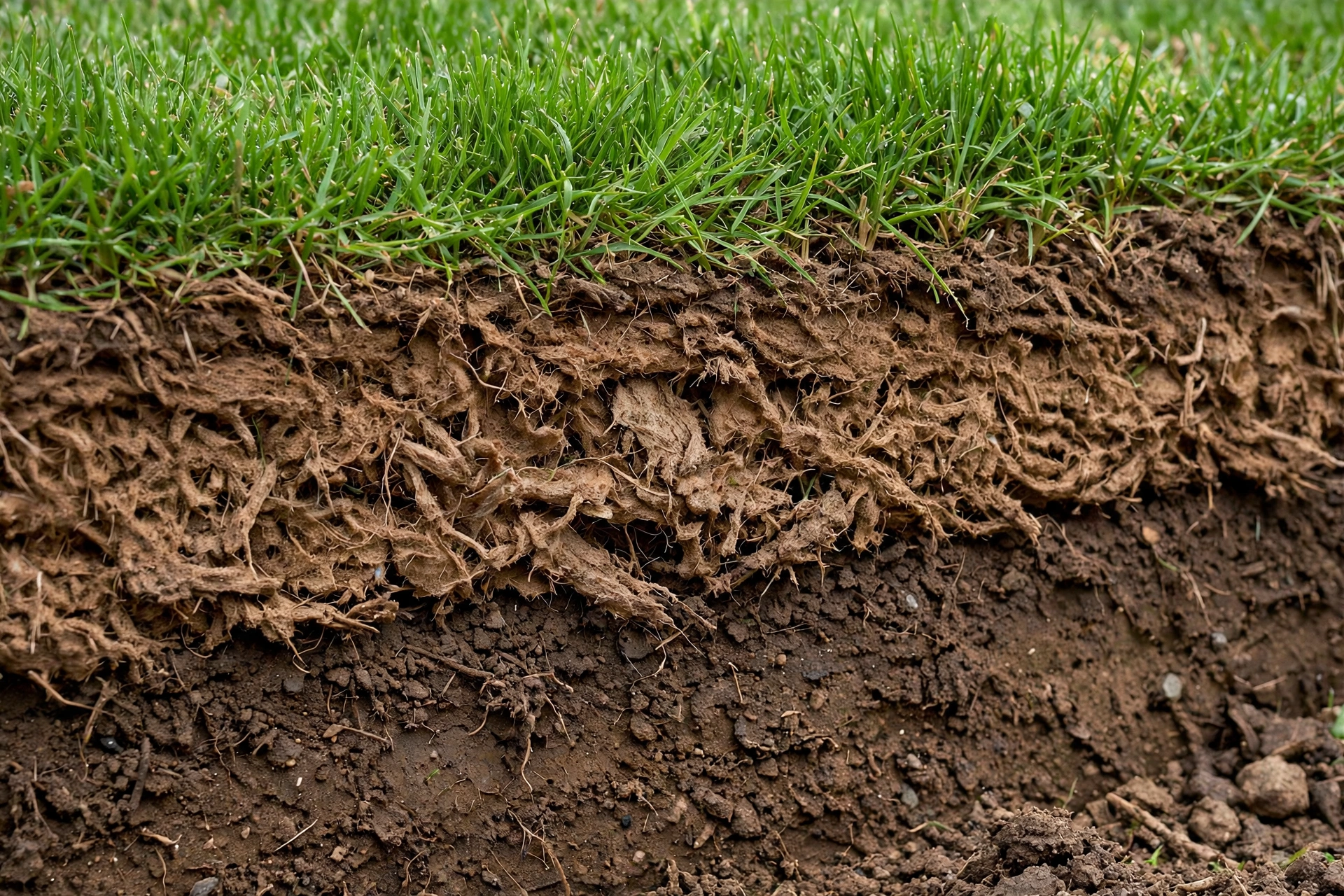
Step onto your lawn and it sinks softly under your feet, like walking on a thick mat. The grass may still look green from above, but it feels soft, springy, and uneven. Water may sit on the surface after rain, and the lawn may dry out fast in hot weather. If this sounds familiar, the most likely cause is thatch: a layer of dead stems, roots, and cuttings that builds up between the green grass and the soil.
A thin layer of thatch is normal. It cushions the lawn and helps the soil hold moisture. The problem starts when the layer gets too thick, usually more than 1 to 2 centimetres. A thick thatch layer stops water and air from reaching the roots, so the roots grow up into the thatch instead of down into the soil. The result is a lawn that feels spongy, dries out fast, and struggles to grow strong roots.
This guide explains what thatch is, how to tell if it is the cause of your spongy lawn, and how to fix it step by step by dethatching and aerating. You do not need a new lawn. In most cases, you can repair the one you have.
What Is Thatch?
Thatch is the layer of living and dead plant material that sits between the green blades and the soil surface. It is made of runners, stems, roots, and grass cuttings that have not broken down yet. New thatch forms all the time, and soil life breaks it down at about the same rate, so the layer stays thin. When the lawn grows fast, or when the soil life is weak, thatch builds up faster than it breaks down.
Thatch is not the same as grass clippings left on the lawn after mowing. Short clippings break down fast and feed the soil. Thatch is made of tougher stems and roots that take much longer to rot. A spongy lawn is often a sign that this tough layer has grown too thick.
Causes of a Spongy Lawn
1. A thick thatch layer
Cut a small square of turf and look at the layer under the green blades. If the brown, spongy layer is more than 2 centimetres thick, it is likely the cause. Water sits in the thatch instead of reaching the soil, so the lawn feels soft and wet on top but dry underneath.
2. Compacted soil
Soil that has been walked on, driven over, or mowed with heavy machines can become compacted. Air and water cannot move through it, so roots stay shallow and the lawn feels soft on top. Compacted soil also slows down the tiny soil life that would normally break thatch down.
3. Too much water and too much fertiliser
Lawns that are watered a little every day and fed often grow fast, soft top growth. That fast growth adds more thatch. Shallow watering also keeps roots near the surface. Water deeply and less often, and feed only as much as the lawn needs. If your lawn stays wet after rain, read Why Does My Lawn Stay Wet and Soggy After Rain? for more on drainage.
4. Moss and weak grass
Moss loves damp, shady lawns with weak grass. A thick thatch layer keeps the surface damp, which suits moss. Moss itself feels soft and spongy underfoot. If moss is taking over, the guide Why Is Moss Taking Over My Lawn? explains the long-term fixes, starting with light, air, and drainage.
Step-by-Step: How to Fix a Spongy Lawn
Step 1: Test the thatch layer
Cut a small plug of turf with a spade, about 10 centimetres across, and look at the cross-section. Measure the brown layer between the green blades and the soil. Less than 1 centimetre is fine. Between 1 and 2 centimetres is worth watching. More than 2 centimetres needs dethatching. Put the plug back and water it in.
Step 2: Mow and water first
Mow the lawn a little shorter than usual, and remove the clippings. Water the lawn the day before you dethatch, so the soil is moist but not wet. Dethatching dry, hard soil is hard work and can damage the grass.
Step 3: Dethatch with a rake or machine
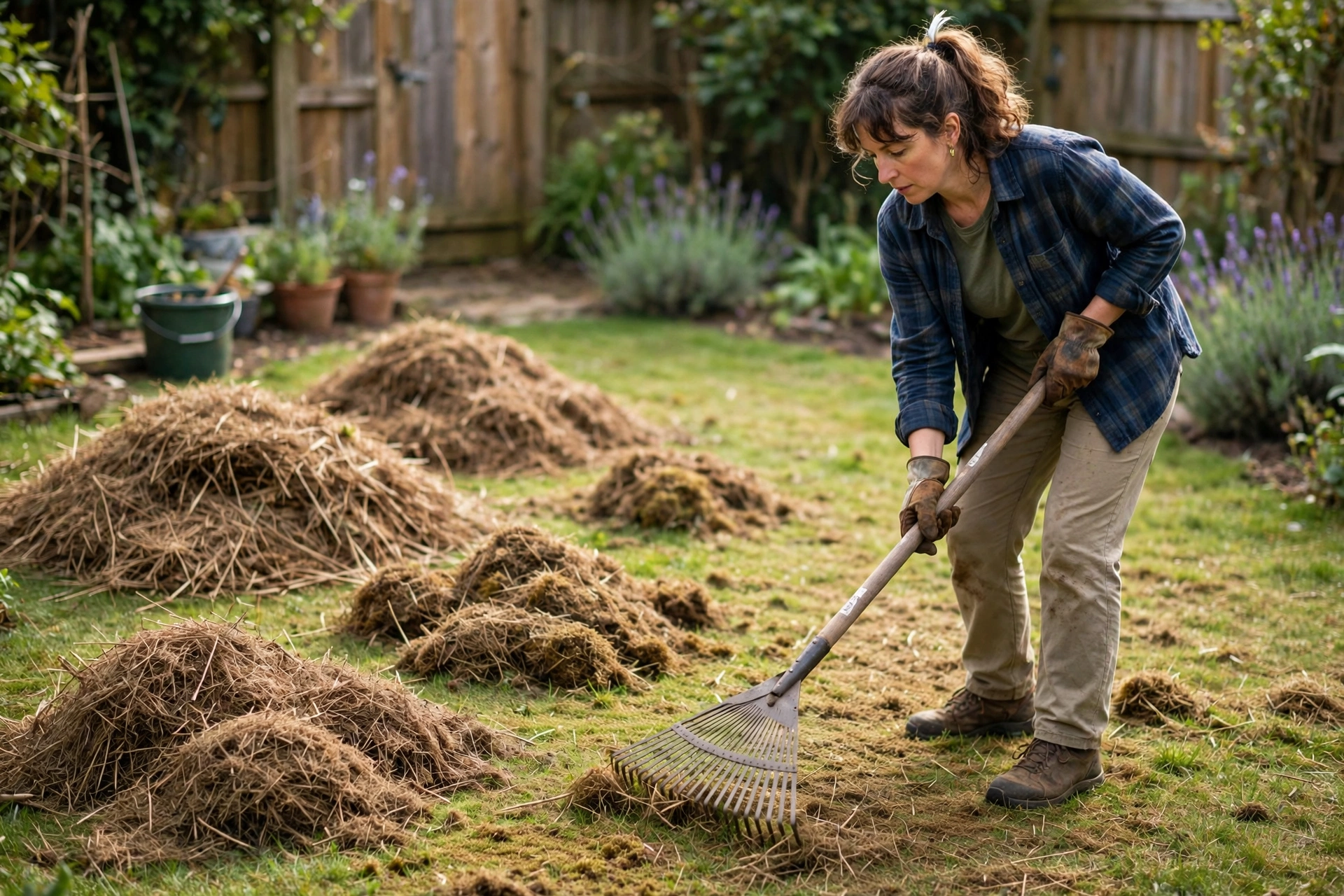
For a small lawn, use a spring-tine or dethatching rake. Rake firmly across the lawn, pulling up the dead material. For a large lawn, hire a dethatching machine or a scarifier. Work in two directions, and collect the material you pull out. The lawn will look rough after dethatching. That is normal, and it will recover fast.
Step 4: Aerate the soil
Aerating makes holes in the soil so air, water, and food can reach the roots. Use a hollow-tine aerator, which pulls out small plugs of soil, or a spiked roller for light work. Work across the whole lawn, and leave the plugs on the surface to break down. Aerating also helps if the grass is thin and patchy, as explained in Why Is My Grass Growing Thin and Patchy Even With Fertilizer?.

Step 5: Topdress and overseed bare spots
Spread a thin layer of fine compost or lawn topdressing over the lawn, and brush it into the holes. This feeds the soil life that breaks down thatch. If dethatching left bare spots, sow grass seed on them and keep them moist until the seed sprouts. For help with bare areas, see Why Is My Lawn Full of Bare Patches?.
Step 6: Water deeply and mow higher
After dethatching and aerating, water deeply, and then water less often. Raise the mower height so the grass grows a little taller. Taller grass grows deeper roots and shades the soil, which slows thatch build-up. Remove weeds while the lawn recovers, using the methods in How to Get Rid of Lawn Weeds Without Killing the Grass.
Common Mistakes With Spongy Lawns
The most common mistake is watering a little every day, which keeps roots shallow and thatch wet. A second mistake is mowing too short, which weakens the grass and lets moss in. A third is feeding the lawn heavily to make it look green, which adds fast, soft growth and more thatch. A fourth is dethatching at the wrong time, in the middle of a hot, dry spell, when the grass cannot recover. A fifth is ignoring compacted soil: dethatching alone will not fix a lawn if the soil below is still hard. Work in the growth season, when the grass is growing well and the soil is moist.
Frequently Asked Questions
How thick should thatch be?
Less than 1 centimetre is ideal. Up to 2 centimetres is usually fine. More than 2 centimetres can cause spongy, weak grass and should be reduced by dethatching.
Will my lawn look bad after dethatching?
Yes, for a short time. Dethatching pulls out dead material and can leave the lawn looking thin and rough. With water and a few weeks of growth, it will fill in and feel firmer than before.
How often should I dethatch?
Most lawns need dethatching only once a year, or less. Test the thatch layer each year, and dethatch only when it is too thick. Aerate once a year as well, especially on soil that gets a lot of foot traffic.
Can I fix a spongy lawn without a machine?
Yes, for a small lawn. A dethatching rake and a garden fork can do the job, although it takes more time. For a large lawn, hiring a machine saves a lot of effort.
Does topdressing help with thatch?
Yes. A thin layer of fine compost feeds the soil life that breaks thatch down, and it helps level small dips. Do not spread it too thickly, or it can smother the grass.
