
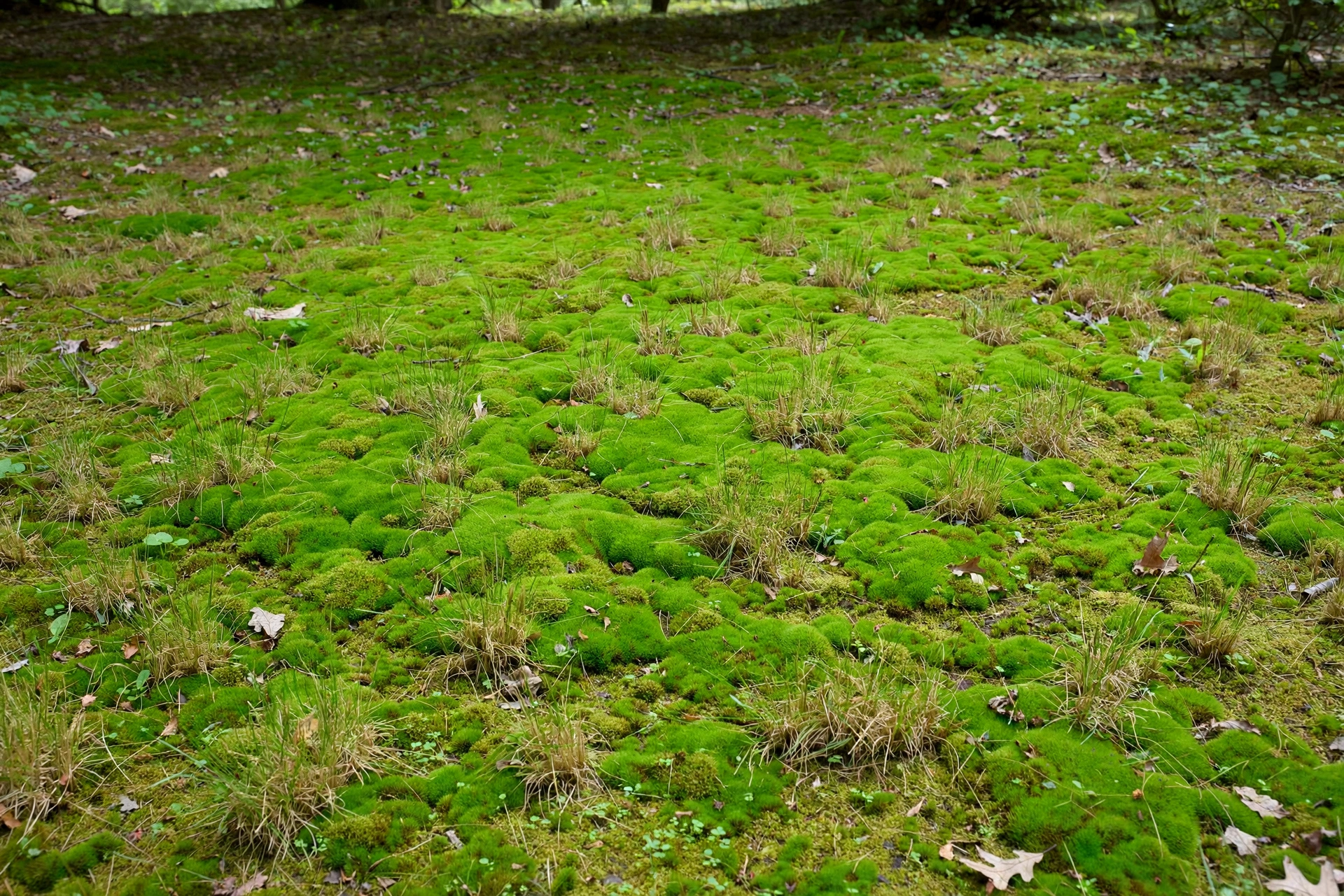
Moss taking over a lawn is a common and frustrating problem. One season the grass looks full and green, and the next, soft green cushions of moss spread across the shady corners, then across the middle of the lawn. Moss does not appear by chance. It grows where grass struggles, and it takes over when the conditions suit moss better than they suit grass.
The good news is that moss can be beaten, but only if the cause is fixed as well as the moss itself. Killing moss without changing the conditions only gives a short break. This guide explains why moss is taking over your lawn, what causes it, and the long-term fixes that help grass grow back thick and strong.
What Moss Is and Why It Grows in Lawns
Moss is a small, simple plant with no true roots. It does not need rich soil to grow. It takes in water and nutrients through its leaves, and it can live on bare soil, on compacted ground, and in places where grass cannot get a hold. Moss loves shade, damp soil, and still air. It grows slowly, but it spreads steadily when grass is thin or weak.
Moss is not a disease, and it does not attack healthy grass. A thick, well-fed lawn leaves no room for moss. When moss is spreading, it is a sign that the lawn is under stress. Fixing moss means fixing those problems, one by one.
Why Moss Is Taking Over Your Lawn: The Main Causes
Moss rarely has a single cause. In most lawns, two or three problems work together. Finding the main causes in your own lawn is the most useful step, because the fix depends on the cause.
Too Much Shade
Shade is the most common cause of moss. Grass needs several hours of sunlight each day to grow thick and strong. Under trees, beside tall fences, and on the north side of a house, grass grows thin and weak, while moss thrives in the cool, damp shade. If moss is worst in the shady parts of the lawn and the sunny parts are fine, shade is the main cause.
Compacted Soil
Soil becomes compacted when it is walked on often, when heavy items sit on it, or when it is worked while wet. Compacted soil has little air in it, so grass roots cannot grow deep. Water also drains slowly from compacted soil, which keeps the surface damp. Moss, which has no deep roots, does not mind compacted soil at all.

Poor Drainage and Wet Soil
Lawns in low spots, or lawns with heavy clay soil, often stay wet after rain. Puddles, soft ground, and a lawn that stays damp for days are signs of poor drainage. Grass roots need air as well as water, and they suffer in soil that is always wet. Moss loves constant dampness, so wet lawns are often mossy lawns.
Low Soil Fertility
Grass that is short of nutrients grows slowly, turns pale, and thins out. Thin grass leaves bare soil where moss can settle. A lawn that has not been fed for a long time, or a lawn growing in poor, sandy soil, is an easy target for moss. Feeding the lawn at the right time of year helps grass grow thick enough to crowd moss out.
Acidic Soil
Soil that is too acidic makes it hard for grass to take up nutrients, even when those nutrients are present. Moss tolerates acidic soil much better than grass does. A simple soil test can show whether the soil is acidic. If it is, adding lime in the amount the test suggests can slowly bring the soil back to a level that suits grass.
Thin Grass and Short Mowing
Cutting grass too short weakens it. Short grass has short roots, dries out fast, and lets light reach the soil surface, which helps moss and weeds. Thin grass also leaves gaps where moss can grow. If the grass is already thin, bare patches in a lawn can appear, and moss often moves into those bare spots first.
How to Get Rid of Moss and Fix the Lawn Step by Step
Work through these steps in order. The first steps clear the moss that is already there. The later steps change the conditions so that grass, not moss, wins in the long term.
Step 1: Rake the moss out. Use a spring-tine rake or a scarifier to pull the moss out of the lawn. Work in two directions, across and along the lawn, to lift as much moss as possible. This is hard work, but it is the fastest way to clear a mossy lawn. Collect and remove all the moss so it does not settle back into the grass.

Step 2: Aerate the soil. Aerating means making holes in the soil so air, water, and nutrients can reach the roots. Use a garden fork or a hollow-tine aerator, and work over the whole lawn, paying extra attention to the worst areas. Aerating is most useful on compacted lawns and heavy soils. It also helps water drain away instead of sitting on the surface.
Step 3: Improve drainage. If water pools on the lawn, find out why. Sometimes the answer is simple: aerating and adding a thin layer of sharp sand or sandy topdressing after aerating helps water move down through the soil. Avoid walking on the lawn when it is wet, because that makes compaction worse.
Step 4: Test the soil and correct it. A basic soil test shows the pH level and the main nutrients. If the soil is acidic, apply lime at the rate the test suggests. If nutrients are low, feed the lawn with a balanced lawn feed. Do not guess at amounts: too much lime or fertilizer can harm the grass.
Step 5: Overseed the thin areas. After raking out moss, the lawn will have thin and bare areas. Scatter grass seed over those areas, press it into good contact with the soil, and keep it damp until it grows. Choose a seed mix that suits the light levels in your lawn: shade-tolerant seed is a better choice for shady areas. New grass fills the gaps where moss used to grow.
Step 6: Feed the lawn through the growing season. A regular feeding plan keeps grass growing strongly. Feed in the main growing season, following the product instructions, and water the feed in if rain is not expected. Strong grass grows thick and shades the soil surface, which makes it hard for moss to return.
Step 7: Change how you water and mow. Water deeply and less often, rather than a little every day, so roots grow deep. Water in the morning when you can, so the grass dries during the day. Mow at a higher setting and never cut off more than one third of the grass height at one time. Longer grass shades the soil and keeps it cooler and drier at the surface.
Step 8: Let in more light and air. Where shade is the main cause, trim back overhanging branches and thin out dense shrubs so more light and air reach the lawn. Even a little extra light and air flow helps grass grow in a shady spot.
Common Mistakes to Avoid
- Only killing the moss. Moss killer clears the moss you can see, but if the soil is still compacted, wet, or shady, the moss comes back. Always fix the cause as well.
- Raking moss out and leaving bare soil. Bare soil is an open invitation for moss and weeds. Overseed bare areas right after raking, so grass fills the gaps first.
- Mowing too short after treatment. Short grass is weak grass. Keep the mower at a higher setting while the lawn recovers.
- Feeding at the wrong time. Heavy feeding when grass is not growing actively wastes the feed and can scorch the lawn. Feed when the grass is growing well.
- Overwatering. Daily light watering keeps the surface damp, which suits moss. Water deeply and less often, and let the surface dry between waterings.
- Ignoring soil acidity. If the soil is very acidic, grass will keep struggling no matter how much seed and feed you use. A soil test takes the guesswork out.
Frequently Asked Questions
Will moss kill my grass?
Moss does not kill grass directly. It spreads into the gaps where grass is already weak or missing, and it can smother small grass plants if it forms a thick mat. The real damage is done by the shade, wet soil, or compaction that let the moss in. Fix those, and the grass can recover.
Does moss killer work on its own?
Moss killer can turn moss black and make it easy to rake out, but it is not a long-term fix on its own. Without aerating, feeding, overseeding, and better light and drainage, moss usually returns within a few months. Use moss killer as a first step, not as the whole plan.
Can I just rake the moss out?
Raking is a good start, and on a lightly mossy lawn it may be all the clearing you need. But raking alone does not change the conditions. Follow it with aerating, overseeding, and the other steps in this guide, or the moss will grow back into the same bare spots.
How long does it take for grass to fill back in?
New grass seed usually shows green shoots within two to three weeks in good conditions, but a lawn takes a full growing season to thicken up properly. Be patient, keep the new grass watered, and avoid heavy use of the lawn while it is young.
Will moss come back every year?
It can, especially in very shady or wet lawns. Moss control is an ongoing job, not a one-time fix. A yearly routine of aerating, feeding, and overseeding keeps grass strong and makes it harder for moss to return. If the lawn is also showing other stress signs, such as grass turning yellow in patches, check the soil, watering, and feeding routine as well, because the same weak-grass problems are often behind both issues.
Save This Guide for Later
Moss takes time to beat, so save this guide and work through it step by step across the growing season. Rake the moss out, fix the soil, overseed the bare spots, and keep the grass fed and mowed at a good height. With steady care, the grass will thicken, the moss will fade, and the lawn will stay green for much longer.
