
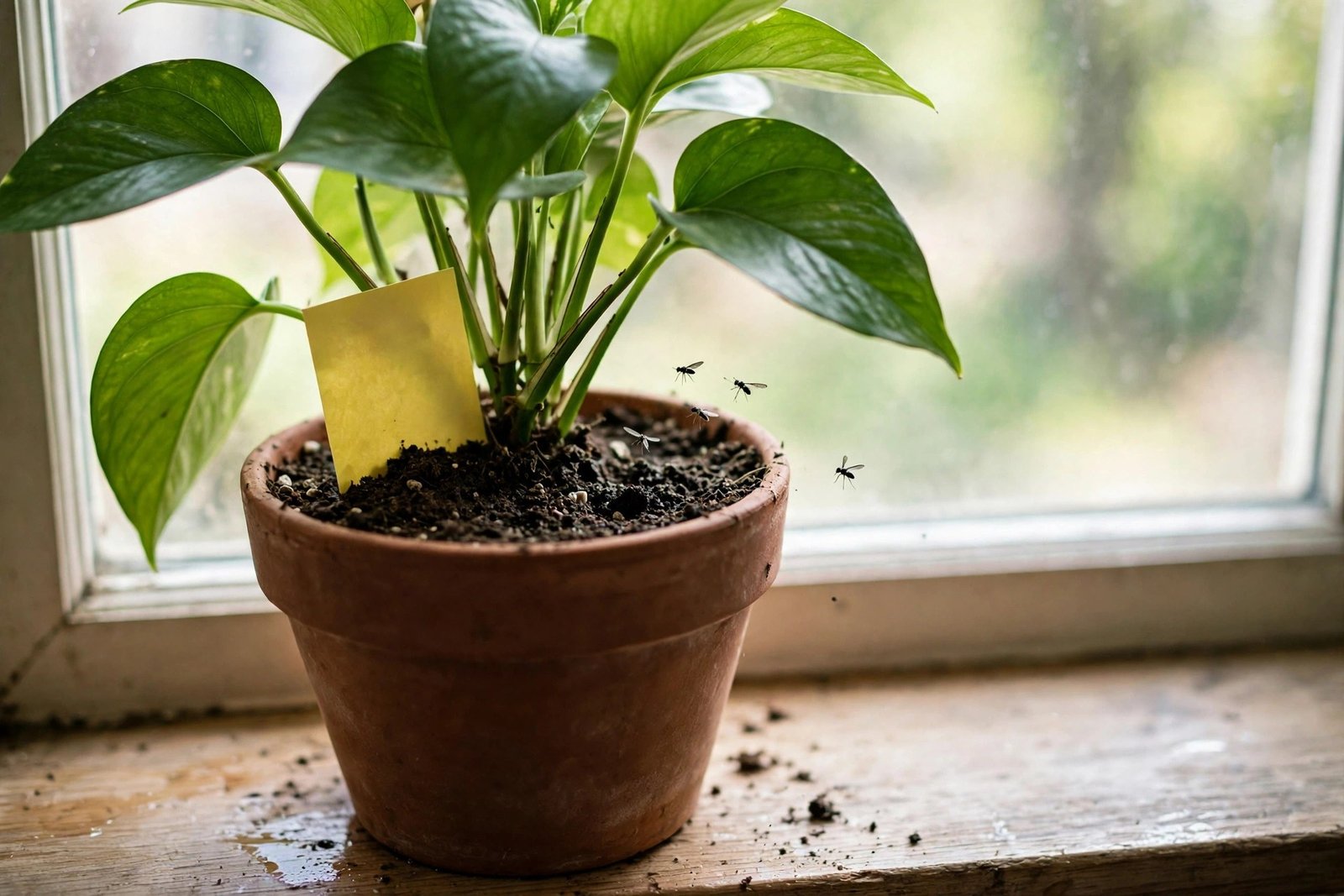
You water your plant, and a small cloud of tiny black flies rises from the soil. They hover around the pot, land on the leaves, and drift toward the nearest window. These are fungus gnats, and once they move in, they do not leave on their own.
The flying adults are annoying, but they are not the real problem. The real damage happens out of sight, in the soil. Female gnats lay their eggs in damp potting mix, and the tiny larvae feed on fungi, organic matter and the fine root hairs of your plants. Seedlings and young plants suffer most. Their roots are small, so even light feeding can slow growth, turn leaves yellow and, in bad cases, kill the plant.
The good news is that fungus gnats are one of the easiest indoor pests to beat. You do not need strong chemicals, and you do not need to throw your plant away. You need to break their life cycle: dry the soil, catch the adults and stop new eggs from hatching. Do all three together, and the gnats are gone in a few weeks.

What Causes Fungus Gnats?
Fungus gnats appear when the conditions in a pot suit them. Understanding the cause is the first step, because the same wet soil that keeps the plant alive is also a perfect nursery for them.
1. Soil That Stays Wet for Too Long
This is the number one cause. Gnats need damp soil to lay eggs. If the top layer of potting mix never dries out between waterings, females will keep coming back to the same pot. Plants that are watered on a fixed schedule, rather than when the soil actually needs it, are the most common victims.
2. Rich, Organic Potting Mix
Gnats feed on fungi and decaying matter. Fresh compost, peat-based mixes and potting soil with a lot of organic material give larvae plenty of food. This does not mean the mix is bad. It means wet, rich soil is a strong invitation.
3. Pots With No Drainage
A pot without drainage holes holds water at the bottom. The lower soil stays soaked even when the surface looks dry. Gnats love this, and roots hate it. Decorative pots without holes are a common hiding place for an infestation.
4. A New Plant Brought Home
Many infestations start with a single new plant. Its soil may already hold eggs or larvae from the shop or nursery. Within days, the adults spread to every other pot nearby.
5. Dead Leaves and Debris on the Soil
Fallen leaves sitting on damp soil rot quickly. That soft, rotting layer is food for larvae and a shelter for eggs. A clean soil surface is much less attractive to gnats.
How to Stop Fungus Gnats: A Step-by-Step Fix
Follow these steps in order. Each one helps on its own, but together they break the life cycle completely.
Step 1: Let the Top Soil Dry Out
Stop watering on a schedule. Push your finger about 2 to 3 cm into the soil. Water only when that top layer feels dry. For most indoor plants, this means watering less often than you think.
Drying the surface kills eggs and larvae near the top, and it makes the pot far less attractive to egg-laying females. Your plant will cope with a short dry spell far better than it copes with constant wet roots. If you are unsure whether a plant needs water, lifting the pot helps: a dry pot feels much lighter than a wet one.
Step 2: Remove the Top Layer of Soil
Scrape off the top 2 to 3 cm of potting mix and throw it away. This removes many eggs and larvae at once. Replace it with fresh, dry potting mix.
For extra protection, cover the new surface with a thin layer of fine sand, small gravel or horticultural grit. Gnats cannot easily lay eggs through a dry, gritty top layer, and the surface dries faster after watering. This simple barrier alone cuts new infestations sharply.
Step 3: Set Yellow Sticky Traps
Push one or two yellow sticky traps into the soil near the base of the plant. The yellow colour attracts the flying adults, and they stick fast.
Traps will not solve the problem alone, because they only catch adults, not the larvae in the soil. But they do two important jobs: they cut the number of females laying eggs, and they show you whether the problem is shrinking. When the traps stay empty for a week or two, you know you are winning. Replace a trap when it is covered in gnats or dust.
Step 4: Water From the Bottom
Watering from the top keeps the soil surface wet, which is exactly where gnats lay eggs. Watering from the bottom keeps the surface dry while the roots still get the moisture they need.

Place the pot in a shallow tray of water for 15 to 20 minutes, then let it drain fully and empty the tray. The lower soil soaks up water while the top stays dry. If your pot has no drainage hole, repot it into one that does. A saucer that always holds standing water is a gnat nursery, so always empty it after watering.
Step 5: Treat the Soil With a Biological Control
For a stubborn infestation, treat the soil with Bacillus thuringiensis israelensis, often sold as BTI or as mosquito bits. It is a naturally occurring bacteria that kills gnat larvae but is harmless to plants, pets and people.
Soak the product in water as directed on the label, then water the plants with that liquid. Repeat once a week for three to four weeks. This targets the larvae directly, while the dry soil and traps deal with the adults. Together, the combination ends the cycle.
Step 6: Repot the Plant if the Problem Is Severe
If a plant is badly infested, with clouds of gnats every time you touch the pot, the fastest fix is a fresh start. Take the plant out, shake off as much old soil as you can from the roots, and rinse them gently under lukewarm water. Repot in fresh, dry potting mix in a clean pot with drainage holes.
This removes nearly all the larvae at once. Keep the new pot away from other plants for two weeks and watch it closely. If a few gnats appear, the sticky traps and dry soil routine will finish them off.
Step 7: Keep Going for Three to Four Weeks
Fungus gnats have a life cycle of about three to four weeks from egg to flying adult. That means you will still see a few gnats for a while even when your fix is working. The larvae already in the soil must finish growing and be caught as adults before the cycle ends.
Do not stop after the first quiet week. Keep the soil dry on top, keep the traps in place and keep watering from the bottom until you have had at least two full weeks with no gnats at all. Stopping early is the most common reason the problem comes back.
Common Mistakes That Keep Fungus Gnats Coming Back
Watering Again Before the Soil Dries
The single biggest mistake is going back to the old watering habit as soon as the gnats seem fewer. Wet soil brings them straight back. Always check with your finger first.
Only Trapping the Adults
Sticky traps catch flies, not larvae. If you trap adults but keep the soil wet, new gnats keep hatching. Traps work only as part of the full fix.
Spraying Chemicals on Indoor Plants
Strong insect sprays may kill the flies you can see, but they rarely reach the larvae in the soil, and they fill your living space with chemicals you do not need. The drying, trapping and BTI approach works better and is safer indoors.
Throwing the Plant Away Too Soon
Fungus gnats are a soil problem, not a plant problem. The plant itself is usually fine once the larvae are gone. Give the fix a few weeks before deciding a plant is beyond saving.
Keeping the Saucer Full of Water
A saucer with standing water keeps the bottom of the pot permanently wet. Empty it after every watering, every time.
Using Garden Soil for Indoor Pots
Garden soil is dense, holds water for a long time and can carry eggs and larvae. Use a light, free-draining potting mix made for containers, and your plants will be healthier and far less likely to attract gnats.
For other safe, plant-friendly pest controls, see our guides on How to Stop Aphids From Covering Your Plants: Safe Controls That Work, How to Stop Slugs and Snails From Eating Your Plants Overnight, and Why Do My Plants Keep Wilting Even When the Soil Is Wet?.
Frequently Asked Questions
Are fungus gnats harmful to people?
No. Fungus gnats do not bite, sting or spread disease to people. They are a nuisance, and their larvae can damage plant roots, but they are harmless to humans and pets.
How long does it take to get rid of fungus gnats?
About three to four weeks if you follow the full fix: dry soil, sticky traps and a soil treatment. You should see numbers drop within the first week, and the last few stragglers disappear as the life cycle ends.
Will fungus gnats go away on their own?
Rarely. If the soil stays damp, females keep laying eggs and the cycle continues. They only disappear on their own when the soil dries out fully or the plant dies. A dry top layer is what ends the problem.
Do home remedies like cinnamon or neem oil work?
They can help a little. A light dusting of cinnamon on the soil surface discourages fungi, and neem oil watered into the soil can disturb larvae. But neither is a complete fix on its own. Use them alongside drying, trapping and, if needed, a BTI treatment.
Can fungus gnats spread to my other plants?
Yes. Adults fly from pot to pot and lay eggs wherever the soil is damp. Check every plant nearby, and move an infested plant away from healthy ones until the gnats are gone.
