
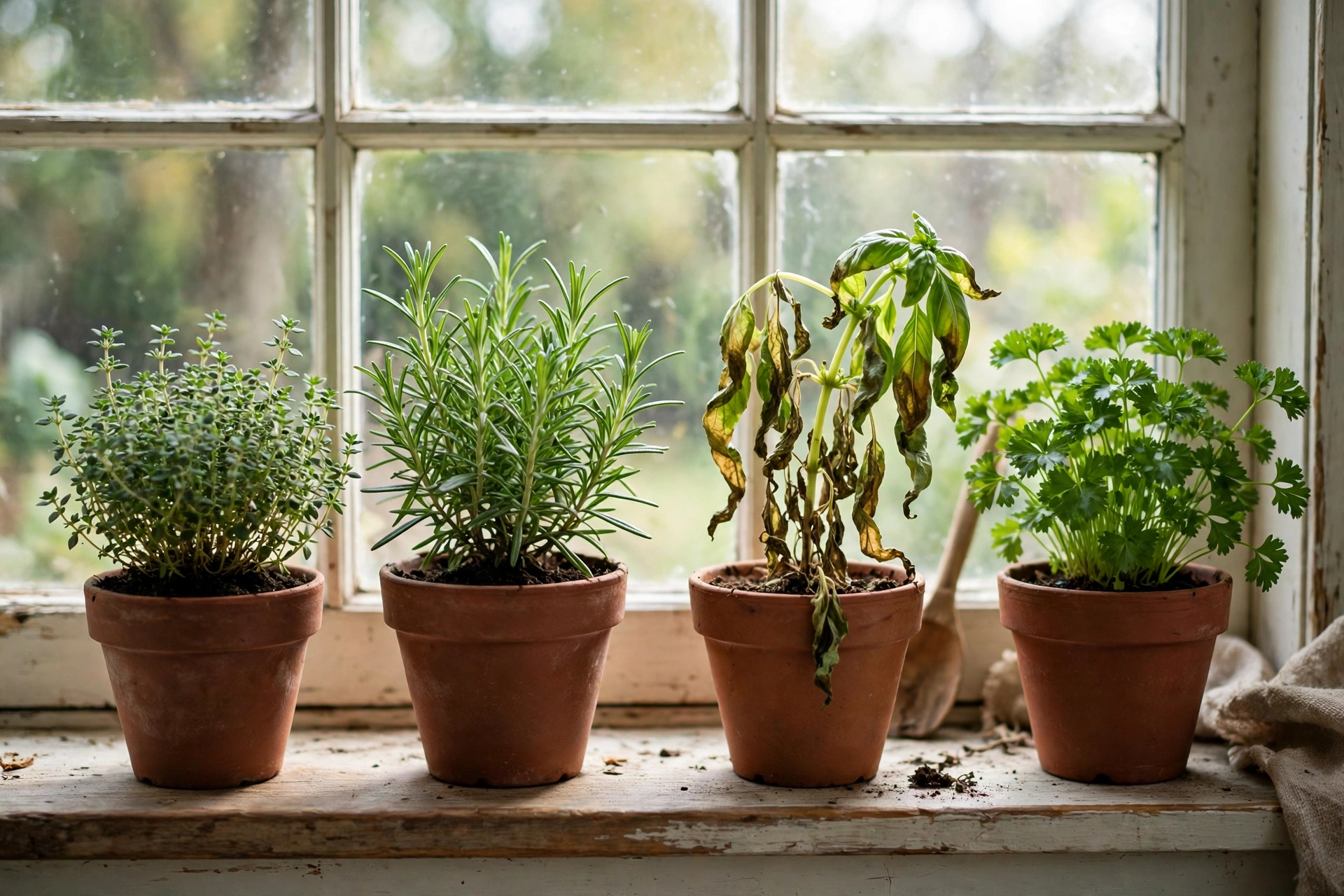
Herbs that keep dying are a common frustration for new and experienced growers alike. A basil plant looks healthy in the shop, a mint plant smells fresh, and a parsley plant looks green and full. A few weeks later, leaves wilt, stems turn brown, or the whole plant collapses. It is easy to think you have no skill with herbs, but in most cases the plant is not dying because of you alone. It is dying because light, water, or soil does not match what that herb needs.
Herbs that keep dying usually point to one of three mistakes: too little light, watering that is too often or too little, or soil that stays wet and has no drainage. Each herb has slightly different needs, but the basic rules are the same for most common herbs. Fix the light, water, and soil first, and most herbs will recover and grow well.
This guide explains why herbs keep dying, the main causes in light, water, and soil, and a step-by-step fix you can use for potted herbs on a windowsill, on a balcony, or in a garden bed. It also covers common mistakes, and answers the questions growers ask most often.
Why Herbs That Keep Dying Usually Fail
Herbs that keep dying often fail for a simple reason: the place they are grown does not match their needs. A herb that needs full sun will not grow in a dark kitchen. A herb that needs dry soil will rot in wet soil. A herb in a pot with no drainage holes will drown, even if you water it only a little. The first step is to find which of these three areas is wrong.

1. Not enough light
Light is the most common cause of herbs that keep dying indoors. Most herbs need at least six hours of bright, direct light each day. A windowsill that gets only a little morning light, a kitchen counter away from a window, or a shaded balcony is not enough. The plant grows tall and thin, leaves turn pale, stems become weak, and the plant slowly dies. Move herbs to the brightest spot you have, and turn pots every few days so all sides get light.
2. Too much water
Overwatering is the second most common cause. Herbs such as rosemary, thyme, and sage like soil that dries out between waterings. If the soil stays wet, roots cannot get air, they rot, and leaves turn yellow, brown, or black and fall off. Watering a little every day is worse than watering deeply once a week, because the top soil stays wet all the time. Always check the soil before watering, and let the top soil dry out for most herbs.
3. Too little water
Too little water also kills herbs, especially basil and mint, which like moist soil. If a pot dries out completely, leaves wilt, dry at the edges, and drop. A plant that wilts often will become weak, even if it recovers after watering. Small pots dry out fast in sun and wind, so check them daily in warm weather. Water deeply until water runs out of the drainage holes, then wait until the top soil is dry again.
4. Poor drainage and heavy soil
Soil that holds too much water is a common cause of herbs that keep dying. Heavy garden soil, or a potting mix with no drainage material, stays wet and airless. Roots rot, and the plant dies from the roots up. Pots with no drainage holes are a major problem. Every herb pot must have drainage holes, and the soil must drain freely. A light, free-draining potting mix, with some coarse material mixed in, works well for most herbs.
5. Wrong pot size, feeding, and sudden changes
A pot that is too small dries out fast and has little room for roots, while a pot that is too large holds too much wet soil around small roots. Herbs also need very little fertiliser: too much feed can burn roots and damage leaves. Moving a herb from a warm shop to a cold windowsill, or from indoors to full sun in one day, can also shock the plant, and leaves may drop within a few days. Move herbs slowly, and avoid repotting, pruning, and feeding all at the same time. If herb leaves turn black or show dark spots, the cause may be water or disease, as explained in How to Stop Basil Leaves From Turning Black: Causes and Fixes
How to Fix Herbs That Keep Dying: Step by Step
To fix herbs that keep dying, work through these steps in order. Start with light and drainage, then water, then soil and pot size. Watch new growth for one to two weeks to see if the plant is recovering.

Step 1: Move the herb to the brightest spot
Place potted herbs in the brightest spot you have, with at least six hours of direct light each day. A south-facing windowsill, a sunny balcony, or a sunny garden bed is best. If you have no bright spot indoors, move the herb outside during the day if the weather is warm, or use a simple grow light. Turn the pot every few days so the plant grows evenly.
Step 2: Check drainage holes and soil
Check that the pot has drainage holes, and that water runs out freely when you water. If the pot has no holes, move the herb to a pot with holes at once. If the soil is heavy and wet, repot the herb in fresh, free-draining potting mix. Remove any black, soft roots, and trim away dead stems. Do not use garden soil in pots, because it compacts and holds too much water.
Step 3: Water the right way
Check the soil with a finger before watering. If the top 2 to 3 centimetres are dry, water deeply at the base until water runs out of the drainage holes. Empty the saucer after 15 minutes, so the pot does not sit in water. If the soil is still moist, wait and check again the next day. Basil and mint like moist soil, while rosemary, thyme, and sage like drier soil, so learn the needs of each herb you grow.
Step 4: Repot into the right pot
Choose a pot that is 2 to 5 centimetres wider than the root ball, with drainage holes. Use fresh potting mix, and do not bury the stem deeper than it was before. Water well after repotting, and keep the plant in a bright, sheltered spot for a few days. Mint needs special care, because it spreads fast in a bed. Grow mint in its own pot, as explained in How to Stop Mint From Taking Over Your Garden: Containment That Works
Step 5: Prune dead growth and harvest often
Cut off dead, yellow, or black leaves and stems. Harvest herbs often, by cutting the top stems, which encourages bushy new growth. Do not take more than one third of the plant at a time. Regular harvesting keeps the plant compact and healthy, and it helps you notice problems early.
Step 6: Feed lightly, only if needed
Do not feed a stressed herb. Wait until new growth appears, then feed lightly with a balanced liquid feed at half the label rate, once a month at most. Most herbs in fresh potting mix need no feed for the first few months. Too much feed is a common cause of herbs that keep dying, so less is better.
Common Mistakes That Kill Herbs
- Watering on a schedule, not by soil: Watering every day, even when the soil is wet, rots roots. Always check the soil first.
- Using a pot with no drainage: Pots without holes hold water at the bottom and kill roots. Use a pot with holes and empty the saucer.
- Keeping herbs in a dark kitchen: Herbs need bright light. A dark counter is one of the fastest ways to kill them.
- Planting several herbs in one small pot: Different herbs need different water and light. Give each herb its own pot.
- Feeding too much: Strong, frequent feeding burns roots and makes weak growth. Feed lightly, or not at all.
- Moving herbs suddenly: Moving a plant from indoors to full sun, or from a shop to a cold spot, shocks it. Move it slowly.
Frequently Asked Questions
Why do my herbs die a few weeks after I buy them?
Most shop herbs are grown in small pots, with crowded roots and soft growth. After you buy them, they need more light, a larger pot, and the right watering. Repot them into a larger pot with drainage holes, place them in bright light, and water by checking the soil. Many shop herbs recover well with these three changes.
How often should I water potted herbs?
There is no fixed schedule. Check the soil with a finger every day, and water only when the top 2 to 3 centimetres are dry. In warm, sunny weather, small pots may need water daily. In cool, cloudy weather, they may need water only once a week. Water deeply, then let the soil dry a little before watering again.
Can I save a herb with root rot?
Sometimes, if you act early. Take the plant out of the pot, remove black, soft roots, and repot it in fresh, dry, free-draining mix in a pot with holes. Cut back dead stems, water lightly, and place the plant in bright, sheltered light. If most roots are black and soft, and the stem is also soft, the plant is unlikely to recover.
Do herbs need fertiliser to grow well?
No, most herbs need very little fertiliser. Too much feed can damage them. Fresh potting mix usually has enough food for the first few months. After that, a light feed once a month, at half the label rate, is enough. Herbs grown for leaves taste better with light feeding.
Which herbs are easiest to keep alive?
Mint, parsley, and chives are usually the easiest, because they tolerate a range of light and water. Basil is easy in warm, bright conditions with moist soil. Rosemary, thyme, and sage are easy in bright light with dry, free-draining soil. Start with one or two easy herbs, learn their needs, and add more herbs later.
Herbs that keep dying are not a sign that you cannot grow plants. They are a sign that light, water, or soil needs to change. Give herbs bright light, a pot with drainage, free-draining soil, and water based on the soil, not on a schedule. With those basics in place, most herbs will grow well and last for months.
