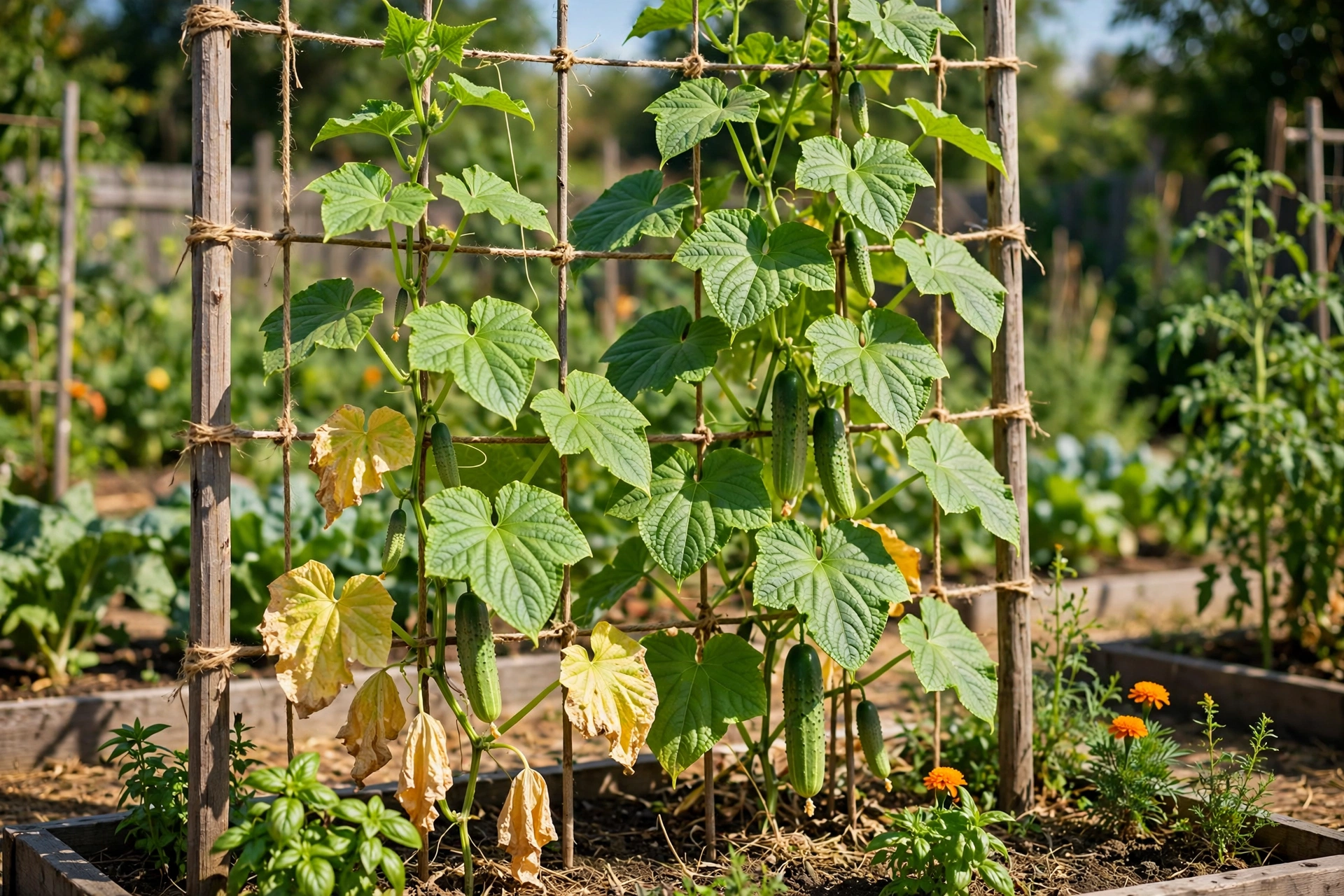
Cucumber leaves turning yellow is a warning sign that many growers see in the middle of the season. The vine may still be growing, and small cucumbers may still be forming, but the leaves turn pale, then yellow, starting at the edges or at the lower leaves. If the cause is not found, more leaves turn yellow, growth slows, and the harvest becomes smaller.
Yellow leaves do not always mean the plant is dying. In most cases, cucumber leaves turning yellow point to a problem with water, food, light, pests, or disease. Each cause leaves different clues on the leaf, so a careful look at the plant can help you find the right fix. This guide explains the 7 main causes, how to check each one, and a clear step-by-step fix.
Work through the causes in order, from the most common to the least common. Change one thing at a time, and watch new leaves for improvement. Old yellow leaves rarely turn green again, so new growth is the best sign that the plant is recovering.
Why Are Cucumber Leaves Turning Yellow?
Cucumber leaves turning yellow can have several causes, and more than one cause can be present at the same time. Look at the whole plant: which leaves are yellow, how the soil feels, how the plant is fed, and whether pests are present. The pattern of yellowing often points to the cause.

1. Too much or too little water
Water problems are the most common cause of yellow cucumber leaves. Soil that stays wet for days can damage roots, so the plant cannot take up nutrients, and lower leaves turn yellow first. Soil that dries out often causes leaves to wilt, dry at the edges, and turn yellow. Cucumbers need steady moisture at root depth, not a cycle of very dry and very wet soil. Mulch and regular checking help keep moisture even.
2. Lack of nitrogen
Nitrogen is needed for green leaf growth. When nitrogen is low, older lower leaves turn pale yellow first, while new leaves stay green for a while. Growth slows, and the vine looks thin. This often happens in poor soil, in pots with old soil, or when plants have been growing in the same bed for a long time without feeding. A balanced fertiliser or a nitrogen-rich feed, used at the label rate, can help, but do not overfeed.
3. Lack of other nutrients
Other nutrient shortages also cause yellowing, but in different patterns. A lack of magnesium often causes yellowing between the veins of older leaves, while the veins stay green. A lack of iron causes yellowing on young leaves first. A lack of potassium causes yellow and brown edges on older leaves. If the pattern is clear, a balanced feed or a feed for vegetables is a safer choice than adding one nutrient alone.
4. Not enough light
Cucumbers need full sun for most of the day. Leaves in deep shade, under a dense vine, or under a nearby plant can turn yellow and die. This is normal for the lowest, oldest leaves on a large vine, but if many leaves turn yellow, the plant may need more light, better spacing, or pruning to let light and air reach the lower leaves. Train the vine up a trellis so light reaches more of the plant.
5. Pests feeding on leaves
Pests such as aphids, spider mites, and cucumber beetles feed on leaves and stems, and damaged leaves turn yellow, spotty, or curled. Check the undersides of leaves for small insects, fine webs, or sticky residue. Spider mites are very small and hard to see, but they leave fine webs and small pale spots. Remove badly damaged leaves, wash pests off with water, and keep the area clean.
6. Fungal and bacterial disease
Diseases such as downy mildew, powdery mildew, and bacterial wilt can cause yellow spots, yellow patches, and wilting. Downy mildew often starts as yellow spots on the top of leaves, with grey growth underneath. Powdery mildew shows as white powder on leaves, which then turn yellow. Remove infected leaves at once, avoid wetting leaves when watering, and improve airflow around the plant. Do not compost diseased leaves.
7. Old age and natural leaf loss
As a cucumber vine grows and produces fruit, the oldest lower leaves naturally turn yellow and die. This is normal if only a few lower leaves are affected and new growth is green and healthy. If the whole plant turns yellow quickly, or if new leaves also turn yellow, the cause is more likely water, feeding, pests, or disease. Like peppers, cucumbers can show stress in their leaves and flowers when conditions are poor. For a similar problem in peppers, see Why Are My Pepper Plants Dropping Flowers? Causes and Fixes
How to Fix Cucumber Leaves Turning Yellow: Step by Step
If cucumber leaves are turning yellow, work through these steps in order. Fix water and light first, then feeding, then pests and disease. Watch new leaves for seven to fourteen days to see if the fix is working.
Step 1: Check the soil moisture
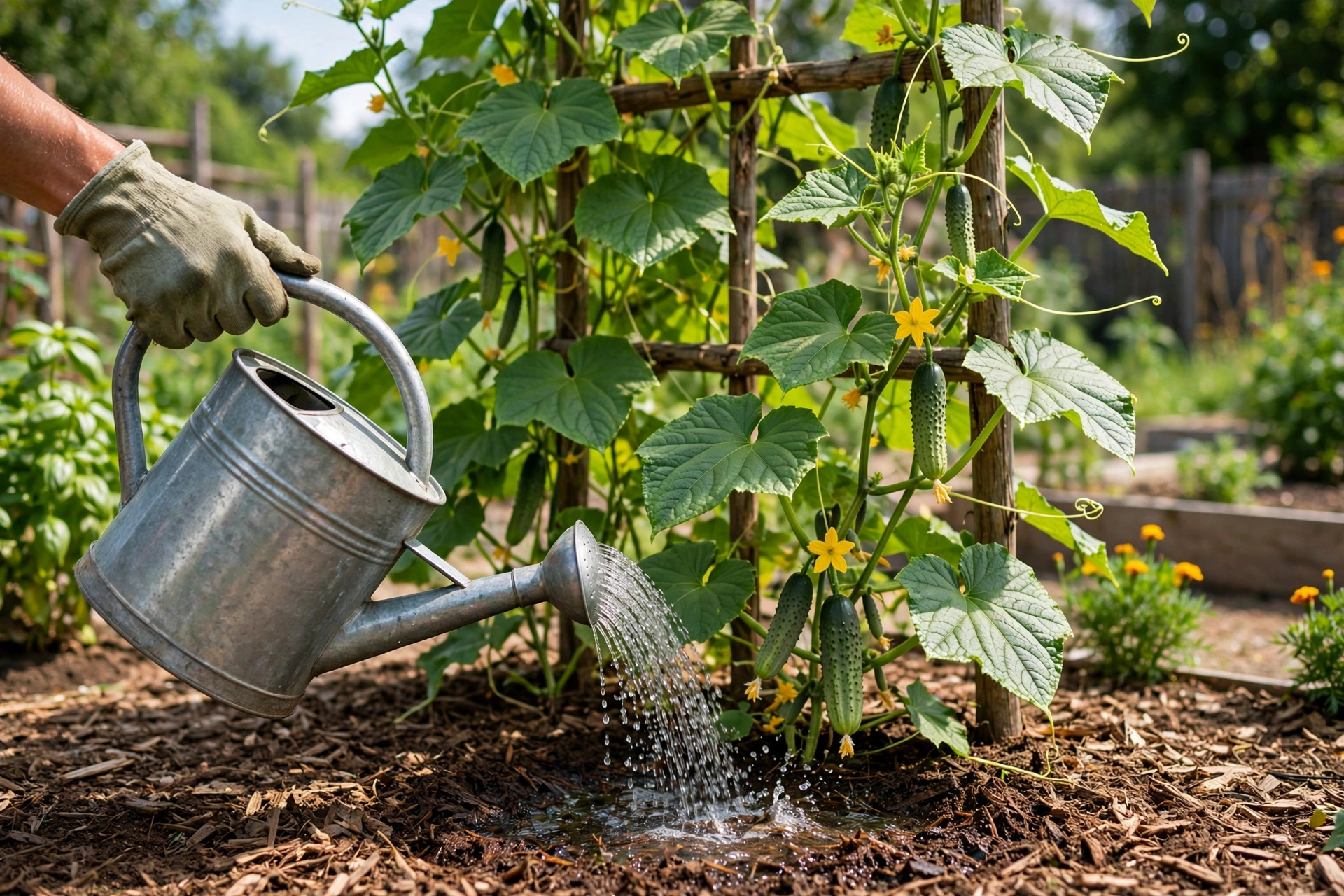
Push a finger 5 centimetres into the soil near the roots. If the soil is wet and smells sour, stop watering until the top soil dries. If the soil is dry, water deeply at the base until the soil is moist to a depth of about 15 centimetres. Water in the morning, at the base, and avoid wetting the leaves. Add a 5 to 8 centimetre layer of mulch to keep moisture steady.
Step 2: Improve light and airflow
Train the vine up a trellis, and space plants so air can move between them. Remove only the worst yellow leaves, and prune crowded stems lightly to let light reach the lower leaves. Do not remove too many green leaves at once, because the plant needs them to make food. Good airflow also helps leaves dry after rain and reduces disease.
Step 3: Feed with a balanced fertiliser
If lower leaves are pale yellow and growth is slow, feed with a balanced fertiliser at the label rate, watered in well. Do not feed a dry plant; water first, then feed. If the plant is already growing fast and green, do not add extra fertiliser, because too much feeding can burn roots and make yellowing worse. Feed once, then wait a week before deciding if more is needed.
Step 4: Check for pests every few days
Look under leaves and on stems for aphids, beetles, and fine webs. Wash aphids off with a strong spray of water, and pick off beetles by hand. Remove leaves that are badly damaged or covered in pests. Keep weeds down around the plant, because weeds can hide pests and disease. Like tomatoes, cucumbers can flower and fruit poorly when pests or stress weaken the plant. For more on flowering without fruit, see Why Are My Tomato Plants Flowering but Not Producing Fruit?
Step 5: Remove diseased leaves and keep leaves dry
Cut off leaves with yellow spots, white powder, or signs of mildew, and throw them away. Do not compost them. Water at the base, not over the leaves, and water in the morning so any wet leaves dry quickly. If disease keeps spreading, remove the worst-affected plant to protect nearby plants.
Step 6: Watch new growth
After the fix, new leaves should be green and healthy within one to two weeks. Old yellow leaves will not turn green again, so remove them when they are fully yellow. If new leaves also turn yellow, check water, feeding, and pests again, and consider whether the plant is at the end of its season.
Common Mistakes That Make Yellow Leaves Worse
- Watering the leaves: Wet leaves spread disease and stay wet overnight. Water at the base instead.
- Overwatering to fix yellowing: More water can rot roots if the soil is already wet. Check the soil first.
- Adding too much fertiliser: A heavy dose can burn roots and cause more yellowing. Use the label rate only.
- Removing all yellow leaves at once: Taking off too many leaves weakens the plant. Remove only the worst leaves.
- Ignoring pests: A few aphids or mites can multiply quickly. Check the undersides of leaves often.
- Leaving diseased leaves in the bed: Diseased leaves spread infection. Throw them away, and do not compost them.
Frequently Asked Questions
Should I remove yellow cucumber leaves?
Yes, remove leaves that are fully yellow, spotted, or diseased. This improves airflow, reduces disease, and makes it easier to see new growth. Do not remove healthy green leaves, and do not remove more than a few leaves at a time.
Can yellow cucumber leaves turn green again?
No, in most cases. A yellow leaf rarely turns green again, even after the cause is fixed. The goal is to stop more leaves from turning yellow, and to help new leaves grow green and healthy. Remove old yellow leaves once the plant is recovering.
Is yellow leaves on cucumbers a sign of overwatering?
It can be. Overwatering damages roots, so the plant cannot take up nutrients, and lower leaves turn yellow first. Check the soil before watering again. If the soil is wet, let it dry. If the soil is dry, water deeply. Steady moisture is better than frequent light watering.
Why are only the lower cucumber leaves turning yellow?
Lower leaves turn yellow first when nitrogen is low, when the plant is old, or when lower leaves are in shade. This is common and not always a serious problem. If only a few lower leaves are yellow and new growth is green, the plant is likely healthy. If yellowing moves up the vine quickly, check water, feeding, and pests.
Do cucumbers need full sun to stay green?
Yes. Cucumbers need full sun for most of the day to grow green, healthy leaves and fruit. In deep shade, leaves turn pale and yellow, and the plant grows slowly. Grow cucumbers in the sunniest part of the garden, and train vines up a trellis so light reaches more leaves.
Cucumber leaves turning yellow is a useful warning, not a lost season. Check water first, then light, feeding, pests, and disease. Fix the cause, remove the worst leaves, and watch new growth. With steady care, most cucumber plants recover and keep producing fruit.
