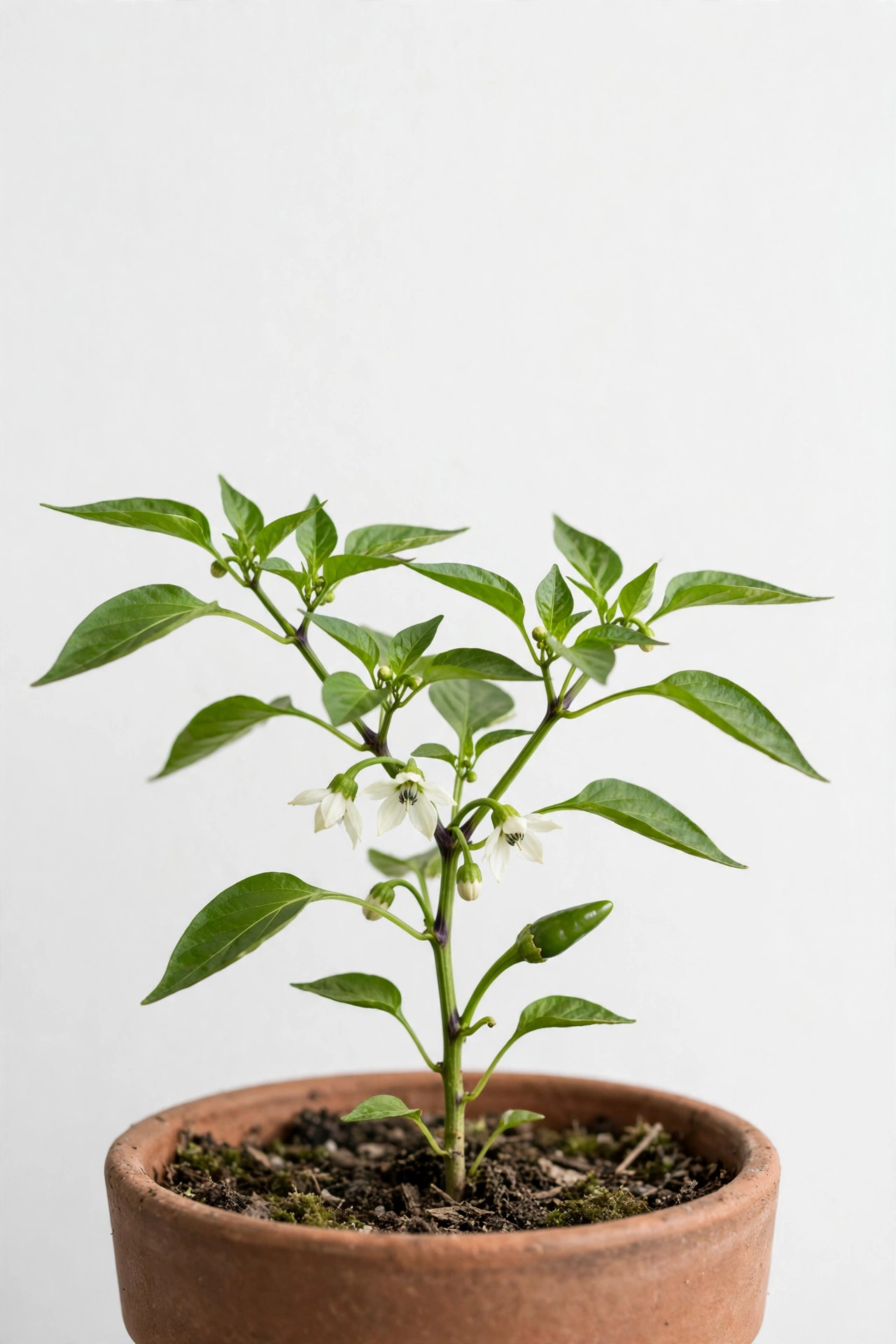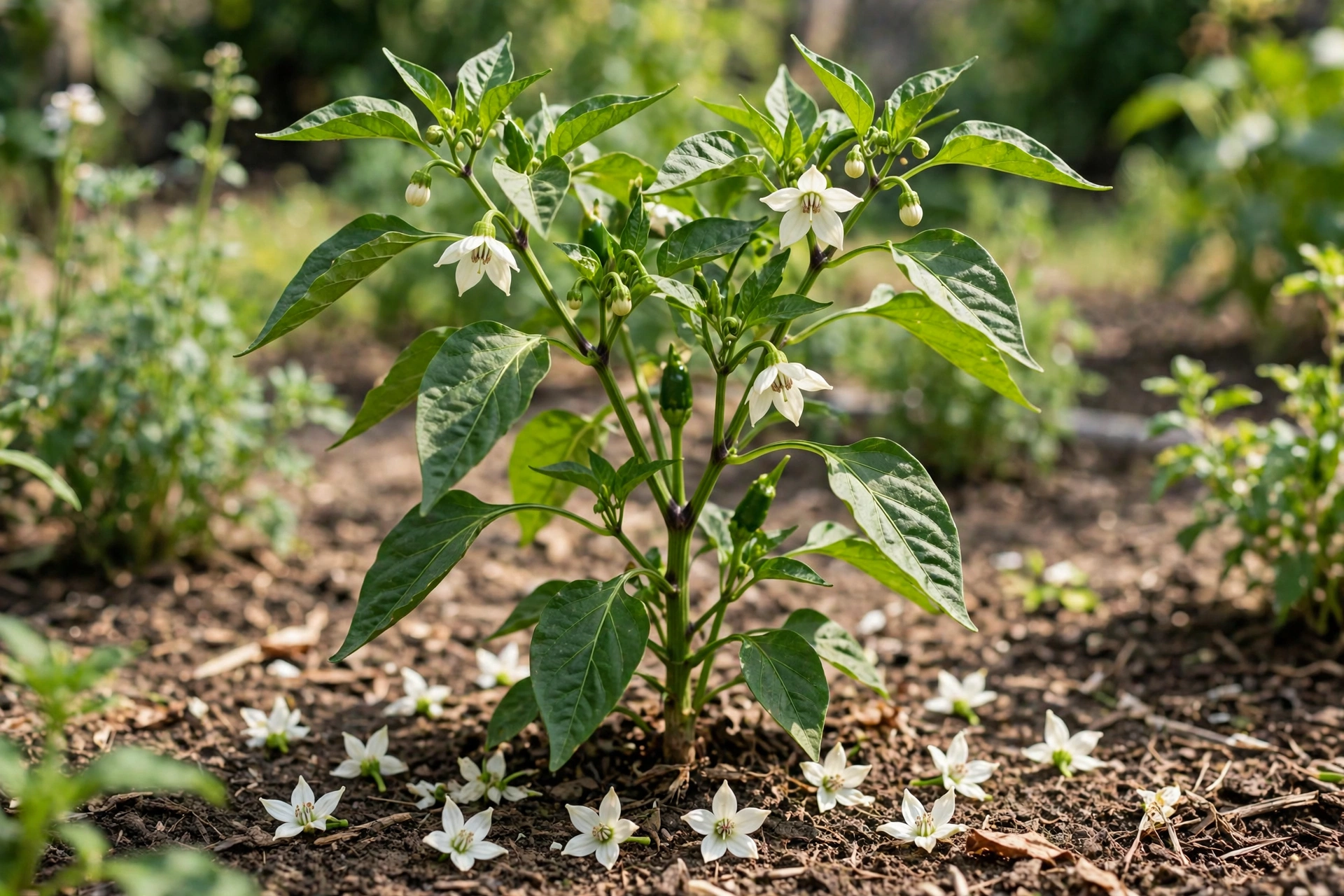
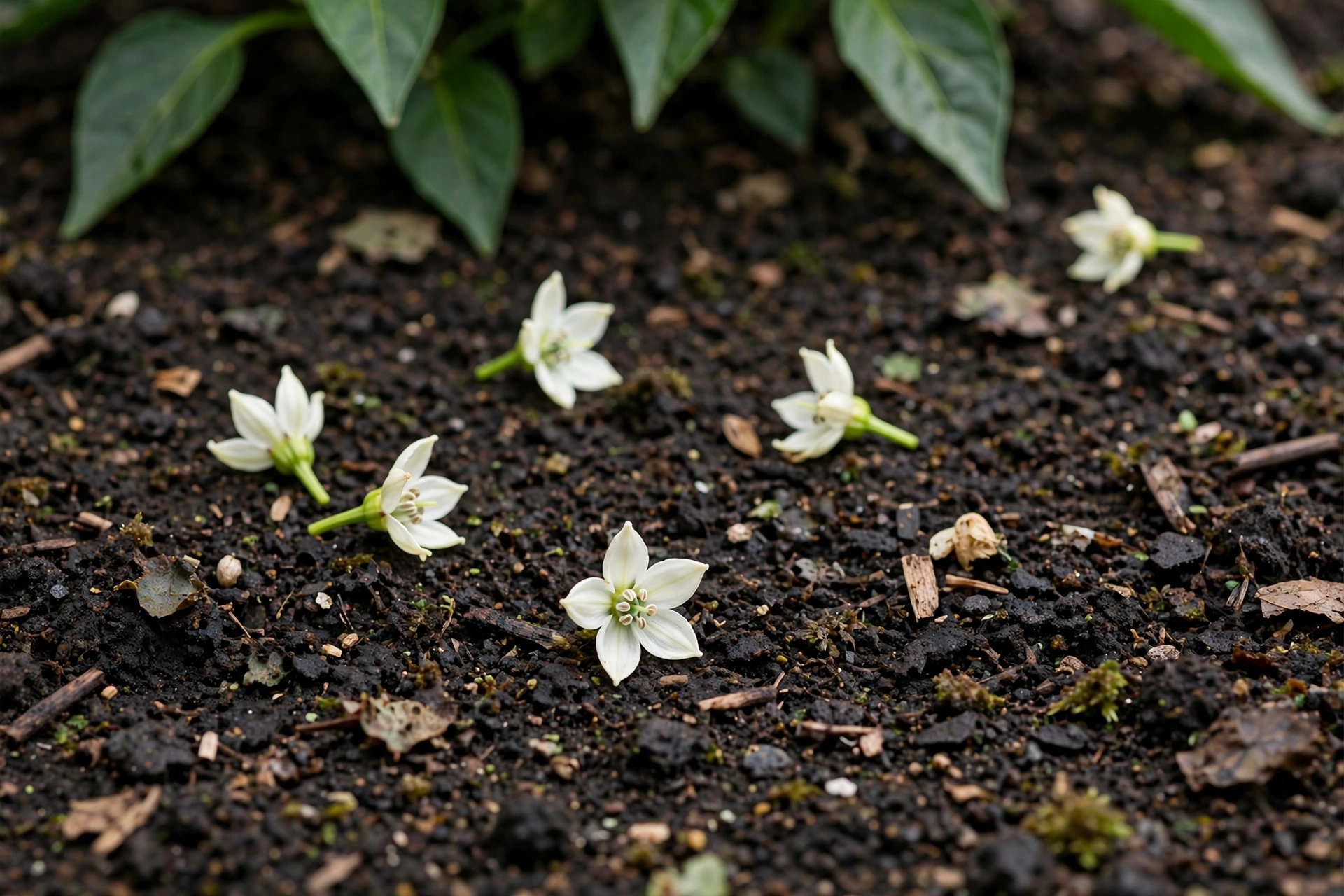
Pepper plants dropping flowers is a common and worrying problem for vegetable growers. The plant looks green and healthy, buds open, and then the small white flowers fall to the soil without forming a pepper. After a few days of flower drop, it is easy to think the plant is sick or that the season is lost. In most cases, however, the plant is reacting to stress and protecting itself until conditions improve.
Flower drop is a signal, not a final result. A pepper plant needs the right temperature, water, food, and pollination to hold its flowers and turn them into fruit. When one of these is missing, the plant drops flowers to save energy for its leaves and roots. Once the cause is found and fixed, new flowers usually appear, and many of them will set fruit.
This guide explains the main causes of pepper plants dropping flowers, how to check each one in your garden, and a clear step-by-step fix. It also covers common mistakes that make the problem worse, and answers the questions growers ask most often.
Why Are Pepper Plants Dropping Flowers?
Pepper plants dropping flowers can have several causes that lead to the same result: flowers open, then fall. The best way to solve the problem is to look at temperature, water, feeding, pollination, plant size, and pests together, instead of changing only one thing at a time.
1. Heat stress
High heat is one of the most common causes of pepper flower drop. When daytime temperatures stay very high for several days, and nights also stay warm, flowers may dry out, fail to pollinate, and fall. The plant may wilt in the afternoon even when the soil is moist, and new buds may drop before they open. Shade during the hottest part of the day, steady watering, and mulch help the plant cope until temperatures fall.
2. Cold nights and sudden temperature change
Peppers are warm-season plants, and cold nights can also cause flowers to drop. A sharp drop in temperature, cold wind, or a plant moved outside too early can stress the flowers. Growth slows, leaves may look pale, and flowers fall within a day or two of the cold spell. Protect young plants from cold wind, and wait until nights are reliably warm before planting outside.
3. Inconsistent watering
Pepper plants need steady moisture. Soil that dries out completely and is then soaked, or soil that stays wet for days, both stress the roots. Dry soil causes flowers to drop quickly, while waterlogged soil can damage roots and reduce the plant’s ability to take up water and nutrients. The goal is soil that is moist at root depth, not wet on the surface and dry below. A layer of mulch helps keep moisture even.
4. Too much nitrogen fertiliser
Too much nitrogen makes pepper plants grow many large, dark green leaves but few flowers that stay on the plant. The plant puts energy into leaves instead of fruit. This often happens after a heavy dose of a high-nitrogen fertiliser, fresh manure, or a rich feed given too often. If the plant is very leafy and tall with few peppers, stop nitrogen-rich feeding and switch to a balanced feed at a low rate.
5. Poor pollination
Pepper flowers are self-pollinating, which means pollen can move within the same flower, but they still need movement to release it. Still air, very high humidity, rain during flowering, or a lack of insects can reduce pollination. Unpollinated flowers often fall after a few days. Like tomatoes, peppers can flower without setting fruit when pollination or temperature is poor. For a closer look at the same problem in tomatoes, see Why Are My Tomato Plants Flowering but Not Producing Fruit?
6. A young plant or recent transplanting
A young pepper plant, or one that was recently transplanted, may drop its first flowers while it builds roots. The plant is not yet strong enough to support fruit, so it drops flowers until its root system grows. This is normal in the first weeks after planting. Avoid disturbing the roots, keep watering steady, and allow the plant time to settle before expecting fruit.
7. Pests, disease, and damaged flowers
Pests such as aphids and thrips feed on buds and young flowers, and damaged flowers often fall. Check the undersides of leaves and the buds for small insects, sticky residue, or distorted growth. Fungal problems and leaf damage can also weaken the plant. Healthy leaves support healthy flowers, so check leaves regularly. If leaves show dark spots or other damage, the cause may need a different fix, as explained in How to Stop Basil Leaves From Turning Black: Causes and Fixes, which shows how leaf problems are checked and treated.
How to Fix Pepper Plants Dropping Flowers: Step by Step
If pepper plants are dropping flowers, work through these steps in order. Change one or two things at a time, then watch the plant for seven to fourteen days. New flowers are the best sign that the fix is working.

Step 1: Check the temperature
Note the daytime and night temperatures for a few days. If heat is the problem, give the plant light shade in the afternoon with shade cloth, a light cover, or a taller plant nearby. If cold nights are the problem, protect the plant at night and avoid planting out until nights are warm. Do not move a potted plant in and out every day, because the change itself can cause more flower drop.
Step 2: Water deeply and evenly
Water at the base of the plant, early in the day, until the soil is moist to a depth of about 15 centimetres. Check the soil with a finger before watering again. If the top 3 centimetres are dry, it is time to water. Add a 5 to 8 centimetre layer of mulch around the plant, keeping it a few centimetres away from the stem, to hold moisture and keep roots cool.
Step 3: Stop high-nitrogen feeding
Stop fertiliser that is high in nitrogen until flowers start to set fruit. If the plant needs food, use a balanced fertiliser at half the label rate, or a feed made for flowering vegetables, and water it in well. Do not feed a stressed, dry plant. Water first, then feed lightly when the plant is recovering.
Step 4: Help pollination
In the middle of the day, when flowers are open and dry, gently shake or tap each flowering stem. This helps pollen move inside the flower. Space plants so air can move between them, and avoid spraying water directly onto open flowers. If plants are in a sheltered place with little wind, daily gentle shaking can make a clear difference.
Step 5: Check for pests and remove damaged flowers
Look under leaves and on buds every few days. Remove fallen flowers from the soil, because they can attract pests and disease. If you find aphids, wash them off with a strong spray of water, and remove badly damaged buds. Keep the area around the plant clean and free of weeds that can hide pests.
Step 6: Support the plant and leave it to recover
Give the plant a stake or cage if it is tall or heavy, so wind does not damage stems and flowers. Avoid pruning heavily while the plant is stressed. A light prune to improve airflow is enough. After the fix, new buds should appear within one to two weeks, and the plant should hold more flowers as conditions stay steady.
Common Mistakes That Make Flower Drop Worse
- Watering more and more: Constantly wet soil can rot roots and cause more flower drop, not less. Water only when the soil needs it.
- Adding more fertiliser: Extra feeding, especially nitrogen, pushes leaf growth and can delay fruit. Feed lightly and only when needed.
- Removing all the flowers: Taking off every flower does not make the plant stronger. It only delays fruit. Leave healthy flowers on the plant.
- Moving the plant often: Moving pots between sun and shade, or in and out of shelter, stresses the plant and causes more drop.
- Spraying in hot sun: Spraying leaves or flowers in strong heat can burn them. Spray early in the morning or late in the day, and only when needed.
- Ignoring the first signs: Waiting until most flowers have fallen makes recovery slower. Check plants every few days during flowering.
Frequently Asked Questions
Is some flower drop normal on pepper plants?
Yes. A small amount of early flower drop is normal, especially on young plants and during the first flowers of the season. Pepper plants dropping flowers in small numbers is not a cause for worry. The plant may drop a few flowers while it grows stronger. Worry only when most flowers fall over several days, or when no new buds appear.
How long does it take for flowers to stay after a fix?
Most plants show improvement within seven to fourteen days after the cause is fixed. New buds appear first, then flowers stay longer and start to form small peppers. If temperatures stay very high or very cold, recovery may take longer, and the plant may need shade or protection until conditions change.
Should I remove fallen flowers from the soil?
Yes. Pick up fallen flowers and buds from the soil and throw them away. This keeps the area clean, reduces the risk of disease, and makes it easier to see whether new flowers are still falling.
Will a pepper plant that dropped flowers still produce peppers?
Yes, in most cases. Pepper plants keep making new flowers through the season. Once heat, water, feeding, or pollination improves, new flowers can set fruit. A plant that lost early flowers can still give a good harvest later in the season.
Do pepper plants need bees to set fruit?
No, peppers do not need bees, because their flowers can pollinate themselves. Bees and other insects can help, but wind and gentle shaking are often enough. The main need is for pollen to move inside the open flower while it is dry and healthy.
Pepper plants dropping flowers is frustrating, but it is usually a fixable problem. Check temperature first, then water, feeding, pollination, and pests. Fix the cause, keep conditions steady, and give the plant time to grow new flowers. With steady care, most pepper plants recover and start setting fruit again.