You feed your plants, water them on time, and give them sun — yet they still look pale, grow slowly, or refuse to flower. The problem may not be what you are doing. It may be your soil’s pH. The fastest way to find out is to test soil pH at home.
Soil pH measures how acidic or alkaline your soil is, on a scale from 0 to 14. Most garden plants grow best between 6.0 and 7.0. Outside that range, plants cannot take up nutrients that are already in the soil — you can add all the fertiliser you like, but locked-out nutrients stay locked out.
The good news is that you do not need a laboratory to find out where your soil stands. You can test soil pH at home in about 20 minutes, with a cheap kit, test strips, or two things from your kitchen. This guide shows you three methods, how to read the result, and what to do next.
Why Soil pH Matters for Your Plants
Soil pH controls which nutrients your plants can absorb. In soil that is too acidic (below 6.0), phosphorus, calcium, and magnesium become hard for roots to reach, and aluminium can build up to root-damaging levels. In soil that is too alkaline (above 7.5), iron, zinc, and manganese become scarce — which is why plants in alkaline soil often develop yellow leaves with green veins.
The signs of a pH problem look like other problems, which is why it is so often missed. Slow growth, yellowing leaves, poor flowering, and fertiliser that seems to do nothing are all classic clues. Blueberries, azaleas, and rhododendrons that struggle in ordinary garden soil are another common sign. Testing soil pH at home first saves you from guessing and from spending money on the wrong fix.
Before You Test: Collect a Good Soil Sample
A test is only as good as the sample you feed it, so take five minutes to collect properly.
Pick the area you want to test — a vegetable bed, a flower border, or the lawn — and test each area separately, because pH can vary a lot across one garden. Take small scoops from five or six spots in the same bed, each from about 10 to 15 cm deep, and mix them in a clean bucket. Remove stones, roots, and bits of mulch, and let the mix dry on a tray for a day if it is wet. You only need about a cup of this mixed soil for any of the three tests below.
Do not sample next to a concrete path or a freshly limed bed, and do not test soil you have just fertilised — both give false readings.
Method 1: The Vinegar and Baking Soda Test (Free, 10 Minutes)
This kitchen test will not give you a number, but it will tell you which side of neutral your soil sits on — and for many gardeners, that is enough to start.
Put two spoonfuls of your dry, mixed soil into each of two small clean jars, add a little water, and stir until damp. Pour a splash of vinegar into the first jar. If it fizzes or bubbles, your soil is alkaline — the vinegar is reacting with the lime in it. Now stir a spoonful of baking soda into a little water and pour it into the second jar. If that one fizzes, your soil is acidic. If neither jar fizzes, your soil is probably close to neutral, around pH 7.
This method is a useful first check, especially if you are deciding whether to buy a test kit. It cannot tell you whether your pH is 5.5 or 6.5, though. For a number you can act on, use one of the next two methods.

Method 2: A Colour-Change Test Kit (Cheap and Accurate Enough)
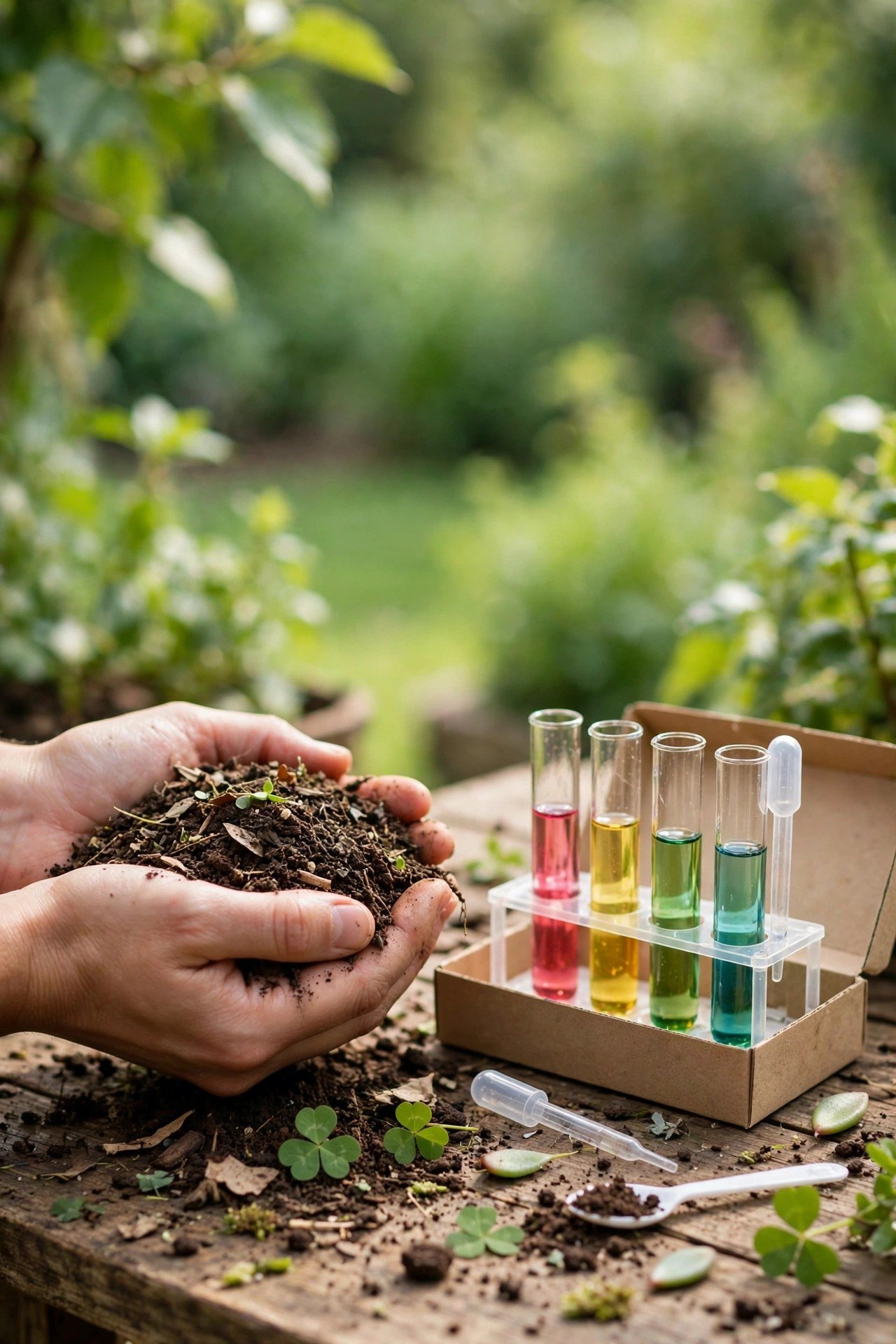
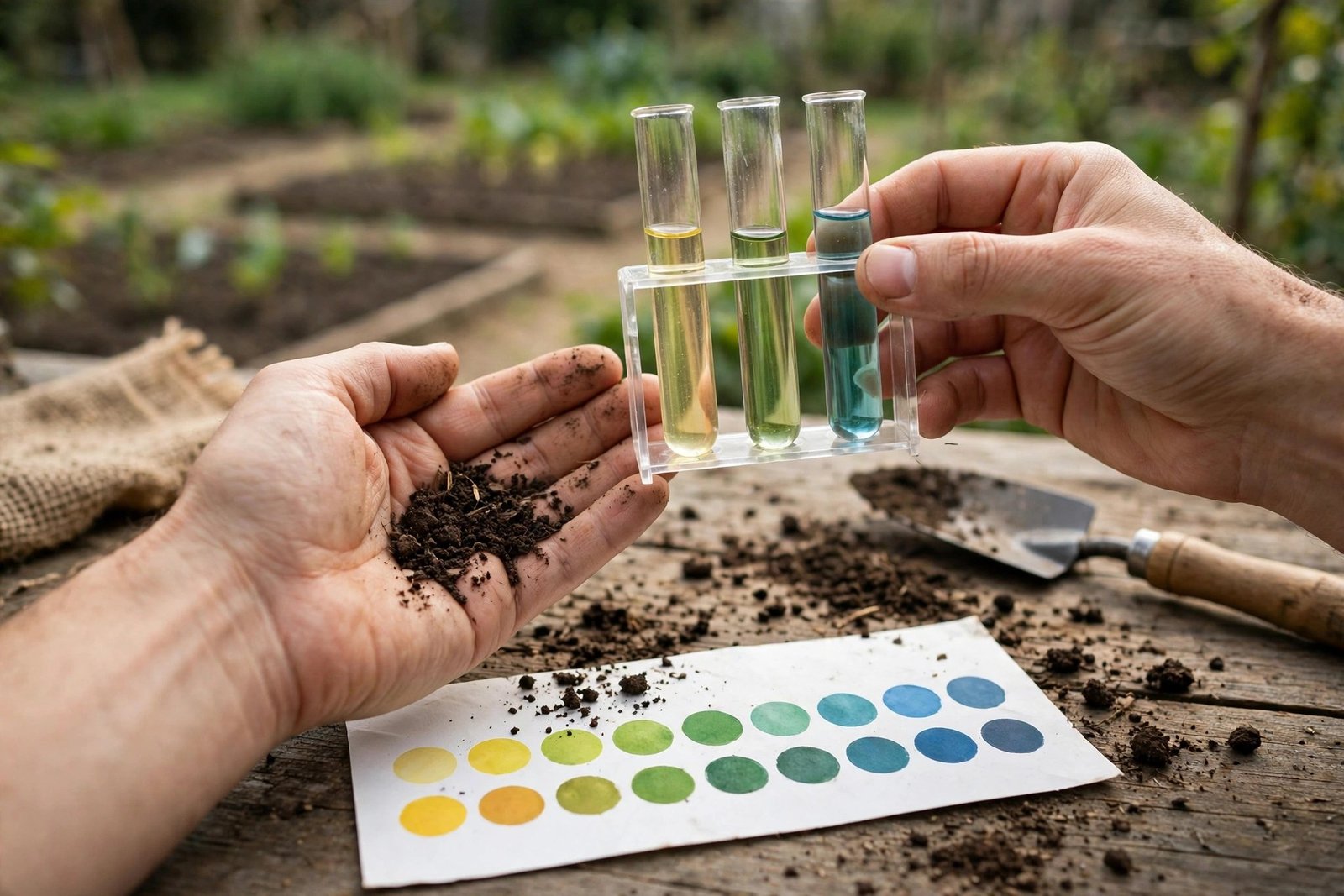
A home soil pH test kit costs little and is the method most gardeners should use: a small test tube, a powder or liquid reagent, and a colour chart.
Scoop a little of your prepared soil into the test tube up to the marked line, add water to the second line, then add the reagent and shake well. Let the tube sit for a few minutes until the liquid settles and the colour develops. Hold the tube against the white part of the colour chart in good daylight and match the colour to the nearest pH value.
Take two readings from the same bed and average them; if they disagree by more than half a point, repeat with a fresh sample.
Method 3: Digital pH Meter or Test Strips
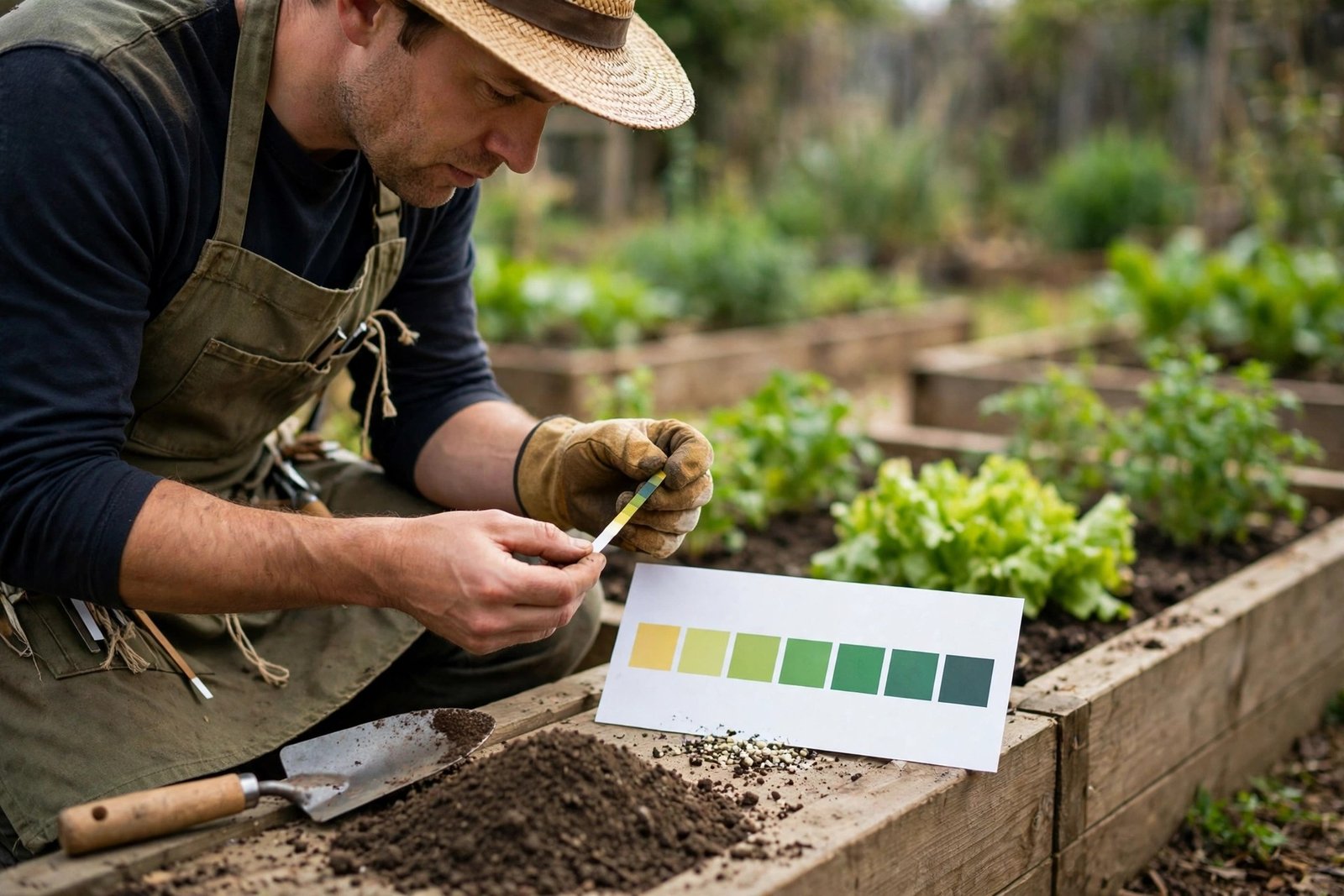
Test strips work like the kit but are quicker: stir soil into distilled water, dip a strip, wait the time the packet states, and compare the colour with the chart. Use distilled water, not tap water, because tap water has its own pH and will shift the reading.
A digital soil pH meter is the fastest option — push the probe into damp soil and read the number. Cheap meters drift, so rinse the probe after every use and check it against a kit reading once a season. If the two disagree by more than 0.5, trust the kit.
How to Read Your Result
- Below 5.5 — strongly acidic. Many vegetables and lawns struggle. Blueberries and azaleas love it.
- 5.5 to 6.0 — moderately acidic. Fine for potatoes, strawberries, and most vegetables, but a little low for brassicas.
- 6.0 to 7.0 — the sweet spot. Most vegetables, herbs, flowers, and lawns grow best here.
- 7.0 to 7.5 — slightly alkaline. Most plants still cope, but iron-hungry plants may yellow.
- Above 7.5 — alkaline. Yellowing leaves, poor growth, and nutrient lockout are common.
A single reading is a snapshot, not a verdict. If the result surprises you, test again from a fresh sample before changing anything. One odd reading is often a sampling mistake, not a soil emergency.
What to Do With the Result
If your soil is too acidic (below 6.0)
Raise the pH with garden lime (ground limestone). For a typical garden bed, scatter about 100 to 200 grams per square metre for a small correction, water it in, and retest after six to eight weeks. Lime works slowly, so do not add more until you have retested. Wood ash also raises pH, but it is strong and variable — use only a light sprinkle.
Check your habits too: heavy use of acidic fertilisers and thick pine-needle mulch can push pH down over time. If your soil is heavy clay, read our guide on how to improve heavy clay soil without replacing it — clay holds acidity and needs the same slow, patient approach.
If your soil is too alkaline (above 7.5)
Lower the pH with elemental sulphur or acidic organic matter. Sulphur is the reliable option: about 50 to 100 grams per square metre, dug lightly into the top few centimetres, then watered in. It takes several weeks to work as soil microbes convert it. Well-rotted compost, pine bark, and composted manure also help gently over time.
Do not try to fix alkaline soil with vinegar or other kitchen acids — the effect lasts days, not months, and it can harm soil life. Hard or alkaline water also nudges pH up with every watering, so retest each season.
If your soil is in the sweet spot (6.0 to 7.0)
Leave it alone. Keep feeding it with compost, mulch sensibly, and retest once a year. Many gardeners damage good soil by “improving” it without a reason. If you are unsure whether your soil texture is helping or hurting, our guide on how to tell if your soil is too sandy, too clay or just right will help.
How Often Should You Test?
Test soil pH at home once a year, in the same season, so you can compare results fairly. Always test before you add lime, sulphur, or a new fertiliser programme — and retest six to eight weeks after any correction, before adding more. Test a new bed before planting it.
Keep a simple note of each result with the date and bed name — over two or three years you will see a trend, and trends beat single readings.
Common Mistakes When Testing Soil pH
Testing wet or freshly fertilised soil. Both skew the reading. Let the sample dry and wait a few weeks after feeding.
Testing only one spot. pH varies across a garden. Mix scoops from several spots in the same bed.
Trusting a single cheap meter reading. Meters drift. Cross-check with a colour-change kit at least once a season.
Over-correcting. Adding too much lime or sulphur at once is harder to undo than adding too little. Correct in small steps and retest.
Testing once and never again. Soil pH changes with rain, watering, mulch, and fertiliser. A yearly retest keeps you ahead of the drift.
Frequently Asked Questions
What is the best pH for a vegetable garden?
Most vegetables grow best between 6.0 and 7.0. Potatoes and sweet potatoes tolerate 5.5, while brassicas such as cabbage and broccoli prefer 6.5 to 7.0. If you grow a mix, aim for 6.5.
Can I test soil pH at home without buying anything?
Yes — the vinegar and baking soda test in this guide uses kitchen items and tells you whether your soil is acidic, alkaline, or near neutral. It will not give you an exact number, so use a kit if you need to correct the pH precisely.
How long does it take to change soil pH?
Lime and sulphur work over weeks, not days. Expect a visible change in six to eight weeks, and the full effect over a season. Retest before adding more.
Does compost change soil pH?
Good compost nudges soil towards neutral over time, which helps both acidic and alkaline soils. It will not fix a strongly acidic or alkaline soil on its own — for that you need lime or sulphur. If your compost is not breaking down properly, see why your compost pile is not heating up.
Why do my plants still look yellow after I fixed the pH?
Yellow leaves can have several causes, and pH is only one of them. The plant may need time to recover, or the nutrients may still be low. Give the plant a few weeks after the correction before judging the result, and check that you are not overwatering.
The Bottom Line
Testing soil pH at home is quick, cheap, and it answers a question that guessing never will: is the soil itself the reason your plants are struggling? Take a proper mixed sample, use the kitchen test for a rough answer or a kit for a number, and correct in small steps, retesting after six to eight weeks. Most gardens only need one test a year — and the plants will show you the difference.