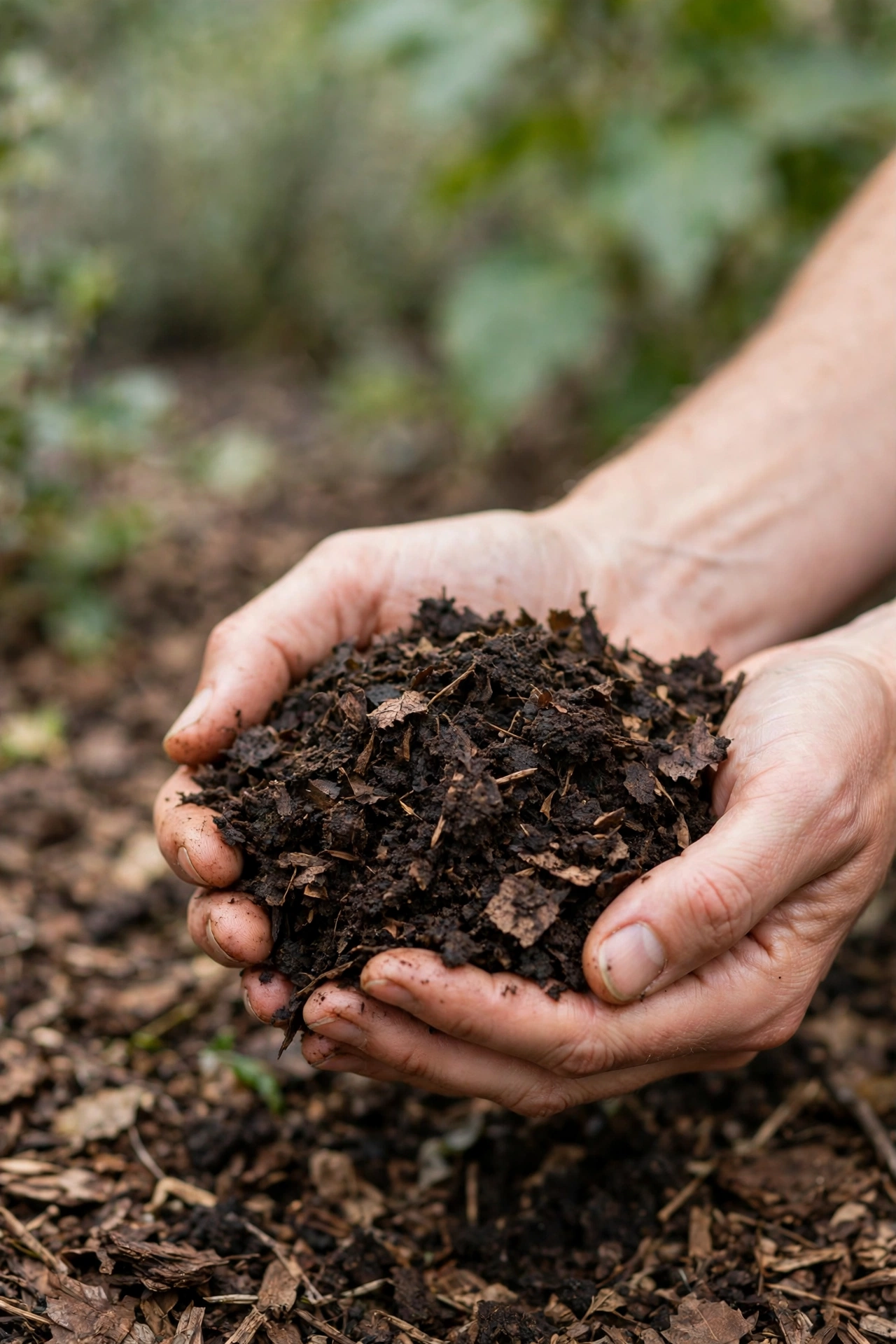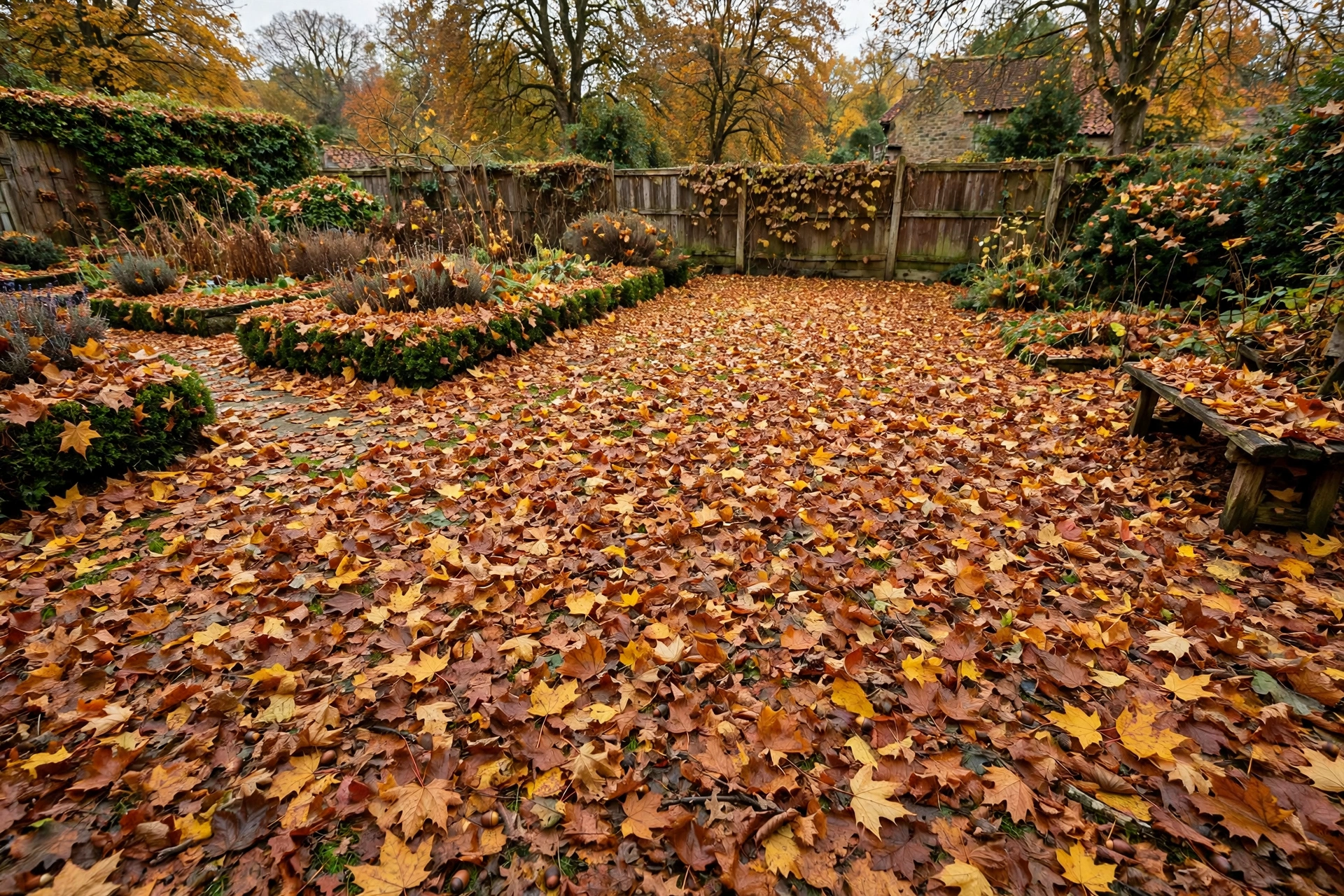
Every autumn, gardens fill with fallen leaves. They cover lawns, fill paths, block drains and pile up against fences. Many gardeners see them only as a problem to clear away, and they spend hours raking, bagging and carrying leaves to the bin. Yet those same leaves are one of the best free materials a garden can have.
Fallen leaves can become leaf mould, a dark, crumbly material that improves soil, holds water and feeds soil life. They can also become mulch, a protective layer that keeps soil moist and stops weeds. The problem is not the leaves themselves. The problem is that most gardeners do not know how to turn them into something useful, so the leaves become a mess instead of a resource.
This guide explains why fallen leaves cause trouble, and how to turn leaf waste into free garden gold, step by step. It covers leaf mould, mulch, common mistakes and answers to the questions gardeners ask most. It is written in simple English, for a normal home garden, with no special tools and no need to buy anything.
Why Fallen Leaves Become a Problem
The first cause is volume. A single large tree can drop thousands of leaves in a few weeks, and they land all at once. A thick layer on a lawn blocks light and air, and the grass underneath turns yellow and weak. Leaves on paths become slippery when wet, and leaves in drains can block water and cause flooding.
The second cause is that leaves rot slowly on their own. A thick, wet pile of leaves can turn slimy, smell bad and attract flies, especially if it contains grass cuttings or food waste. Leaves left in a heap with no air and no care will not turn into good leaf mould. They will simply sit, wet and compacted, for months.
The third cause is the habit of throwing leaves away. When leaves are bagged and taken to the bin, the garden loses the nutrients and organic matter they contain. The soil becomes poorer over time, and the gardener must then buy compost and mulch to replace what was thrown away. Keeping leaves in the garden, in the right form, breaks that wasteful cycle.
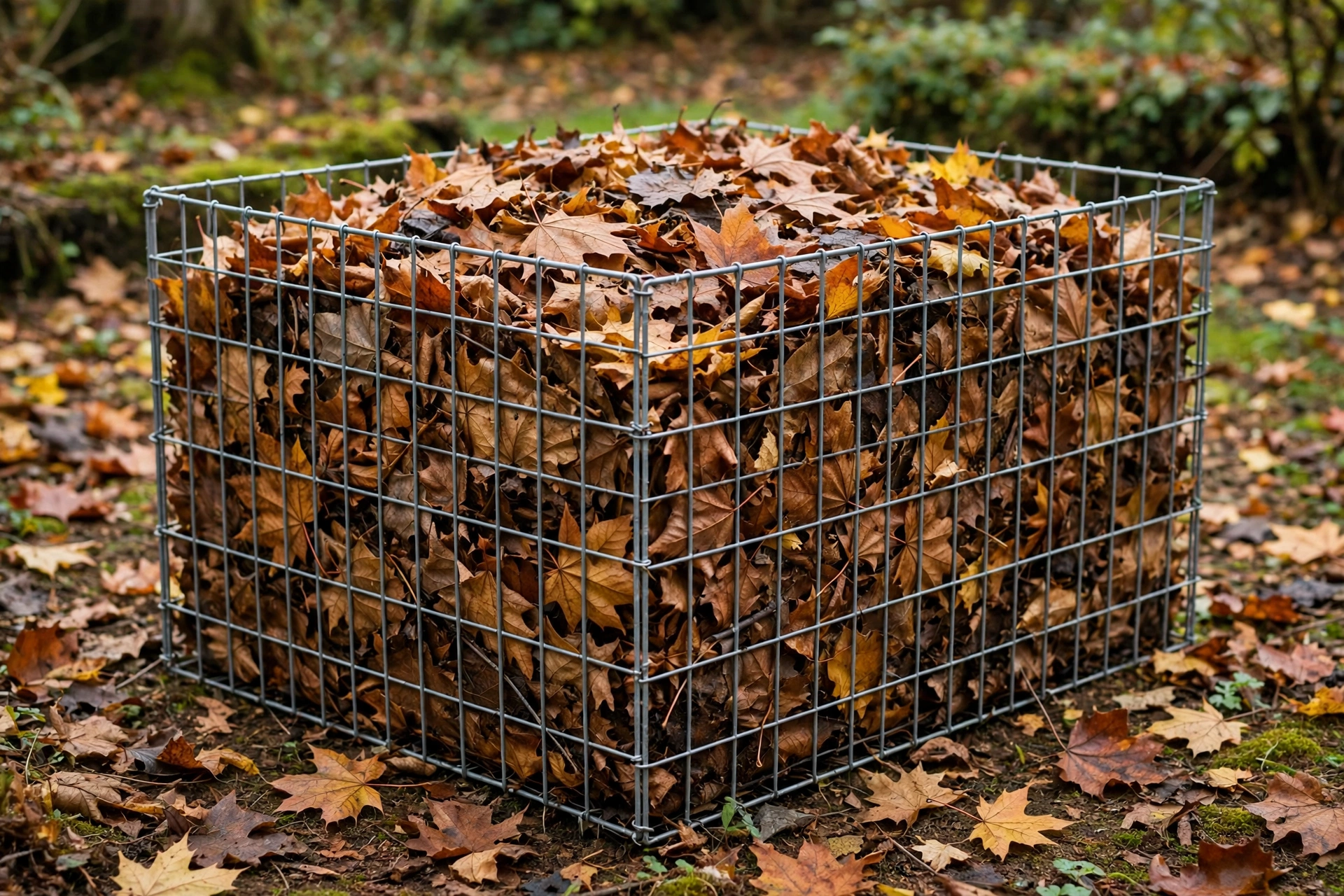
How to Turn Fallen Leaves Into Leaf Mould: Step by Step
Leaf mould is made from leaves alone, with water and time. It is not the same as compost, which needs a mix of green and brown materials. Leaf mould is slower, but it is very simple to make, and it is excellent for improving soil.
- Step 1: Collect the leaves. Rake leaves from lawns and paths, and collect them in a wheelbarrow or a large bag. Remove sticks, stones and rubbish. Leaves from most trees work well, but avoid leaves that are diseased or covered in chemicals.
- Step 2: Shred or crush them if you can. Run a mower over the leaves, or crush them by hand. Smaller pieces rot faster and pack better. This step is helpful, but it is not essential.
- Step 3: Pack them into a bin or bags. Use a wire bin, a wooden frame, or strong bags with holes for air. Pack the leaves down firmly, and water them until they are damp all the way through, like a wrung-out sponge.
- Step 4: Keep them damp and leave them alone. Cover the bin to keep rain off, but check the leaves every few weeks and water them if they dry out. Leaf mould takes six months to two years, depending on the leaf type and the weather. Patience is part of the process.
- Step 5: Use the finished leaf mould. When the leaves have turned dark, crumbly and sweet-smelling, the mould is ready. Mix it into planting holes, spread it over beds, or use it as a light mulch. It improves soil structure and helps soil hold water.
How to Use Fallen Leaves as Mulch
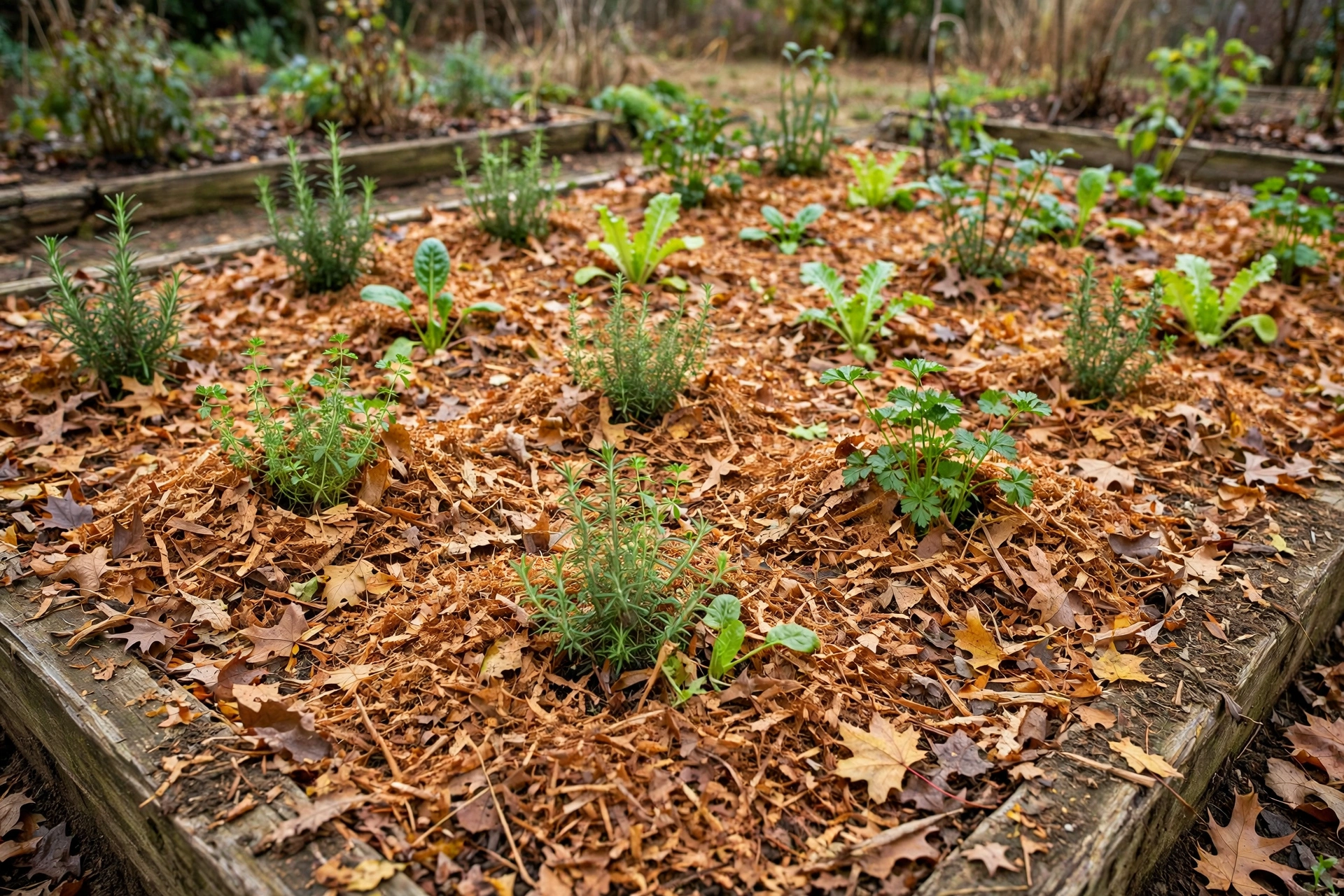
Not all leaves need to become leaf mould. Shredded leaves make an excellent mulch, and they can be used straight away. Spread a layer about five centimetres thick over bare soil in beds and borders, keeping it away from stems and trunks. The mulch will keep soil moist, stop weeds, and protect roots from cold and heat.
Learn how to use mulch correctly before you start, because mulch piled against a stem can cause rot, and mulch that is too thick can block water. Shredded leaves are best for mulch, because whole leaves can mat together and form a layer that water cannot pass through. If you have no shredder, run a mower over the leaves first.
Other Simple Ways to Use Fallen Leaves
Leaves can also be added to a compost heap, in thin layers mixed with green materials such as grass cuttings and kitchen waste. Do not add a thick layer of leaves all at once, because it will block air. Learn to make compost in a small space if you have only a small garden, because the same rules apply: thin layers, air, and a balance of green and brown materials.
A small pile of leaves in a quiet corner can also give shelter to insects, beetles and frogs through the cold months. Keep that pile away from paths and drains, and do not disturb it in winter. It is a simple way to use leaves without any work at all, and it helps wildlife at the same time.
Common Mistakes With Fallen Leaves
Mistake 1: Leaving a thick layer on the lawn. A few leaves on a lawn are fine, but a thick layer blocks light and air, and the grass underneath will die. Rake leaves off lawns regularly, and use them for mould or mulch instead.
Mistake 2: Making a wet, airless pile. A pile of leaves with no air, no drainage and no care will turn slimy and smell bad. Use a bin with holes, keep the leaves damp but not soaking, and do not add food waste. If a compost pile smells, learn how to stop compost from smelling bad and attracting flies, because the same causes, too much water and too little air, apply to leaf piles too.
Mistake 3: Throwing leaves away. Bagging leaves and sending them to the bin wastes a free resource. The garden loses organic matter, and the soil becomes poorer. Keep leaves in the garden, as mould, mulch or compost.
Mistake 4: Using whole leaves as mulch. Whole leaves can mat together into a hard layer that water cannot pass through. Shred them first, or mix them with other mulch materials, so water can reach the soil.
Mistake 5: Expecting leaf mould in a few weeks. Leaf mould is slow. It takes months, not days, and some leaves take up to two years. Plan ahead, make a new batch each autumn, and use the mould from last year while the new batch rots.
Frequently Asked Questions
How long does leaf mould take to make?
Leaf mould usually takes six months to two years. Thin, soft leaves rot faster than thick, tough leaves. Shredding the leaves, keeping them damp, and packing them firmly will all help them rot faster.
Can I use fallen leaves on the garden straight away?
Yes, as shredded mulch. Spread a thin layer over beds, keeping it away from stems. Do not use a thick layer of whole leaves, because it can block water and air. For soil improvement, leaf mould is better than fresh leaves.
Are all fallen leaves safe to use?
Most leaves are safe, but avoid leaves that are diseased, or leaves from trees that have been sprayed with chemicals. If you are unsure, use the leaves for mulch on ornamental beds, not on food crops.
Do fallen leaves harm the lawn?
A thick layer of leaves will harm a lawn, because it blocks light and air. Rake leaves off the lawn regularly. A few leaves left on the lawn, mown into small pieces, are usually fine.
Is leaf mould the same as compost?
No. Leaf mould is made from leaves alone, with water and time, and it is low in nutrients but excellent for soil structure. Compost is made from a mix of green and brown materials, and it is richer in nutrients. Both are useful, and they work well together.
Save This Guide for Later
Pin this guide so you can check the leaf mould steps and the mulching tips again next time leaves cover your garden.