
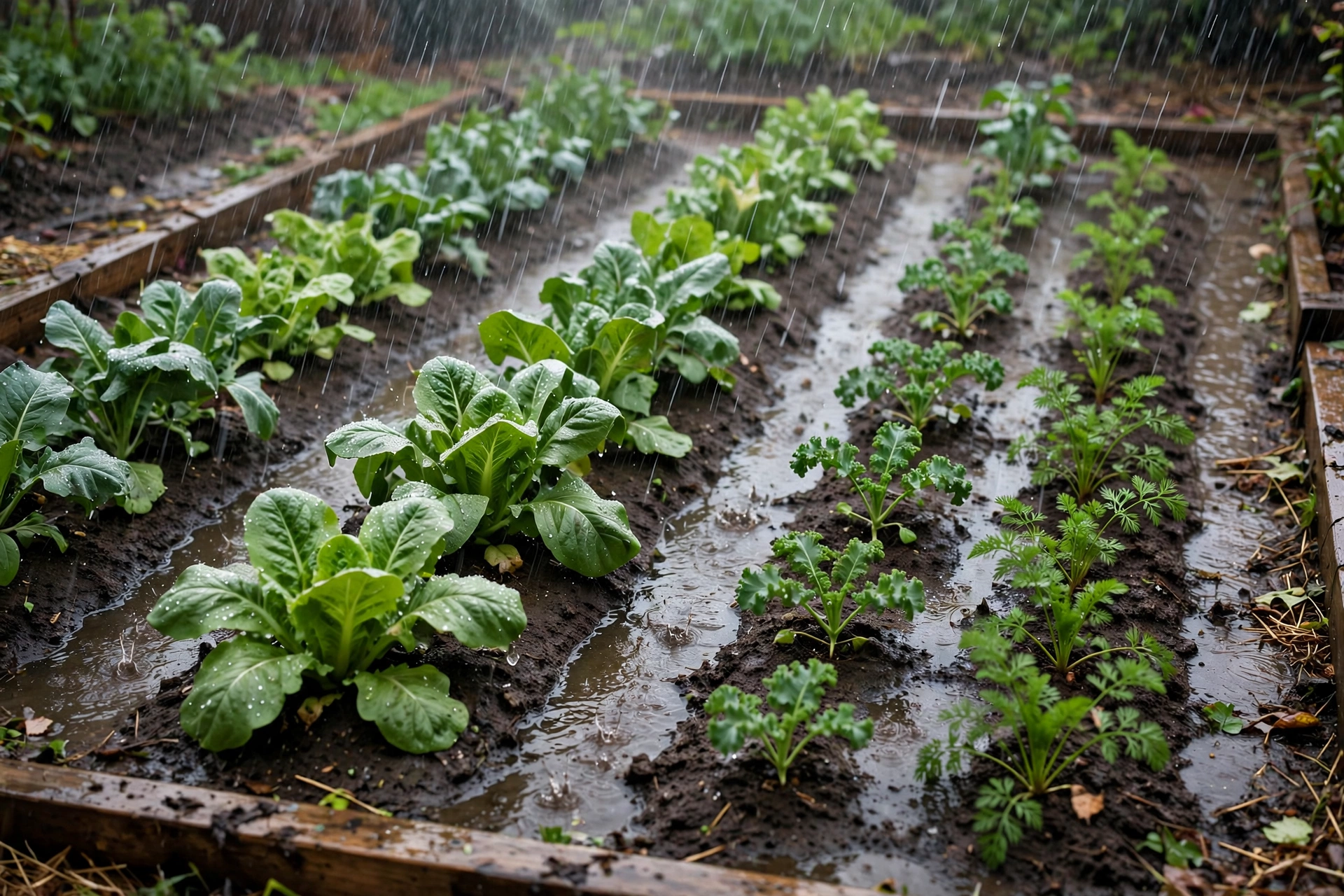
Heavy rain can undo weeks of garden work in a single storm. Beds wash out. Paths turn to mud. Young plants bend and break. Water sits on the soil for days. Roots rot in the wet ground. As a result, many gardeners feel that heavy rain is a problem they cannot control. In fact, most rain damage comes from water that has nowhere good to go. Good heavy rain garden drainage gives that water a safe path. This guide explains how rain damages a garden, why water pools in some spots, and how to fix drainage and cover problems step by step.
What Heavy Rain Does to a Garden
Rain itself is not the enemy. Plants need water. Soil needs water. The problem starts when too much water arrives too fast. Heavy drops hit bare soil with force. They break the surface into small pieces. Then the water carries those pieces away. Fine soil, compost, and seed can wash off a bed in minutes. Leaves and stems take a beating too. Tender growth snaps. Flowers bruise. Fruit splits. After the rain, the damage continues. Puddles sit on the surface. Air cannot reach the roots. Roots in waterlogged soil cannot breathe. They start to rot.
In addition, wet leaves stay damp for hours. That damp air helps fungal diseases spread. Young plants suffer most of all, because their roots are shallow and their stems are soft. Our guide on how to protect young plants from heat, wind, and heavy rain explains covers and supports that help tender plants survive a storm.
Why Water Pools and Beds Wash Away
Water pools where it cannot drain away fast enough. Compacted soil is the most common cause. Feet, wheelbarrows, and heavy rain press soil down over time. Compacted soil has few air spaces. Water cannot sink through it. Instead, it sits on top. Clay soil causes the same problem in a different way. It holds water well, but it drains slowly. After heavy rain, clay beds can stay wet for days. Low spots in the garden collect water too. Water always flows downhill. It gathers in dips, at the base of slopes, and against walls and fences. If a bed sits in one of those spots, it will flood first.
Blocked drains make pooling worse. Leaves, soil, and mulch wash into gutters, channels, and drain covers. Water then has no exit. It backs up and spreads across beds and paths. Bare soil washes away fastest of all. A bed with no mulch and no plant cover has nothing to slow the rain down. Slopes add speed. Water runs faster down a slope. It carries more soil with it. However, the cause is rarely one thing alone. Most gardens have a mix of compacted soil, a low spot, and a blocked drain. Therefore, the fix needs to deal with all three: help water sink in, give it a path away, and protect the soil surface.
Step-by-Step: Drainage and Cover Fixes for Heavy Rain
Start with the easy checks, then move to the bigger jobs. Do the first steps before the next storm if you can. The channel and cover steps take a little longer, but they give the best protection.
Step 1: Watch the water during rain
First, watch your garden during a rainy day. Look from a window or under cover. Note where water flows, where it pools, and where soil washes away. Mark the worst spots with a stick or a stone. Check which beds flood first and which paths turn to mud. This simple watch tells you where to work first. Without it, you may fix the wrong spot. After the rain, walk the garden again. Look for washed-out soil, flattened plants, and standing water.
Step 2: Clear gutters, drains, and paths
Next, clear every drain, gutter, and channel in the garden. Scoop leaves and soil out of gutters and downpipes. Lift drain covers and clear the silt below. Sweep paths so water can run off them. Also, check that downpipes point away from beds and toward a drain or a safe outlet. If a downpipe pours straight onto a bed, move it or add a short pipe to carry water away. This step costs nothing. It often solves half the problem. Do it often, because leaves and soil build up fast in rainy weather.
Step 3: Dig a shallow drainage channel
Now give excess water a path away from your beds. Dig a shallow channel along the low side of a bed or path. Make it about 10 centimetres deep and 15 centimetres wide. Slope it gently so water flows to a drain, a lawn, or a safe low area. Do not point it at a neighbour’s garden or a building. Line the channel with gravel if you have it. Gravel keeps the sides open and stops the channel from silting up. In addition, a gravel channel looks tidy and is easy to clear. Check it after rain. Clear any soil that has washed in, and deepen it if water still pools above it.

Step 4: Improve the soil and raise low beds
Improve drainage from below as well as from above. Fork compacted soil lightly when it is damp, not soaking wet. Work in mature compost. Compost opens up the soil. It creates air spaces that let water sink in. Also, compost feeds soil life. For beds that flood again and again, raise them. Add a low wooden or stone edge. Fill it with a mix of soil and compost, about 15 to 20 centimetres above the old level. Raised beds drain faster. Their roots sit above standing water. However, raised beds dry out faster in hot weather too. Therefore, mulch them well and water them more often when the weather turns warm and dry.
Step 5: Cover delicate beds before a storm
Cover the beds that need it most. Young vegetables, seedlings, and soft flowers suffer most in heavy rain. Push hoops or short stakes into the soil along the bed. Drape a clear plastic cover, a rain cloth, or horticultural fleece over the hoops. Fix the edges with bricks or stones. The cover should slope so rain runs off, not pool in the middle. Leave the ends open on mild days so air can move. Close them when a storm is coming. Remove the cover after the rain so plants can dry. Wet plants under a closed cover can develop disease. A simple hoop cover is cheap, fast to build, and easy to store.

Step 6: Mulch and protect the soil surface
Cover bare soil with mulch. A layer of straw, bark, leaves, or coarse compost about 5 to 8 centimetres thick breaks the force of rain. Drops hit the mulch, not the soil. Water then soaks in slowly instead of washing soil away. In addition, mulch keeps soil moist and feeds soil life. Use coarse mulch in wet gardens. Fine mulch can wash away or form a wet mat. After a storm, check the mulch. Push it back where it has moved. Top it up where it has thinned. Mulch is one of the cheapest forms of rain protection. It also helps in the cold season, when you prepare your garden for the cold season rest period and cover beds for months of wet weather.
Step 7: Help the garden recover after rain
After heavy rain, help the garden recover before the next storm. First, let the soil dry a little. Do not walk on soaking beds. Your feet will compact the soil. Then lift flattened plants gently and support them with stakes or string. Remove leaves that are rotting on the soil. They can spread disease. Check roots that are now exposed. Cover them with soil or compost. Do not feed plants right after a storm. Their roots are stressed. Wait until the soil drains and new growth appears.
Common Mistakes With Heavy Rain and Garden Drainage
One common mistake is digging a channel that points at a house, a wall, or a neighbour’s garden. Water needs a safe outlet. Send it to a drain, a lawn, or a planted low area. Another mistake is covering beds with a flat sheet. Rain pools in the middle. The sheet sags. It crushes the plants below. Always slope a cover so water runs off. A third mistake is working wet soil. Digging or walking on soaking soil compacts it. That makes drainage worse, not better. Wait until the soil is damp, not wet. Many gardeners also forget the drains. They dig a good channel, then leave a blocked gutter above it. Water backs up and floods the bed anyway. Therefore, check drains often in rainy weather, and use coarse mulch on slopes, because fine mulch washes away in the first storm.
Frequently Asked Questions
How can I stop heavy rain from washing soil off my beds?
Cover bare soil with coarse mulch, about 5 to 8 centimetres thick. Mulch breaks the force of rain. It also slows water down. In addition, dig a shallow channel on the low side of the bed. The channel carries excess water away safely.
Should I cover my vegetable beds every time it rains?
No. Light rain helps plants grow. Cover beds only before heavy rain or a storm. Focus on young plants, seedlings, and soft flowers. Remove the cover after the rain so plants can dry and air can move.
What is the best drainage fix for a garden that floods every time?
Start by clearing drains and gutters. Then dig a shallow channel to a safe outlet. Next, improve the soil with compost and raise the worst beds. The three steps work best together.
Can I dig a drainage channel in wet soil?
Yes, for a shallow channel, if you must. Work from a board or a path. Avoid walking on beds. Dig when the rain eases, not during the heaviest rain. For deeper work, wait until the soil is damp, not soaking wet.
How do I protect young plants from heavy rain?
Use hoops and a sloped cover. Fix the edges with bricks or stones. Leave the ends open on mild days. Support tall plants with stakes. Mulch around the base so rain does not splash soil onto leaves. Check plants after the storm and lift any that have fallen.
Heavy rain does not have to ruin your garden. Watch where water goes. Clear the drains. Dig a shallow channel. Improve the soil. Cover delicate beds. Mulch bare soil. Then help the garden recover after each storm. With those steps, heavy rain garden drainage becomes a simple routine. Beds will keep their soil. Plants will stay upright. In addition, the garden will recover faster after every storm.
