Water dripping from a balcony pot is a small problem that quickly becomes a big one. A few drops after watering may not seem serious, but over time the water carries soil down to the balcony below, stains the floor, and leaves muddy marks on walls, railings, and furniture. For the people living below, it is a daily annoyance, and it can damage their plants, their drying clothes, and their outdoor space.
This guide explains how to stop water and soil dripping from your balcony pots for good. You will learn why pots drip, what damage dripping can cause, and a simple step-by-step fix that uses deep trays, careful watering, and better drainage. The fixes are cheap, need no special tools, and work for small herb pots as well as large planters.
Dripping is almost always a sign that something in the watering routine or the pot setup needs to change. It is rarely the plant’s fault. Once you fix the cause, the dripping stops, the balcony stays clean, and the plants still get all the water they need. If your plants also show signs of too much water, our guide to the signs of overwatering will help you check whether you are watering more than the plants can use.
Why Do Balcony Pots Drip?
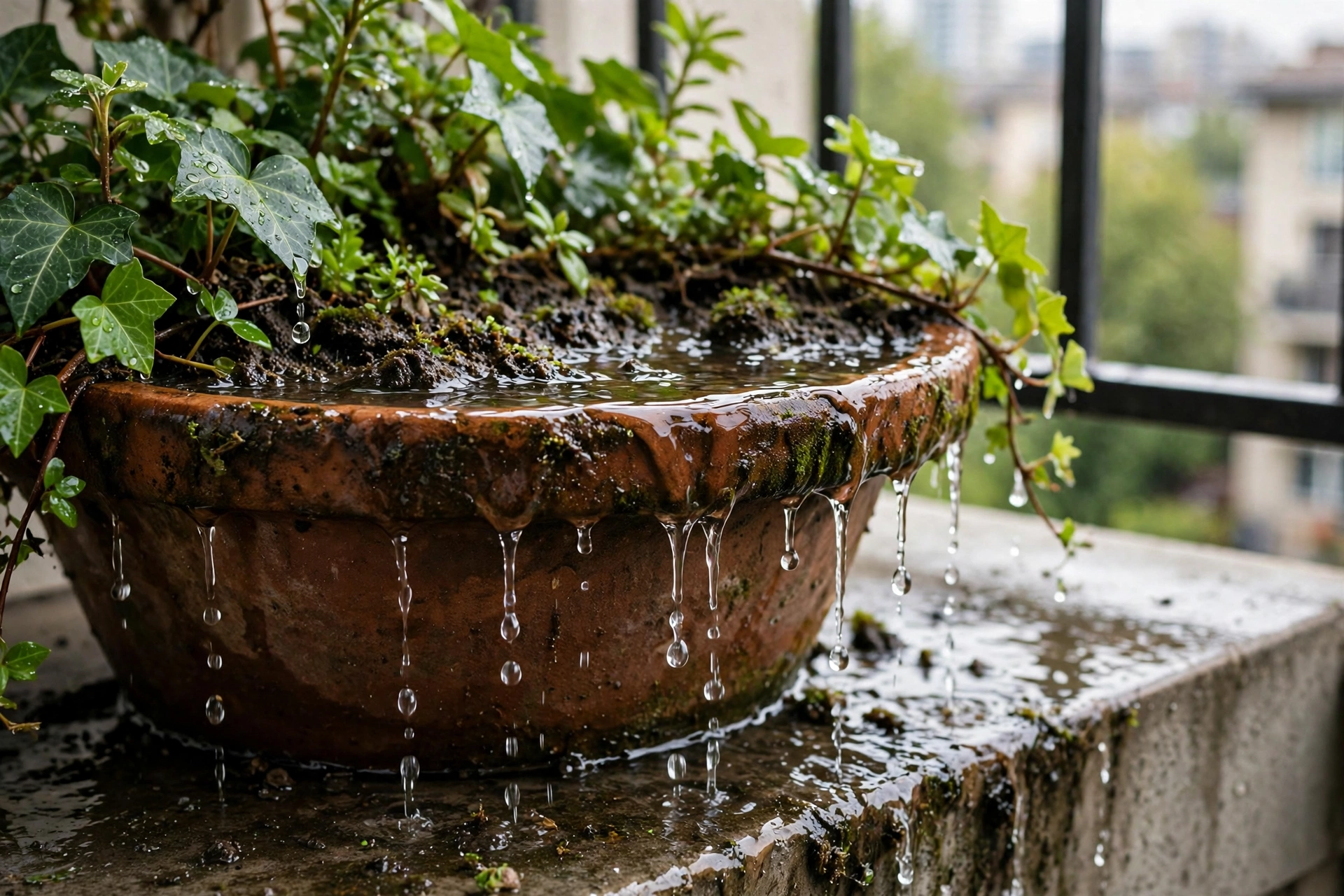
Most dripping starts with too much water at once. When a pot is watered quickly from above, the water runs over the soil surface and out of the drainage holes before the soil can absorb it. It then falls from the balcony edge or runs along the floor to the lowest point, which is often the edge. A pot without a tray has nothing to catch it.
Other causes are just as common. A saucer that is too small overflows after a normal watering. A drainage hole blocked by roots or soil stops water from leaving the pot evenly, so it spills over the rim instead. Soil filled right up to the rim leaves no room for water, so the first drops run straight over the edge. Heavy rain can also fill pots faster than they can drain, and the extra water has to go somewhere.
The soil itself can make dripping worse. Dry potting mix shrinks away from the pot wall and leaves a gap. Water poured on top runs down that gap and out of the bottom without wetting the roots. Loose, light soil washes out of the drainage holes with the water and ends up as mud on the balcony below.
What Dripping Water Can Damage
Dripping water is not just a mess. It stains balcony floors, walls, and railings, and the marks are hard to remove once they dry. A wet floor is slippery, which is a safety problem for anyone walking on the balcony. Soil in the water can block drains and leave grit in corners.
For the people below, dripping water is a daily problem. It can spoil plants on a lower balcony, stain outdoor furniture, and wet clothes left out to dry. Over time it can even damage paint and wood. A small fix on your balcony can prevent a long argument with the people who live below you.
Choosing the Right Tray for Each Pot
A good tray is wider than the pot by at least 2 to 3 cm on each side, so it catches water that runs down the outside of the pot as well as water from the drainage holes. It should be at least 3 to 4 cm deep. Clear plastic trays let you see the water level, while clay trays are heavier and less likely to blow away in wind. For large planters, use a tray on small wheels so you can move the pot and empty the tray easily.

How to Stop Water and Soil Dripping: A Step-by-Step Fix
Work through these steps in order. Most dripping stops after the first two or three, but doing them all gives the best result, especially in heavy rain.
- Put a deep tray under every pot. Choose a tray that is wider than the pot and at least 3 to 4 cm deep. A shallow saucer overflows after one watering, but a deep tray holds the extra water until the soil can absorb it. Empty the tray after half an hour if it is still full.
- Water slowly, at soil level. Pour water in a slow stream close to the soil, and pause often so the soil can absorb it. Watering with a can that has a narrow spout, or a bottle with small holes, gives you far more control than pouring from a jug.
- Check the drainage holes. Turn each pot on its side and look at the holes. Clear away roots, soil, or debris that block them, and make sure the pot sits on small feet or a stand so water can leave freely.
- Lower the soil level. The soil surface should sit 2 to 3 cm below the rim of the pot. If the soil is too high, scoop some out. This gap gives the water room to sit on the surface and soak in, instead of running over the edge.
- Cover the soil surface with mulch. A thin layer of bark, straw, or small stones slows water down, stops soil from splashing out, and keeps the surface from drying into a hard crust. Our guide to using mulch correctly explains how much to use and what to avoid.
- Move pots away from the edge. Keep pots at least a hand’s width from the balcony edge and railings, so any water that does escape lands on your own floor and runs to your drain, not over the side.
- Empty trays after watering and rain. Do not leave pots standing in water for hours. Standing water drowns roots, attracts insects, and overflows in the next rain. Tip the tray out once the soil has had time to drink.

After these steps, water the plants as normal and watch what happens. A little water in the trays is fine — that is what they are for. Water running over the edge means one of the steps was missed, so check the trays, the soil level, and the drainage holes again.
Common Mistakes That Keep Balconies Dripping
These habits look harmless, but each one can keep the dripping going.
- Watering every pot with the same amount, even though small pots and large pots need very different amounts of water.
- Using saucers that are too small, or no saucer at all, because the pot looks better without one.
- Watering from above with a strong stream, which washes soil out of the pot and over the edge.
- Leaving trays full of water, which then overflow the next time it rains.
- Filling pots with soil right up to the rim, leaving no space for water to sit.
- Ignoring blocked drainage holes until water starts spilling over the rim.
Fixing one of these mistakes is often enough to stop the dripping. Fixing two or three makes the balcony dry in almost all weather.
Frequently Asked Questions
How do I stop water dripping from my balcony pots?
Put a deep tray under each pot, water slowly at soil level, and keep the soil 2 to 3 cm below the rim. These three steps stop most dripping. If water still escapes, check that the drainage holes are clear and that the tray is wide enough to catch every drop.
Should I water my balcony plants in the morning or the evening?
Morning is usually better. The plants have the whole day to take up the water, and any water that lands on leaves dries before night. Evening watering is fine too, but water the soil, not the leaves, so the plants do not stay wet overnight. Our guide to morning and evening watering explains the difference in more detail.
Do I need a tray under every pot?
Yes, on a balcony it is the simplest protection. Every pot can drip, even a small one, and a tray catches the water before it reaches the edge. Choose trays that are wider than the pots and deep enough to hold a full watering.
What should I do when it rains heavily?
Move small pots closer to the wall, away from the open edge, and empty the trays as soon as the rain stops. Pots that sit in heavy rain fill up fast, and the extra water runs over the edge. Our guide to stopping heavy rain from ruining your garden has more ways to protect pots in a storm.
Can I still water my plants while I am away?
Yes. Self-watering pots, drip bottles, and wicks can keep the soil moist for several days without any dripping, because they release water slowly at the roots. Our guide to watering plants while you are away explains simple self-watering fixes that work.
A dry balcony is not hard to achieve. Deep trays, slow watering, and a little care with soil levels stop almost all dripping, and the plants grow better too. Fix the setup once, and the balcony below stays clean and dry all season.