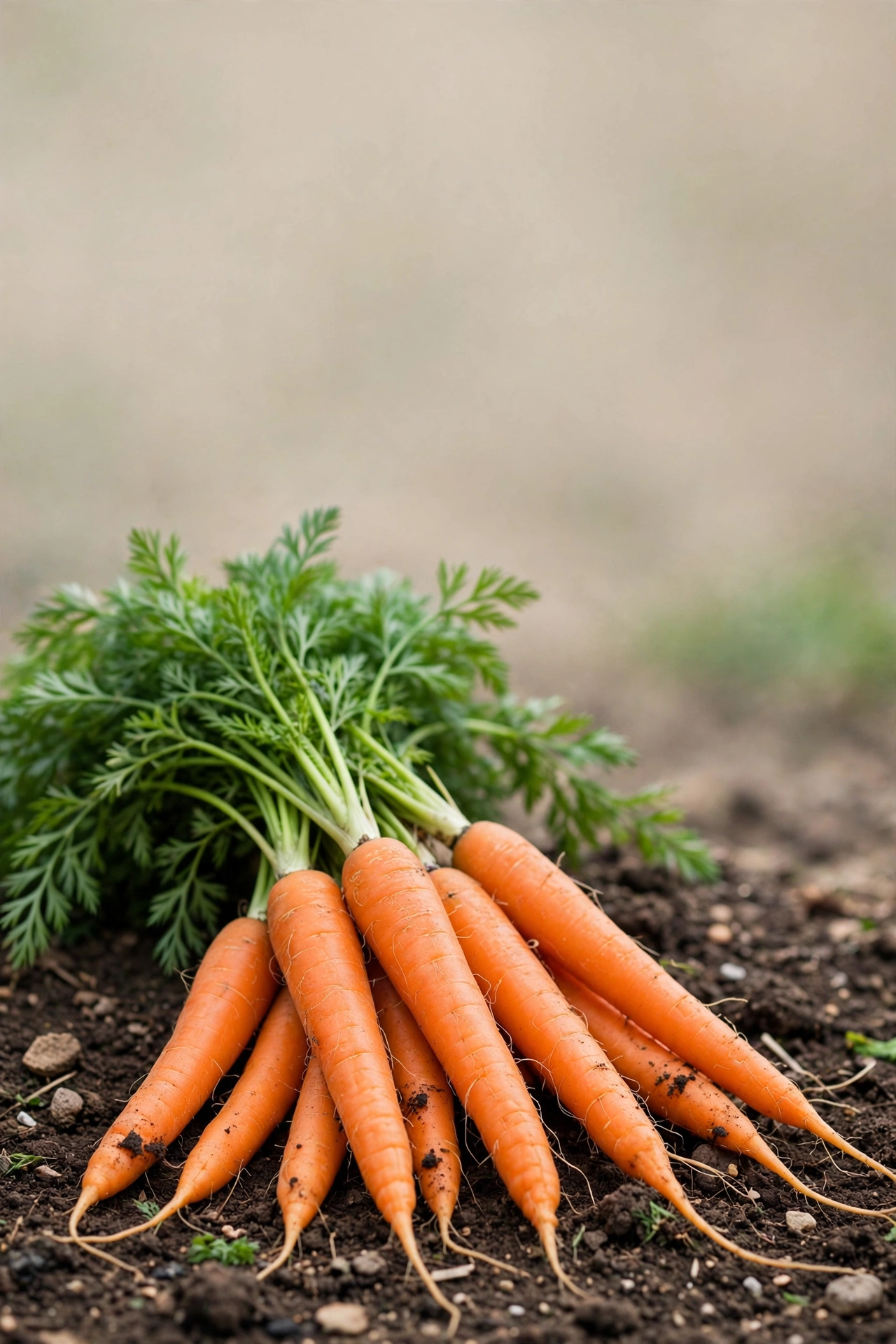
You pull a carrot from the soil and, instead of one long, straight root, you find two or three legs, a bent middle, or a root that splits like a fork. It still tastes like a carrot, and it is still safe to eat, but it is hard to peel and hard to cut into even pieces. If this has happened to you, you are not alone. Forked carrots are one of the most common problems for home growers, and they are almost always caused by something in the soil or in the way the seedlings were started.
The good news is that forked carrots are a fixable problem. A carrot root grows straight down when it can move through soft, deep, even soil without hitting anything hard. When it meets a stone, a lump of fresh manure, a hard layer, or another root, the tip splits or turns, and the root grows around the blockage. That is why two carrots in the same bed can look so different: one found a clear path down, and the other did not.
This guide explains why carrots fork and twist, what the main causes are, and how to grow straight carrots step by step. You do not need special tools or expensive products. You need a deep, loose bed, careful thinning, and steady water.
Why Carrots Fork and Twist
A carrot is a root, and its job is to grow down into the soil to find water and food. The growing tip at the end of the root is soft and sensitive. In good soil it pushes down in a straight line. In hard or blocked soil it cannot push through, so it changes direction. If the tip is damaged, it may split into two or more tips, and each one grows into a separate leg. The result is a forked carrot, a twisted carrot, or a short root that stops growing down and spreads sideways instead.
Forking is not a disease, and it is not caused by a single pest. It is a sign that the root met a problem while it was growing. Once a carrot has forked, you cannot straighten it. The fix is to prevent the problem for the next sowing, by looking at the shape of your carrots and changing one or two things at a time.
What Causes Forked Carrots?
1. Hard, stony, or compacted soil
This is the most common cause. Stones, pieces of wood, lumps of clay, and hard, compacted layers all block the root. Even a small stone can make a carrot split. Carrots need soil that is loose and crumbly to at least the depth of the root you want to grow, usually 25 to 30 centimetres for a full-size carrot. If the soil is hard below the surface, the root will turn or fork when it reaches that layer.
2. Fresh manure or lumpy compost
Fresh manure and rough, unfinished compost can cause forking in two ways. First, lumps block the root, just like stones. Second, fresh manure is rich in nitrogen and can burn or damage the young root tip, which then splits. Use only well-rotted compost that is dark, crumbly, and smells like soil. Mix it into the bed weeks before sowing, and never put fresh manure in a carrot bed.
3. Seedlings grown too close together
Carrot seeds are tiny, and it is easy to sow them too thickly. When seedlings grow shoulder to shoulder, their roots compete for space, water, and food. Crowded roots touch each other, bend, and fork. Thinning feels wasteful, because you pull out young plants, but it is one of the most important steps for straight carrots. Each carrot needs its own space to grow down without pushing against a neighbour.
4. Transplanting carrot seedlings
Carrots do not like to be moved. If you start them in pots and then move them into the bed, the root tip is often bent or damaged during the move, and that damage can cause the root to split into two or more legs. Sow carrot seed directly where it will grow, and do not transplant the seedlings.
5. Uneven water and dry soil
Carrots grow best when the soil stays evenly moist. If the soil dries out and then gets a lot of water, growth can be uneven, and roots may split or crack. Dry soil also becomes hard, which makes it harder for the root to push down. Water deeply and regularly, and keep the surface covered with a thin layer of mulch once the seedlings are strong. A simple moisture routine helps: check the soil with your finger before you water, and water only when the top few centimetres are dry. See our guide How Often Should You Water Garden Beds? A Simple Moisture Routine.
Step-by-Step: How to Grow Straight Carrots
Step 1: Choose a deep, sunny bed
Pick a bed that gets at least six hours of sun a day and has soil at least 30 centimetres deep. A raised bed is a good choice, because you can fill it with loose soil and you know there are no stones or hard layers below. If you grow in the ground, dig the bed over and check the depth with a fork before you sow.
Step 2: Loosen the soil and remove stones
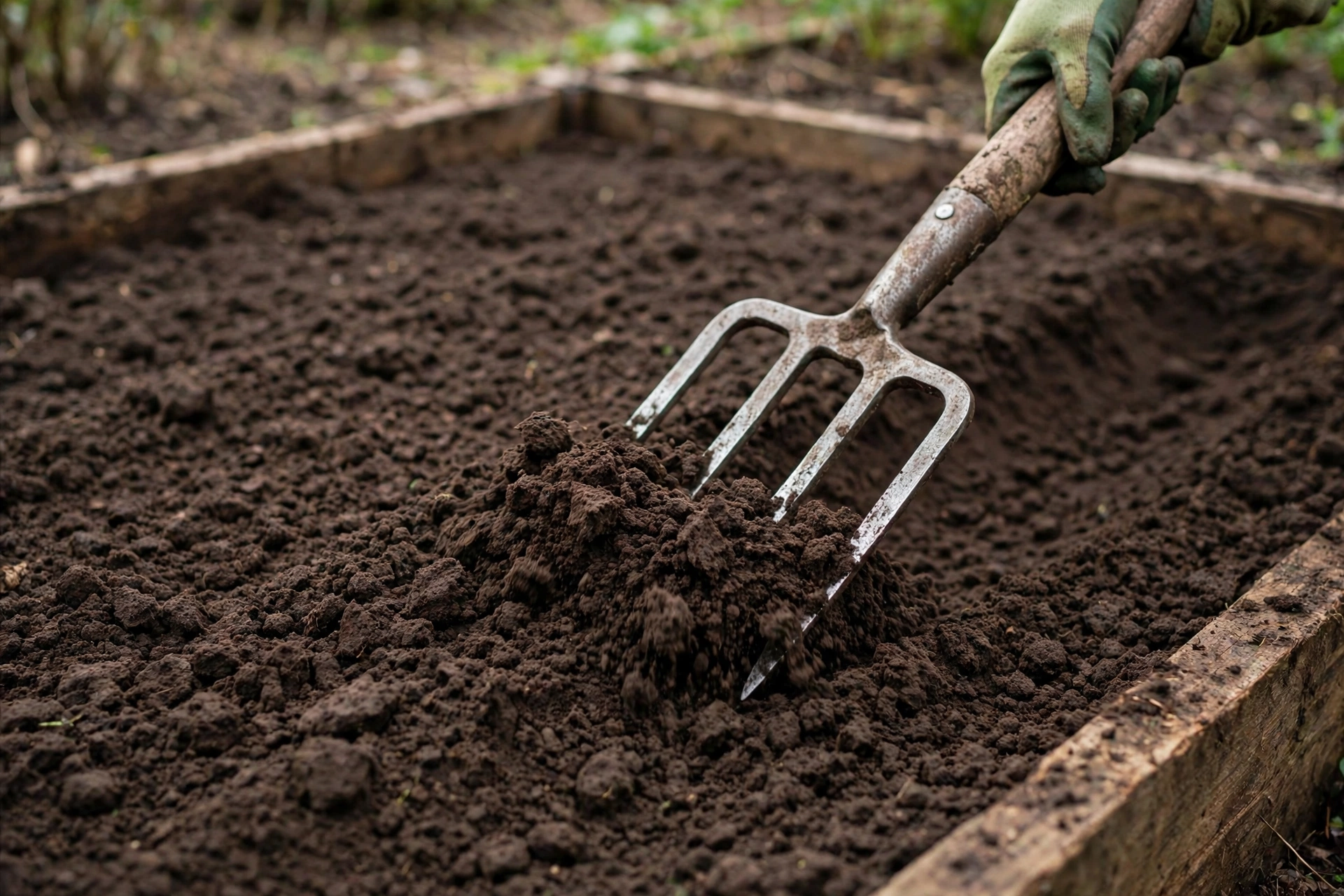
Loosen the soil with a garden fork to a depth of 30 centimetres, and break up any clumps. Pick out stones, roots, and pieces of wood as you work. The soil should feel soft and crumbly when you squeeze a handful. If your soil dries out fast and feels hard between waterings, the guide Why Does My Garden Soil Dry Out So Fast? explains how to hold moisture better. For heavy soil, mix in well-rotted compost that is fully finished and fine. Do not add fresh manure, and do not add sand to clay soil.
Step 3: Sow seed thinly, directly in the bed
Sow the seed directly in the bed in shallow drills about 1 centimetre deep, with rows 20 to 30 centimetres apart. Try to space the seeds about 2 centimetres apart. Mixing the tiny seeds with a little dry sand can help you spread them more evenly. Cover them lightly with fine soil, press the surface gently, and water with a fine spray so the seeds do not wash away.
Step 4: Keep the surface moist until the seeds sprout
Carrot seeds can take two to three weeks to sprout, and they need steady moisture during that time. If the surface dries out, the seeds may fail to sprout, or the young roots may struggle. Water gently each day if the weather is dry, and cover the row with a board or a piece of cloth for the first few days to hold moisture in. Remove the cover as soon as you see green shoots.
Step 5: Thin the seedlings in two stages
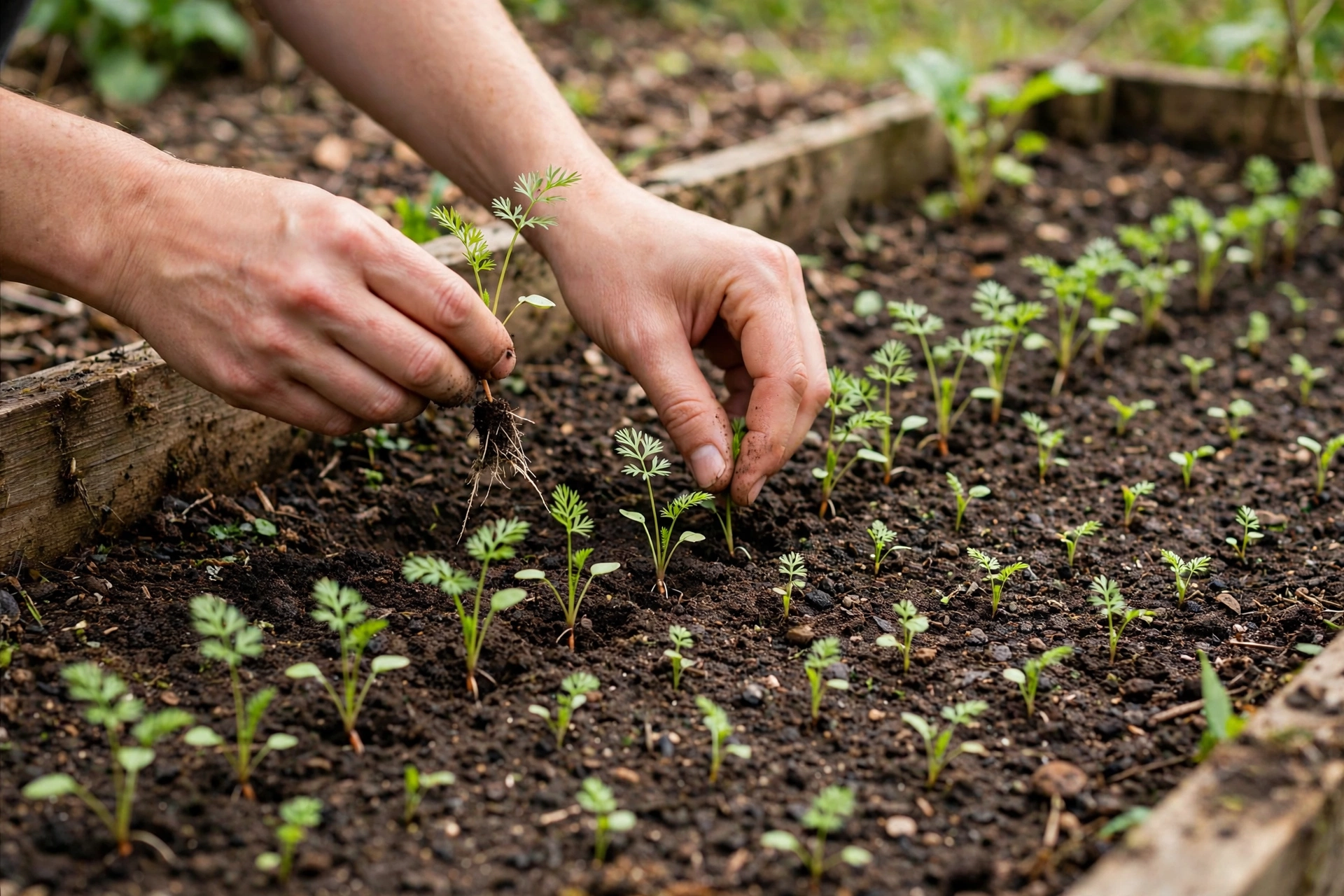
When the seedlings are about 5 centimetres tall, thin them to about 3 centimetres apart. When they are about 10 centimetres tall, thin them again to their final spacing, about 5 to 7 centimetres apart for most varieties. Water the row before thinning so the seedlings pull out easily, and thin in the evening when the plants are less stressed.
Step 6: Water deeply and mulch lightly
Water the bed deeply once or twice a week rather than giving it a light sprinkle every day. Deep watering helps the roots grow down. Push a finger into the soil: if it feels dry 5 centimetres down, it is time to water. Once the seedlings are strong, add a thin layer of mulch around them, keeping it away from the stems. If you want to improve the soil itself, our guide How to Make Compost in a Small Space Without Smell or Mess shows how to make fine, finished compost for beds.
Step 7: Harvest at the right time
Most carrots are ready 70 to 80 days after sowing, depending on the variety. Check the packet for the expected size and days to harvest. Water the bed the day before harvest so the soil is soft, then pull the carrots straight up, holding the leaves close to the base. If a carrot resists, loosen the soil with a fork first.
Common Mistakes That Cause Forked Carrots
The most common mistake is skipping the soil preparation and sowing into hard, stony ground. A second mistake is using fresh manure or rough compost in the carrot bed. A third is sowing too thickly and never thinning, which leaves the roots crowded and bent. A fourth is transplanting seedlings from pots, which damages the root tip. A fifth is watering only the surface, so the top stays wet while the deeper soil stays dry and hard. Small-space growers face the same problems in pots: a pot that is too shallow will force the root to turn at the bottom. Use a deep container and loose mix, as explained in How to Grow Vegetables in a Tiny Space Without a Garden. Fix these five mistakes, and most forked carrots will disappear.
Frequently Asked Questions
Can you eat forked carrots?
Yes. Forked carrots are safe to eat and taste the same as straight carrots. They are just harder to peel and cut. Wash them well, cut off the forked parts, and use them in soups, stews, or grated dishes where shape does not matter.
Will forked carrots grow straight if I leave them longer?
No. Once a carrot has forked, the shape is set. Leaving it in the ground will only make it bigger, not straighter. Harvest it and use it, then fix the soil and spacing for the next sowing.
Do short carrot varieties fork less?
Short, round, or stump-rooted varieties often do better in shallow or heavy soil, because they do not need to grow as deep. If your soil is hard to improve, try a short variety first while you work on loosening a deeper bed.
Does fresh manure really cause forked carrots?
Yes, fresh manure is a common cause. It can damage the root tip and it often contains lumps that block growth. Use only well-rotted compost or manure that has aged for many months, and mix it into the bed well before sowing.
How deep should the soil be for straight carrots?
Aim for loose soil at least 30 centimetres deep for full-size carrots. Short varieties need less, about 20 centimetres. In a raised bed or a deep pot, you can control the depth and the soil quality much more easily than in heavy ground.