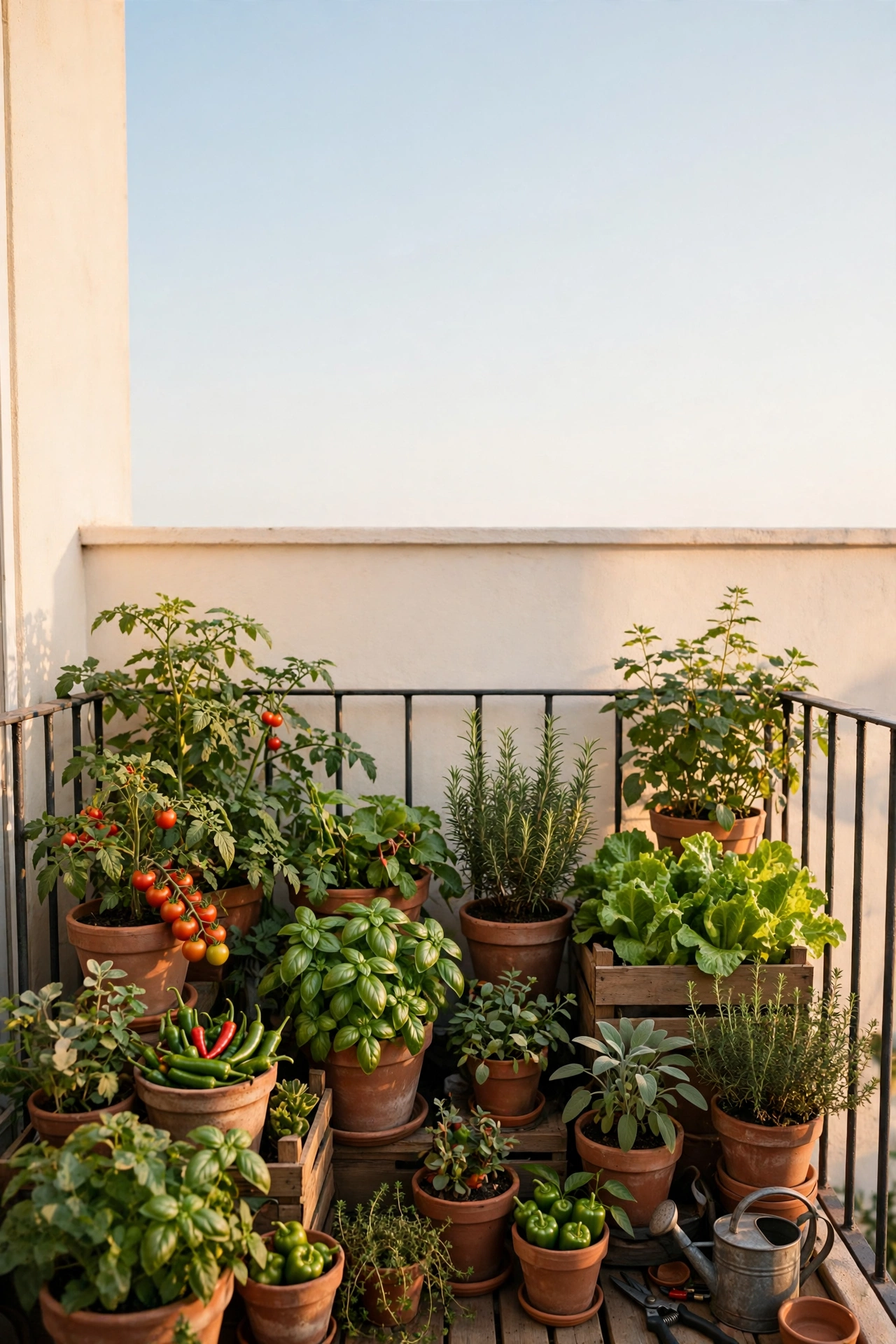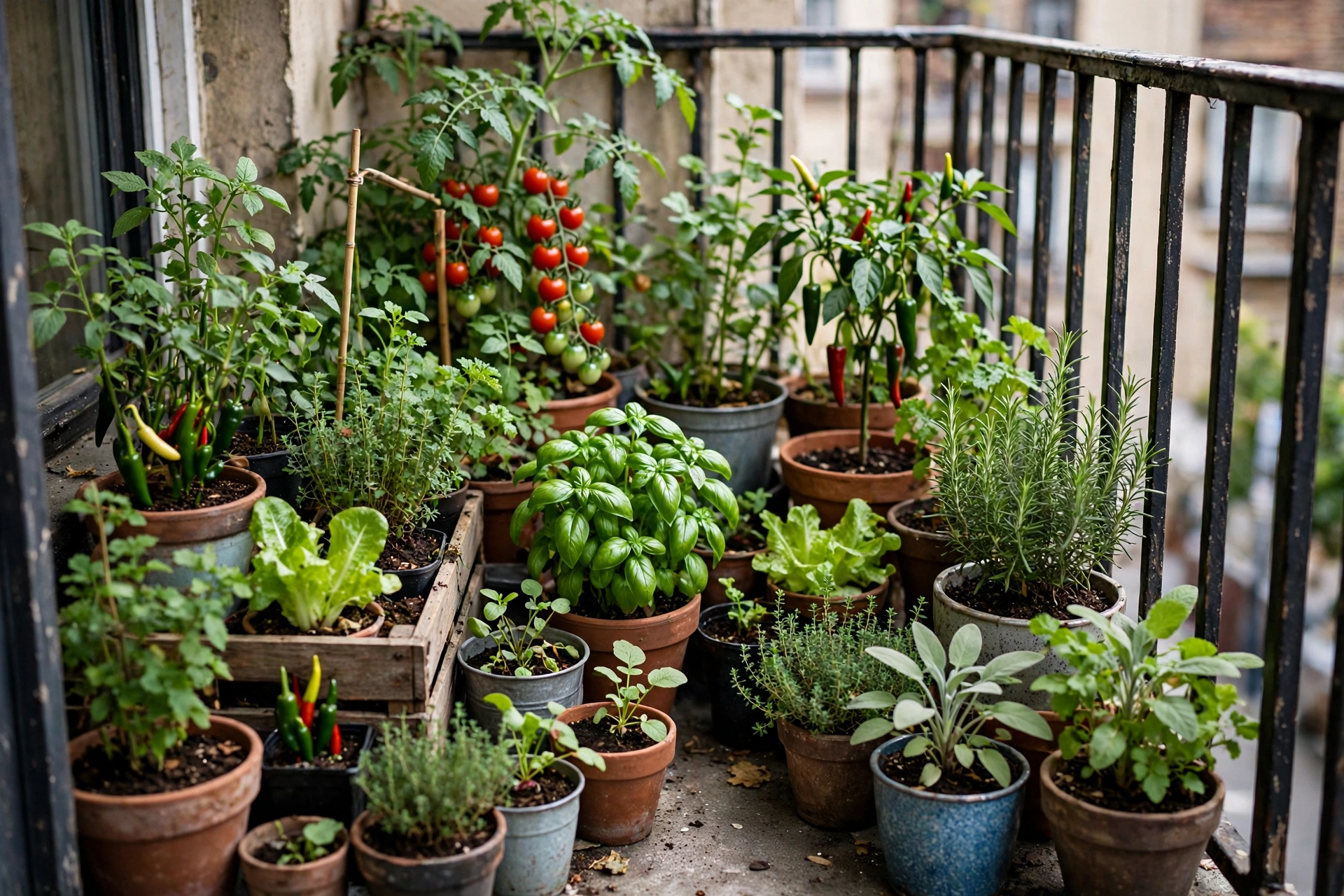
A tiny balcony, a narrow windowsill or a small paved corner can still grow real food. The problem is not the size of the space. Most vegetable advice is written for a garden bed, where roots can spread, soil stays moist for longer and plants have room to grow. In a pot, everything is smaller, faster and less forgiving, so the same advice often fails.
When a tomato plant stops growing, a lettuce plant bolts or a herb pot dries out by midday, it is easy to think that growing vegetables in a tiny space is not possible. In most cases, the plants are not the problem. The containers are too small, the light is weaker than it looks, or the watering routine does not match how fast a pot dries out. Once those three things are fixed, even a space of one or two square metres can produce salad leaves, herbs, tomatoes, chillies and beans through the growing season.
This guide explains how to grow vegetables in a tiny space without a garden, step by step. It covers how to choose the right crops, how to use light and vertical space, how to water and feed plants in pots, and how to avoid the mistakes that waste the most space and time.
Why Growing Vegetables in a Tiny Space Feels So Hard
Small-space growing fails for a few clear reasons, and most of them can be changed without expensive equipment. The first reason is pot size. A small pot holds a small amount of soil, and a small amount of soil holds a small amount of water and nutrients. A plant that would be comfortable in a garden bed becomes root-bound in a small pot, dries out quickly and stops growing.
The second reason is light. A balcony may feel bright, but a wall, a railing or a building opposite can block direct sun for most of the day. Most fruiting vegetables need at least six hours of direct sun to grow well. Leafy vegetables and herbs can manage with less, but they still need bright light. Without enough light, plants grow tall and weak and set little fruit.
The third reason is water. Pots dry out much faster than garden soil, especially in sun and wind. A pot that is wet in the morning can be dry by the afternoon. A pot without drainage holes can also stay wet at the bottom while the surface looks dry, which leads to root problems. Balcony plants dry out fast for the same reasons, and the fix is the same: larger pots, better soil and a regular check of moisture below the surface.
Step-by-Step: How to Grow Vegetables in a Tiny Space
Step 1: Measure Your Light Before You Choose Crops
Watch the space for one or two days and note how many hours of direct sun it receives. Direct sun means sunlight falling on the plants, not just bright daylight. A spot with six hours or more is best for fruiting crops. A spot with three to five hours is better for salad leaves, spinach, lettuce and herbs. A spot with less than three hours is best used for herbs such as mint, parsley and chives, which can cope with partial shade. Choose crops that match the light you actually have. If the sunniest spot is near the railing, put the fruiting crops there and move the leafy crops to the shadier corner.
Step 2: Choose Compact Crops That Suit Pots
Good choices for a tiny space include salad leaves, spinach, spring onions, radishes, herbs, bush beans, dwarf peas, chillies, compact tomatoes and small peppers. These crops grow well in pots, produce food over a long period and do not need a large root system. Avoid large crops that need a lot of space, such as pumpkins, large cabbages and sweetcorn, unless there is a very large container and a strong support. A compact tomato plant in a large pot is a better choice than a tall tomato plant squeezed into a small pot.
Step 3: Use the Largest Pots You Can Fit
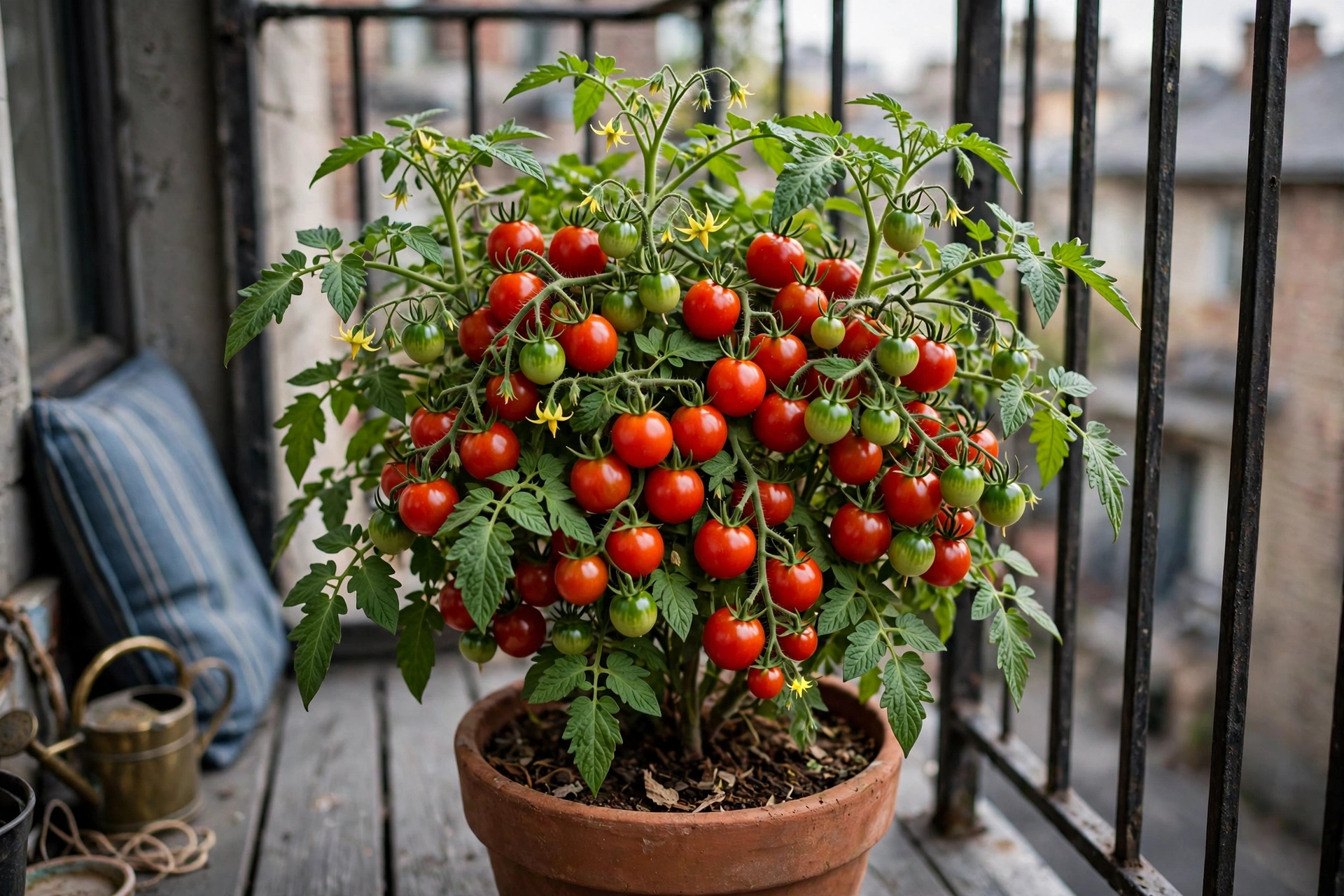
Salad leaves and herbs need pots at least 15 to 20 centimetres deep. Chillies, peppers and bush beans need pots at least 25 to 30 centimetres deep and wide. A single tomato plant needs a pot at least 30 to 40 centimetres deep and wide, with at least 20 litres of soil. Larger pots dry out more slowly, hold more nutrients and give roots room to grow. Every pot must have drainage holes. Place a saucer under the pot, but empty it after watering so the plant is not left standing in water. Light-coloured pots stay cooler in sun than dark pots, which helps roots on a hot balcony.
Step 4: Fill Pots With Good Potting Mix, Not Garden Soil
Garden soil is too heavy for pots. It compacts, drains poorly and can carry pests and weed seeds. Use a good-quality potting mix made for containers. It should feel light and crumbly when damp, hold moisture without staying soggy and let excess water drain away. Mix in a small amount of compost to add nutrients and improve moisture retention. Leave two or three centimetres between the surface of the mix and the rim of the pot, so water stays in the pot instead of running over the edge.
Step 5: Grow Upwards to Make More Space
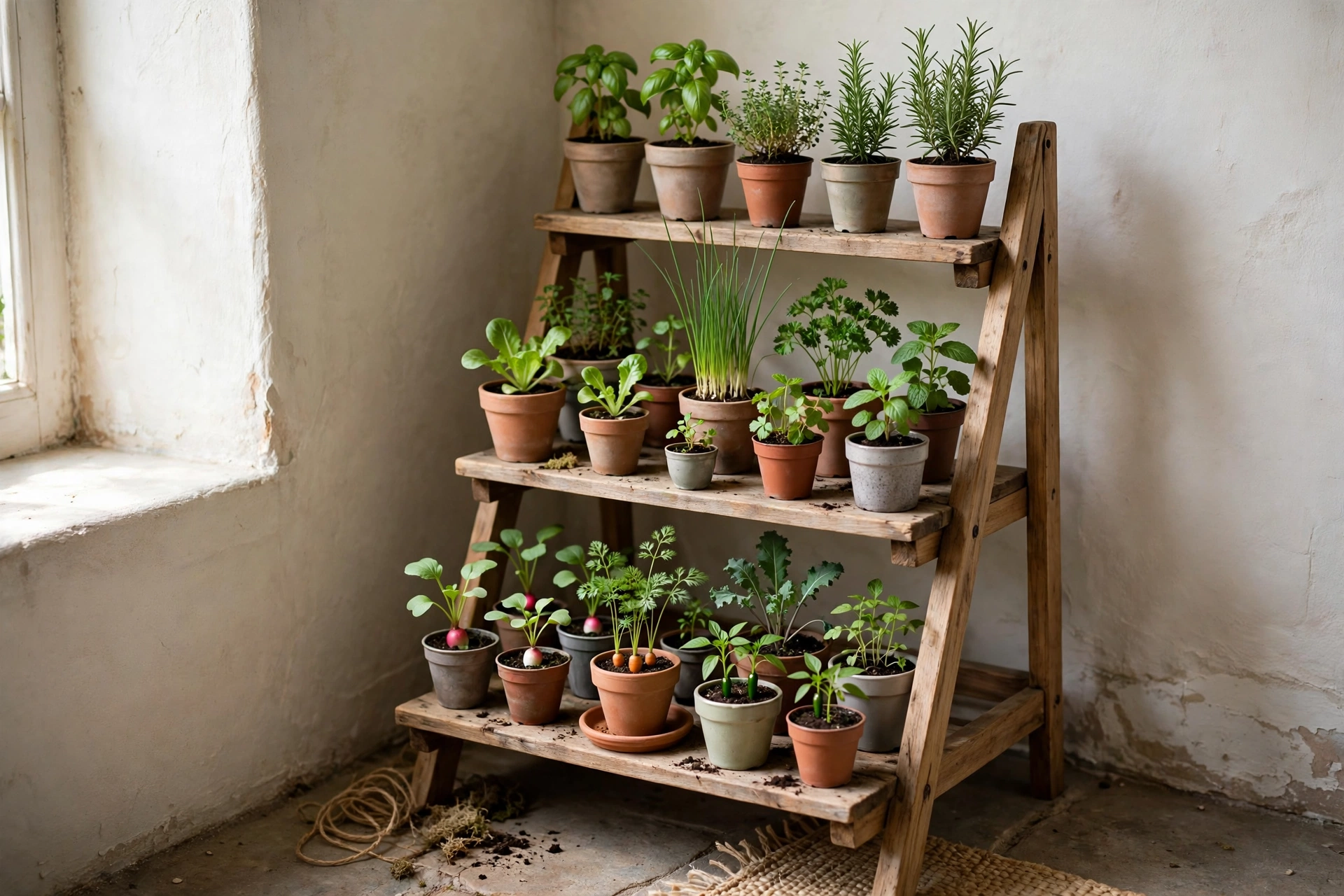
Vertical space is free space. Use a tiered stand, wall-mounted planters, hanging pots, a trellis or a sturdy shelf to grow more plants in the same floor area. Climbing beans, peas and cucumbers can grow up a trellis instead of spreading across the floor. Herbs and salad leaves can grow on a shelf or in wall planters, leaving the floor for larger pots. Arrange vertical planters so that tall plants do not shade small plants. Put the tallest plants at the back, keep small plants in front where they can still receive sun, and leave gaps between pots so air can move.
Step 6: Water Deeply and Check the Soil, Not the Surface
Check the soil by pushing a finger two or three centimetres into the mix. If it feels dry at that depth, water. If it feels damp, wait. Water slowly until water comes out of the drainage holes, then stop. This encourages roots to grow down into the pot instead of staying near the surface. In hot or windy weather, pots may need water every day, sometimes twice a day for small pots. In cooler weather, they may need water only every few days. A simple moisture routine works just as well for pots: check first, then water only when the soil needs it. If time away from home is a problem, self-watering fixes for watering plants while away can keep pots moist for several days.
Step 7: Feed Little and Often, and Harvest Regularly
Plants in pots use up the nutrients in potting mix quickly, because watering washes nutrients out of the drainage holes. Feed with a balanced liquid feed made for vegetables, following the label instructions, usually every one to two weeks during the growing season. Do not overfeed, because too much feed can damage roots and produce soft, weak growth. Harvest regularly. Pick salad leaves from the outside of the plant so new leaves keep growing from the centre. Pick beans, peas and chillies as soon as they are ready, because regular picking encourages the plant to produce more.
Common Mistakes That Waste Space in a Tiny Vegetable Garden
The most common mistake is planting too much in one pot. One tomato plant in a large pot will produce more than three tomato plants crowded into the same pot. Follow the spacing on the seed packet or plant label, even if the pots look empty at first. Young plants grow fast and fill the space.
Another mistake is using pots without drainage holes, or pots that are too small for the crop. A plant that dries out every afternoon will never grow well, no matter how much it is fed. A larger pot is one of the cheapest and most effective improvements in small-space growing.
A third mistake is watering only the surface. A light sprinkle wets the top centimetre of soil and leaves the roots dry. Water slowly and deeply, and check the moisture below the surface before watering again.
Frequently Asked Questions
Can vegetables really grow well in pots on a tiny balcony?
Yes, many vegetables grow well in pots if they have enough light, a large enough pot, good potting mix and regular water. Salad leaves, herbs, chillies, bush beans and compact tomatoes are reliable choices. The harvest will be smaller than from a garden bed, but it can still be useful and fresh through the season.
What is the smallest pot size for growing vegetables?
It depends on the crop. Salad leaves and herbs can grow in pots 15 to 20 centimetres deep. Chillies and bush beans need pots at least 25 to 30 centimetres deep. A tomato plant needs a pot at least 30 to 40 centimetres deep and wide, with at least 20 litres of soil. In general, a larger pot is better than a smaller one.
How often should vegetables in pots be watered?
Check the soil two or three centimetres below the surface. If it is dry, water deeply until water comes out of the drainage holes. In hot, sunny or windy weather, this may be every day. In cooler weather, it may be every few days. Small pots dry out faster than large pots.
Do vegetables in pots need feeding?
Yes. Nutrients in potting mix are used up quickly and washed out by watering. Feed with a balanced liquid vegetable feed every one to two weeks during the growing season, following the label instructions. Do not overfeed, because too much feed can damage roots.
What vegetables grow best with only a few hours of sun?
Salad leaves, spinach, lettuce, spring onions and herbs such as mint, parsley and chives can grow with three to five hours of direct sun. Fruiting crops such as tomatoes, peppers and chillies need at least six hours of direct sun, so they should go in the sunniest spot available.