

Container plants drying out or drowning can be confusing. One week the soil is dry and cracked, the leaves are limp and the plant looks thirsty. The next week the same plant is sitting in wet soil, the leaves turn yellow and the roots start to rot. Both problems can happen to the same plant, in the same pot, in the same month. The plant is not difficult on purpose. It is telling you that the water balance is wrong.
Finding the balance means giving the roots enough water to grow, without leaving them wet for too long. It sounds simple, but pots make it harder than garden beds. A pot holds a small amount of soil, so it dries out fast in sun and wind. At the same time, a pot with poor drainage can hold water at the bottom long after the surface looks dry. This guide explains why container plants drying out or drowning happens, how to find the cause in your own pots, and how to fix it step by step.
Container Plants Drying Out or Drowning: Why It Happens
The first cause is pot size and material. A small pot holds little soil and little water, so it dries out in a few hours on a hot, sunny balcony. A dark pot absorbs heat and dries out even faster. A very large pot can cause the opposite problem. If the plant is small and the pot is much too large, the soil stays wet for a long time because the roots cannot use the water fast enough.
The second cause is soil. Potting mix that is too light and sandy dries out quickly and water runs straight through it. Potting mix that is heavy, compacted or old holds water and lets little air reach the roots. Roots need both water and air. When the soil is always wet, air is pushed out and roots can rot. When the soil is always dry, roots cannot take up water or nutrients.
The third cause is drainage. A pot without drainage holes traps water at the bottom. A pot with holes can still stay wet if the holes are blocked by soil, roots or a saucer full of water. A saucer left full after watering keeps the bottom of the pot wet, even if the top of the soil looks dry.
The fourth cause is the watering habit. Watering a little every day often wets only the surface. The top looks damp, but the roots below stay dry. Watering too much at once, or watering on a fixed schedule without checking the soil, can flood the pot. Weather changes the need for water every day, so a fixed schedule rarely works. Balcony plants dry out fast for the same reasons, and the same checks help here too.
Step-by-Step: Finding the Watering Balance
Step 1: Check the Soil Below the Surface
Push a finger two or three centimetres into the soil. If it feels dry at that depth, the plant needs water. If it feels damp, wait. If it feels wet and cold, do not water at all. Also lift the pot if you can. A dry pot feels light, and a wet pot feels heavy. This simple check is more reliable than looking at the surface, because the surface can dry out in a few hours while the soil below is still damp. A simple moisture routine based on this finger test works well for containers too. This check is the first step to stop container plants drying out or drowning.
Step 2: Check the Drainage Holes
Turn the pot on its side, or lift it carefully, and look at the drainage holes. They should be open and clear. If soil, roots or debris block them, clear them gently with a stick. Water the pot and watch what happens. Water should start to come out of the holes within a short time. If no water comes out, the soil may be so dry that it has shrunk away from the sides of the pot, or so compacted that water cannot pass through.
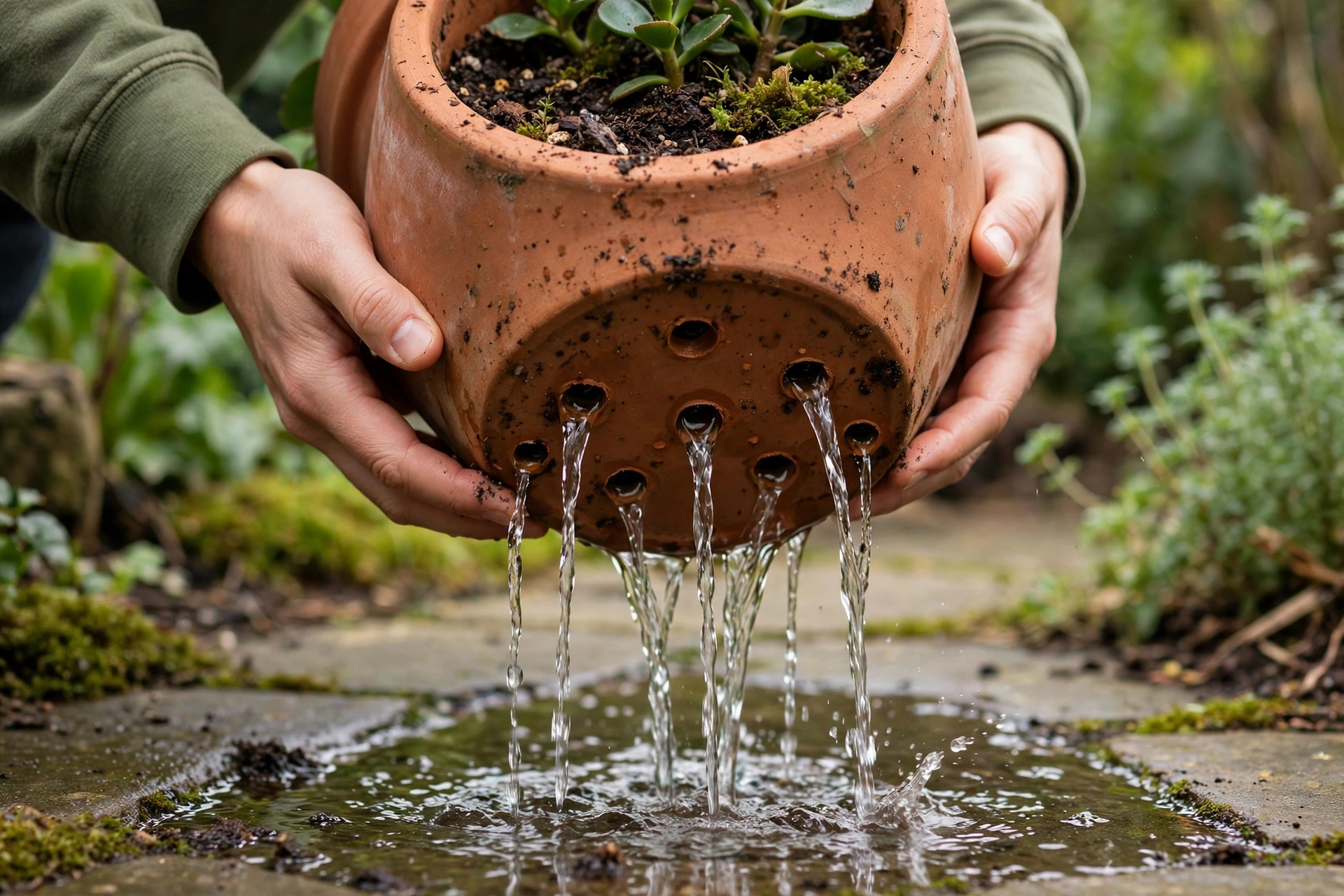
Step 3: Water Slowly and Deeply
When the soil is dry, water slowly, in small amounts, and pause between pours so the water can soak in. Water until it starts to come out of the drainage holes, then stop. This is deep watering. It wets the whole root zone and encourages roots to grow down. A quick sprinkle only wets the surface and does not help the roots. If the soil is very dry, water in two rounds, with a few minutes between them, so the dry mix can absorb the water instead of letting it run down the sides. Deep watering is the simplest fix for container plants drying out or drowning.
Step 4: Empty the Saucer
After watering, wait ten to fifteen minutes, then empty the saucer under the pot. A plant left standing in water will keep its roots wet for hours. This is one of the most common causes of drowning in containers. The only exception is a plant that needs constantly damp soil, and even then, a saucer full of water for a whole day is too much. If the saucer fills again quickly, the pot was watered too much.
Step 5: Match the Pot to the Plant
Choose a pot that is only slightly larger than the root ball when repotting. A pot that is one or two sizes larger is enough. Use a pot with drainage holes, and use a light, free-draining potting mix. For plants that need to stay moist, add compost to the mix to hold water. For plants that need to dry out between waterings, add perlite or coarse sand to improve drainage. A larger pot is not always better, and a smaller pot is not always worse. The right pot is one that dries out at a steady rate, over one to three days, in normal weather.
Step 6: Use Self-Watering Pots and Mulch for Steady Moisture
Self-watering containers have a water reservoir at the bottom and a wick or soil column that draws water up as the plant needs it. They keep moisture steady and are useful for plants that dry out quickly, and for people who cannot water every day. Fill the reservoir, check it every few days, and do not let the soil stay wet for weeks without a break. A layer of mulch on the surface of the soil, such as bark, straw or compost, also slows evaporation and keeps the soil temperature steadier. That steady moisture helps prevent container plants drying out or drowning.

Step 7: Adjust for Sun, Wind and Season
Pots in full sun and wind dry out much faster than pots in shade or shelter. Move pots to a more sheltered spot if they dry out every day, or group pots together so they shade each other and reduce wind. In hot weather, water in the early morning so the plant has water for the day. In cooler weather, water less often and check the soil first. Self-watering fixes for watering plants while away can help when the weather changes suddenly or when you are away for a few days.
Common Mistakes That Cause Drying Out or Drowning
The most common mistake is watering on a schedule instead of checking the soil. A plant watered every day in cool, cloudy weather will drown. A plant watered once a week in hot, windy weather will dry out. Check the soil first, then decide.
Another mistake is using a pot without drainage holes, or a saucer that is never emptied. Water needs a way out. Without it, the bottom of the pot stays wet and roots can rot, even if the surface looks dry. Root rot often starts this way, with yellow leaves, a bad smell from the soil and roots that are dark and soft.
A third mistake is watering only the surface. A light sprinkle does not reach the roots. Water slowly and deeply, and check that water comes out of the drainage holes. If the plant wilts even when the soil feels damp, check the roots and the drainage, because balcony plants can wilt even when watered when the roots are damaged or the soil is waterlogged.
A final mistake is repotting into a pot that is far too large. A small plant in a huge pot sits in wet soil that it cannot use. Repot gradually, one size at a time, and let the plant fill the pot before moving it to a larger one.
Frequently Asked Questions
Why does my container plant dry out every day?
Container plants drying out or drowning every day usually means the pot is too small, the soil is too light, or the plant is in full sun and wind. A larger pot, a potting mix with compost, a layer of mulch and a more sheltered spot will all slow drying. Check the soil below the surface before watering, and water deeply when it is dry.
How do I know if I am overwatering a container plant?
Yellow leaves, soft stems, a bad smell from the soil and leaves that fall off easily are common signs. The soil stays wet for days, and the pot feels heavy. Stop watering, empty the saucer, check the drainage holes and let the soil dry out before watering again.
Should I water container plants every day?
Not always. It depends on the pot size, the plant, the soil and the weather. In hot, sunny weather, small pots may need water every day. In cooler weather, the same pots may need water only every few days. Check the soil two or three centimetres below the surface and water only when it is dry.
Do self-watering pots stop plants from drying out?
They help a lot, because they keep moisture steady and let the plant take water as it needs it. They are useful for thirsty plants and for people who cannot water every day. They do not replace checking the soil. If the reservoir is always full and the soil is always wet, the plant can still drown.
Can a drowned container plant recover?
Sometimes, yes, if the problem is caught early. Stop watering, empty the saucer, move the plant to a bright, airy spot and let the soil dry out. Remove yellow or dead leaves. If the roots are dark, soft and smell bad, the plant may need to be repotted into fresh, free-draining mix, with damaged roots trimmed away. If most of the roots are gone, recovery is unlikely.
