
You water in the morning, and by the afternoon the soil is dry again. The surface turns pale, cracks appear, and the plants wilt even though you watered them only a few hours ago. Soil that dries out too fast is a common problem, and it is rarely caused by a lack of water alone. The soil itself is not holding the water you give it.
This guide explains why garden soil dries out so fast, how to find the cause in your own garden, and the fixes that help soil hold moisture for longer. The steps are simple, they use materials most gardeners already have, and they work for beds, borders, and pots.
How to Tell If Your Soil Dries Out Too Fast
Healthy soil stays damp for a while after watering. It feels cool and dark a few centimetres below the surface, and it holds together loosely when you squeeze it. Soil that dries too fast feels dry and dusty at the surface within a few hours of watering, and it may be dry several centimetres down by the next day.
Try a simple test. Water the soil well in the morning, then check it the next morning. Push a finger into the soil. If it is dry more than 5 cm down, and the plants are wilting, the soil is not holding moisture well. Also look at the surface: a pale, cracked, or dusty surface is a sign that water is leaving the soil too fast.
Why Garden Soil Dries Out So Fast
1. Sandy Soil
Sandy soil has large particles and large gaps between them. Water runs through it quickly, like water through a sieve, and the soil dries out within hours. Sandy soil also holds few nutrients, so plants in it often look pale and hungry as well as thirsty.
2. Low Organic Matter
Organic matter, such as compost and rotted leaves, acts like a sponge in the soil. It soaks up water and releases it slowly to the roots. Soil with little organic matter cannot hold water, and it dries out fast. This is common in new beds, in soil that has been dug over many times, and in soil where all the leaves and plant material are cleared away.
3. Bare Soil in Sun and Wind
Bare soil loses water fast. Sun heats the surface, and wind carries the moisture away. A bed with no mulch, no ground cover, and no shade can dry out in a single hot day, even if the soil underneath is good.
4. Shallow Watering
Watering little and often only wets the top few centimetres of soil. The water dries out quickly, and the roots stay near the surface, where the soil is driest. Deep, less frequent watering trains roots to grow down, where the soil stays moist for longer.
5. Compacted or Hard Soil
Hard, compacted soil is a common cause of dry beds. Water runs off the surface instead of soaking in, so the soil below stays dry even after rain or watering. If water pools on the surface or runs off the bed, compaction may be the problem. The guide on how to fix soil that is too hard for planting explains how to loosen it step by step.
6. Pots and Raised Beds
Pots and raised beds dry out faster than soil in the ground. They have less soil, more surface area, and more exposure to sun and wind. Small pots can dry out in a few hours on a hot day. This is normal, but it means pots need more frequent watering and more mulch than beds in the ground.
Step-by-Step Fix: Help Soil Hold Moisture
- Water deeply first. Water the bed slowly until the soil is damp at least 15 cm down. Use a slow flow, or water in two rounds with a short break between them, so the water soaks in instead of running off.
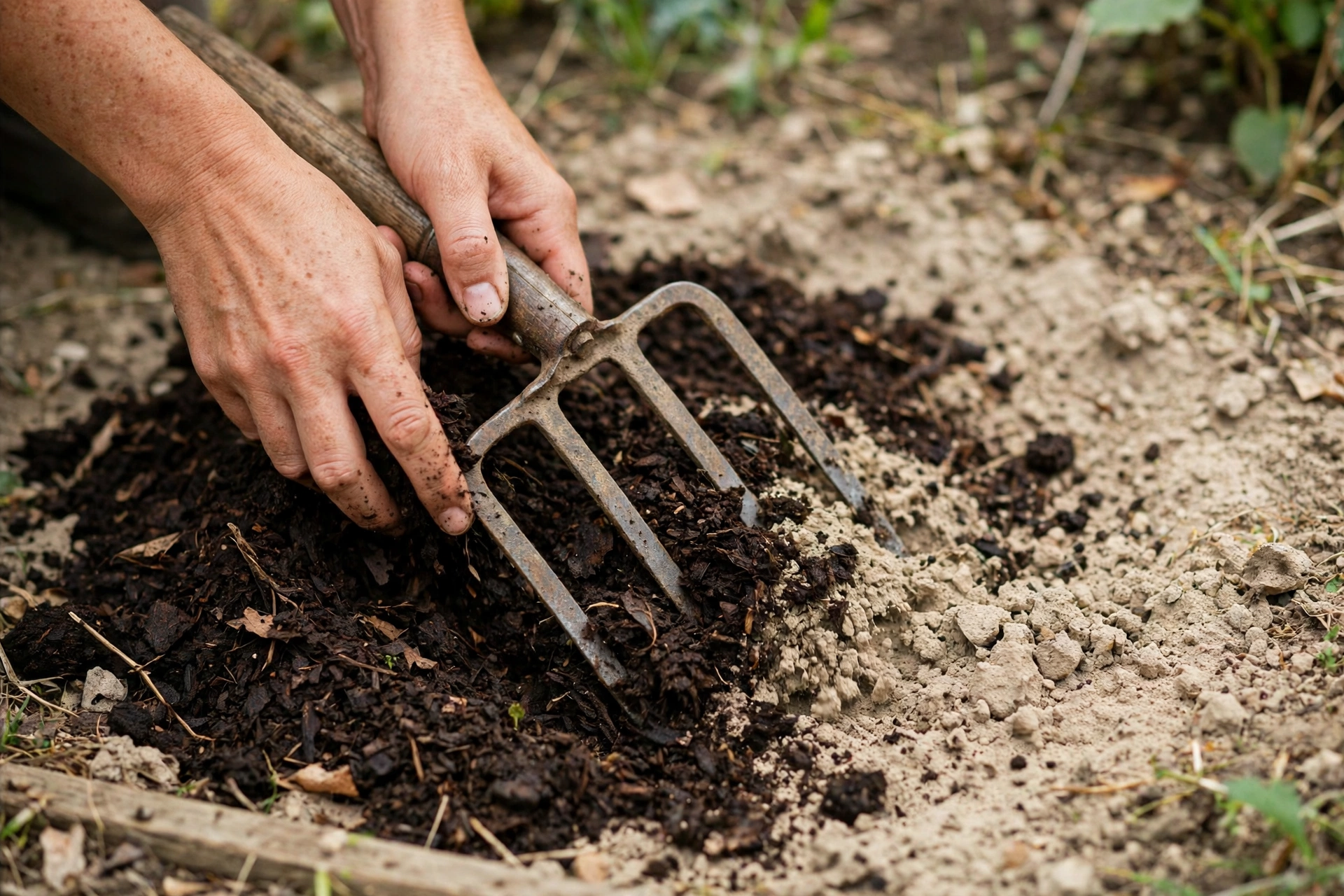
- Add compost. Spread 5 to 8 cm of compost over the bed, and mix the top few centimetres into the soil with a fork. Compost adds organic matter, which holds water like a sponge. Repeat this at least once a year.
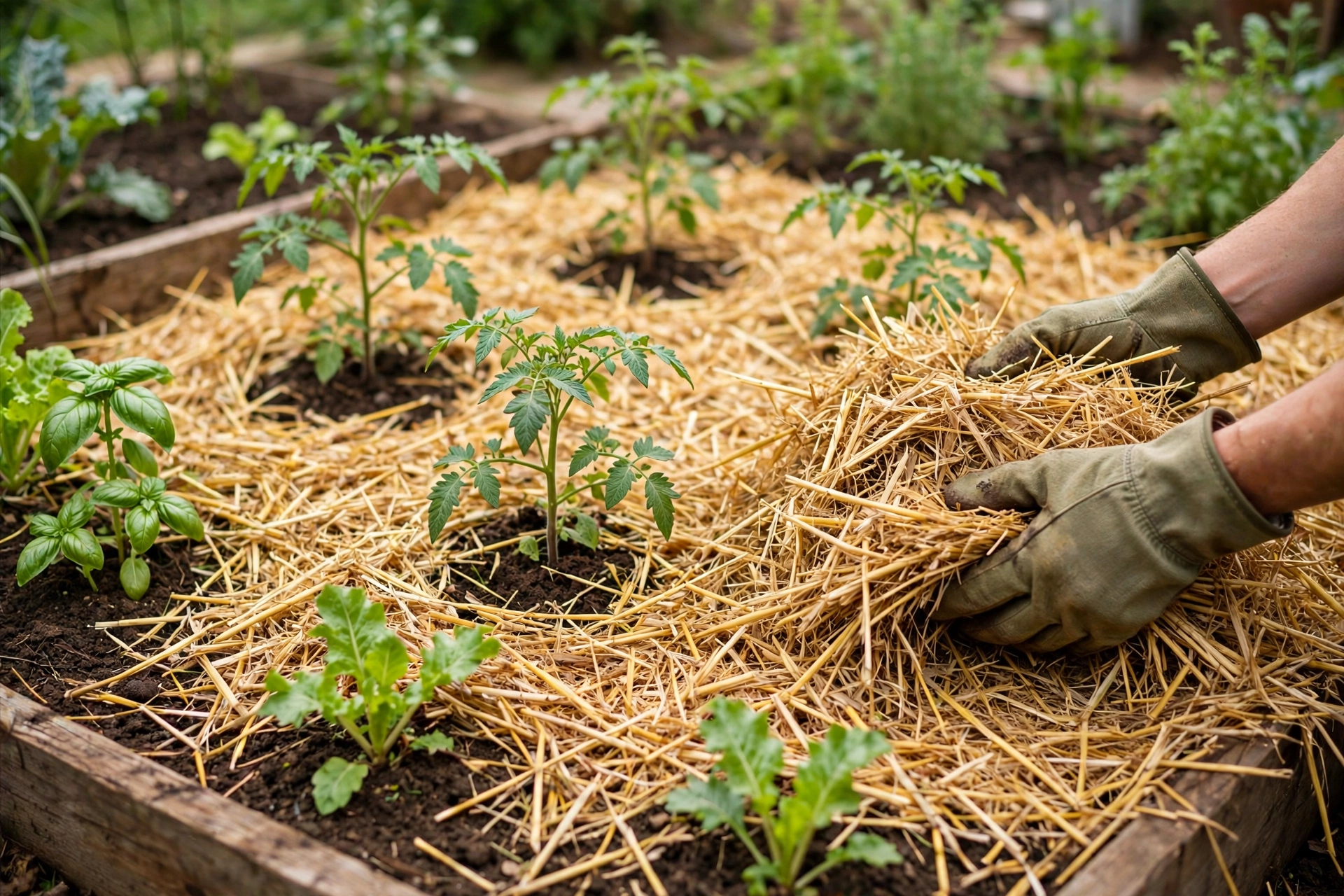
- Mulch the surface. Cover the soil with 5 to 8 cm of mulch, such as straw, shredded leaves, or bark. Leave a small gap around plant stems so they stay dry. Mulch shades the soil, cuts evaporation, and keeps the soil cooler.
- Water at the right time. Water in the early morning or late evening, when the sun is low and the air is cooler. Less water is lost to evaporation, and more of it reaches the roots.
- Water deeply, less often. Instead of a light watering every day, give a deep watering every few days. Check the soil with a finger before you water: if it is still damp a few centimetres down, wait.
- Loosen compacted soil. For hard soil, push a fork into the ground and rock it gently to open up the soil. Do this when the soil is damp, not dry or wet. Then add compost and mulch as above.
- Group plants with similar needs. Put thirsty plants together, so you can water them well, and put plants that like dry soil in a separate area. This stops you from overwatering one plant while trying to keep another alive.
- Shade pots and small beds. Move small pots out of the hottest sun, or group them together so they shade each other. A pot in the shade dries out much more slowly than a pot in full sun.
Mulch: The Fastest Fix for Dry Soil
Mulch is the single fastest way to slow down drying. A layer of mulch on the surface blocks sun and wind, keeps the soil cool, and cuts evaporation by a large amount. It also breaks down slowly and adds organic matter to the soil.
Use straw, shredded leaves, bark, or compost as mulch. Spread it 5 to 8 cm thick, and top it up when it thins out. Keep mulch a few centimetres away from stems and trunks, so they do not stay damp and rot. Do not use a thin layer: a thin layer dries out itself and does little to help the soil below.
Common Mistakes That Keep Soil Dry
- Watering little and often. Light daily watering only wets the surface. The water dries out fast, and the roots stay shallow. Water deeply instead.
- Leaving soil bare. Bare soil dries out fast in sun and wind. Mulch it, or plant ground cover to shade it.
- Watering in the middle of the day. Much of the water evaporates before it reaches the roots. Water in the morning or evening instead.
- Adding sand to clay soil. Sand does not fix heavy soil, and it does not help dry soil hold water. Compost is the material that improves both sandy and clay soil.
- Digging dry soil. Digging dry, hard soil breaks it into dust, which dries out even faster. Wait until the soil is damp, then add compost and fork it in gently.
- Forgetting pots. Pots dry out much faster than beds. Check them every day in hot weather, and mulch the surface of the pot as well.
Plants in dry soil often wilt, even when you water them. If your plants wilt while the soil is still wet, the cause may be different: read the guide on why plants keep wilting even when the soil is wet to check the other causes.
Frequently Asked Questions
How often should I water soil that dries out fast?
Check the soil, not the calendar. Push a finger a few centimetres into the soil. If it is dry, water deeply. If it is still damp, wait. In hot weather, pots may need water every day, while beds with mulch may only need water every few days.
Will compost really help soil hold water?
Yes. Compost holds many times its own weight in water, and it releases that water slowly to the roots. It also improves the structure of both sandy and clay soil. Add compost at least once a year for the best results.
Is mulch enough on its own?
Mulch helps a lot, but it works best with compost underneath. Compost improves the soil itself, while mulch protects the surface. Use both together: compost mixed into the soil, and mulch on top.
Why does my soil dry out even after rain?
Light rain often only wets the top few centimetres, and sandy or bare soil dries out again within a day. Heavy rain can also run off hard soil instead of soaking in. Mulch and compost help the soil catch and hold rainwater for longer.
Should I use water-absorbing crystals in the soil?
Water-absorbing crystals can hold water, but they do not improve the soil, and they need to be replaced over time. Compost and mulch are cheaper, improve the soil for years, and feed the plants as well. Start with those first.
Save This Guide for Later
Soil that dries out fast is usually soil that needs more organic matter and a protective layer on top. Add compost, mulch the surface, water deeply and less often, and water at the right time of day. Within a few weeks, the soil should stay damp for longer, and the plants should wilt less.