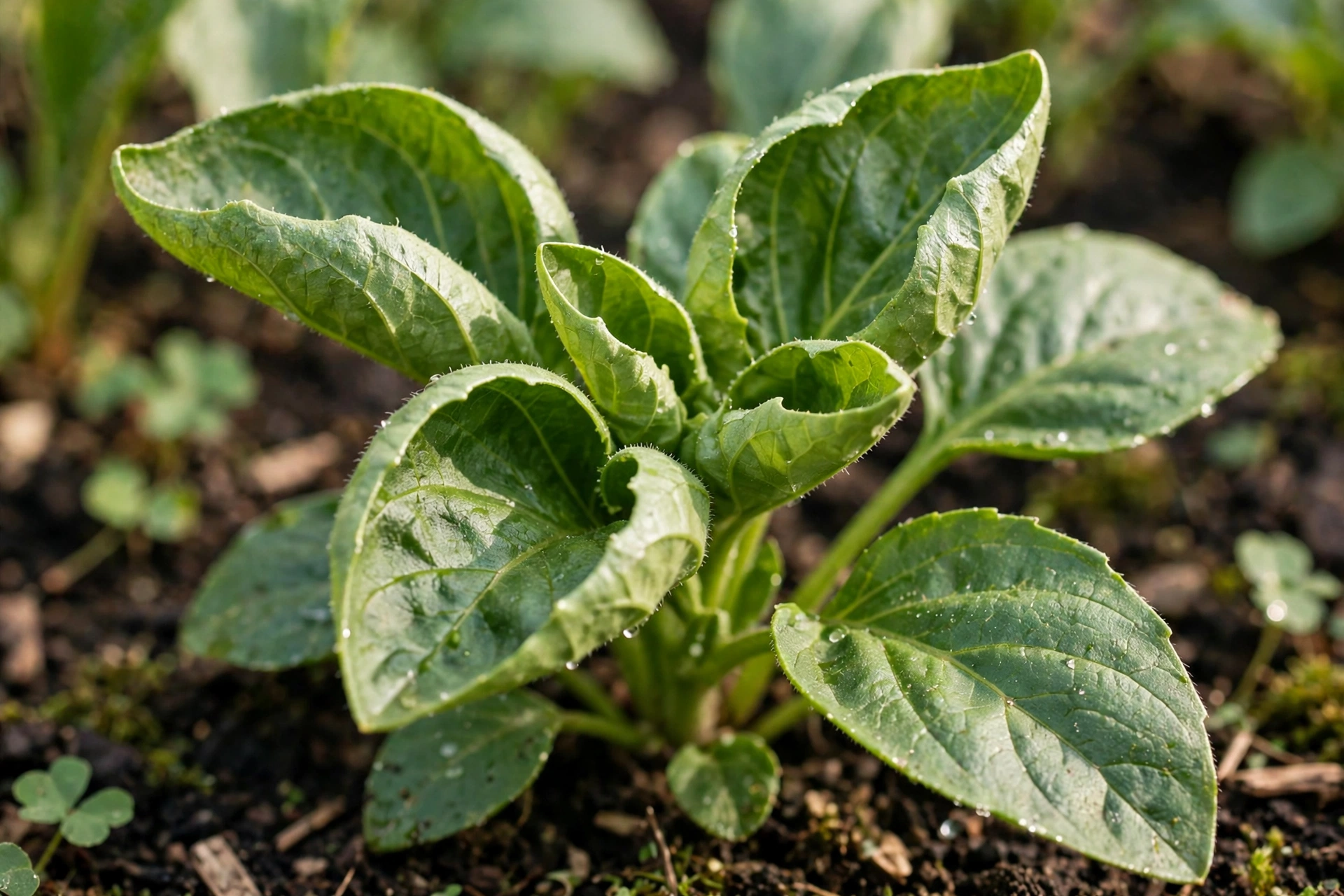
Healthy leaves are usually flat, open, and facing the light. When they start to curl, cup, roll, or twist, the plant is telling you that something is wrong. Leaf curl can look alarming, but it is a symptom, not a disease by itself. The same curled leaf can be caused by insects, heat, dry soil, too much water, or a sudden change in weather. The shape of the curl, and where it appears on the plant, gives you clues about the cause.
Do not rush to spray or feed the plant. First, work out what has changed. Has the weather turned hot and dry? Did you water more or less than usual? Are the leaves curling up, down, or along the edges? Are only the new leaves affected, or the whole plant? This guide will help you read those clues, find the most likely cause, and fix it with simple steps that work.
What Curling Leaves Mean
Leaves curl to protect themselves. When a plant loses water faster than its roots can replace it, the leaves roll up to reduce the surface that is exposed to sun and wind. When insects feed on the underside of a leaf, the leaf may pucker and twist as it grows. When a plant gets too much water, the roots cannot take in air, and the leaves may curl downward and feel soft. In each case, the curl is the plant’s response to stress, and the fix is to remove the stress, not to force the leaf flat.
Common Causes of Curling Leaves
1. Pests on the underside of the leaves
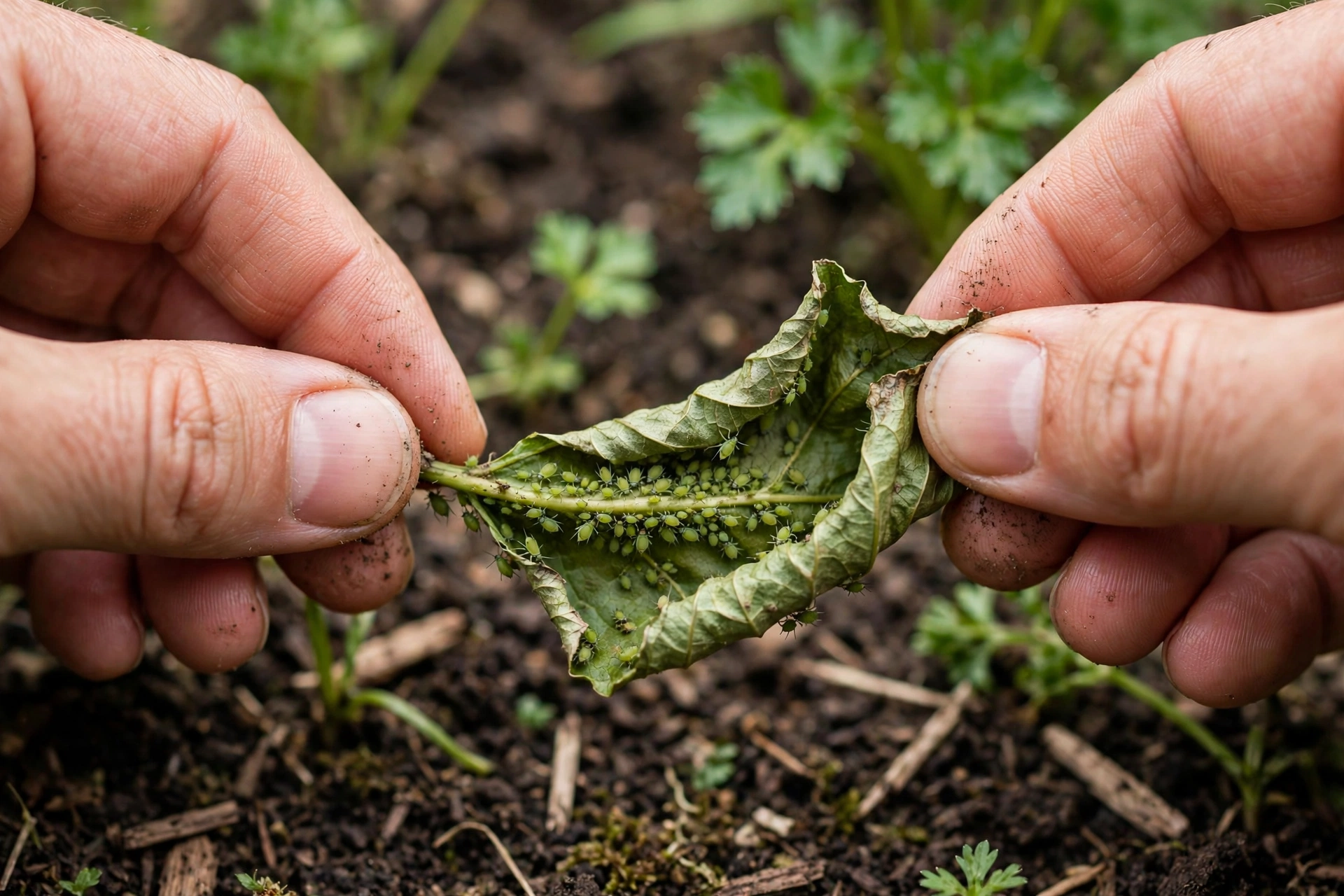
Aphids, whiteflies, and thrips feed on young leaves and suck sap from them. Their feeding damages the leaf as it grows, so the leaf curls, puckers, and may feel sticky. Turn a curled leaf over and look closely at the underside and along the stem. You may see tiny insects, white specks, or a sticky coating. If you find aphids, our guide How to Stop Aphids From Covering Your Plants explains safe controls that work. Start by spraying the undersides with a strong jet of plain water, then check again in a few days.
2. Heat and dry air
Hot sun and dry wind draw water out of leaves fast. The edges may roll inward or upward, and the leaf may feel dry and crisp. This is common on balconies and in beds that get full sun all day. Move pots into light shade during the hottest part of the day if you can, and water the soil, not the leaves. For heatwaves, the guide How to Keep Plants Alive Through a Heatwave has watering and shade tactics that help.
3. Too little water
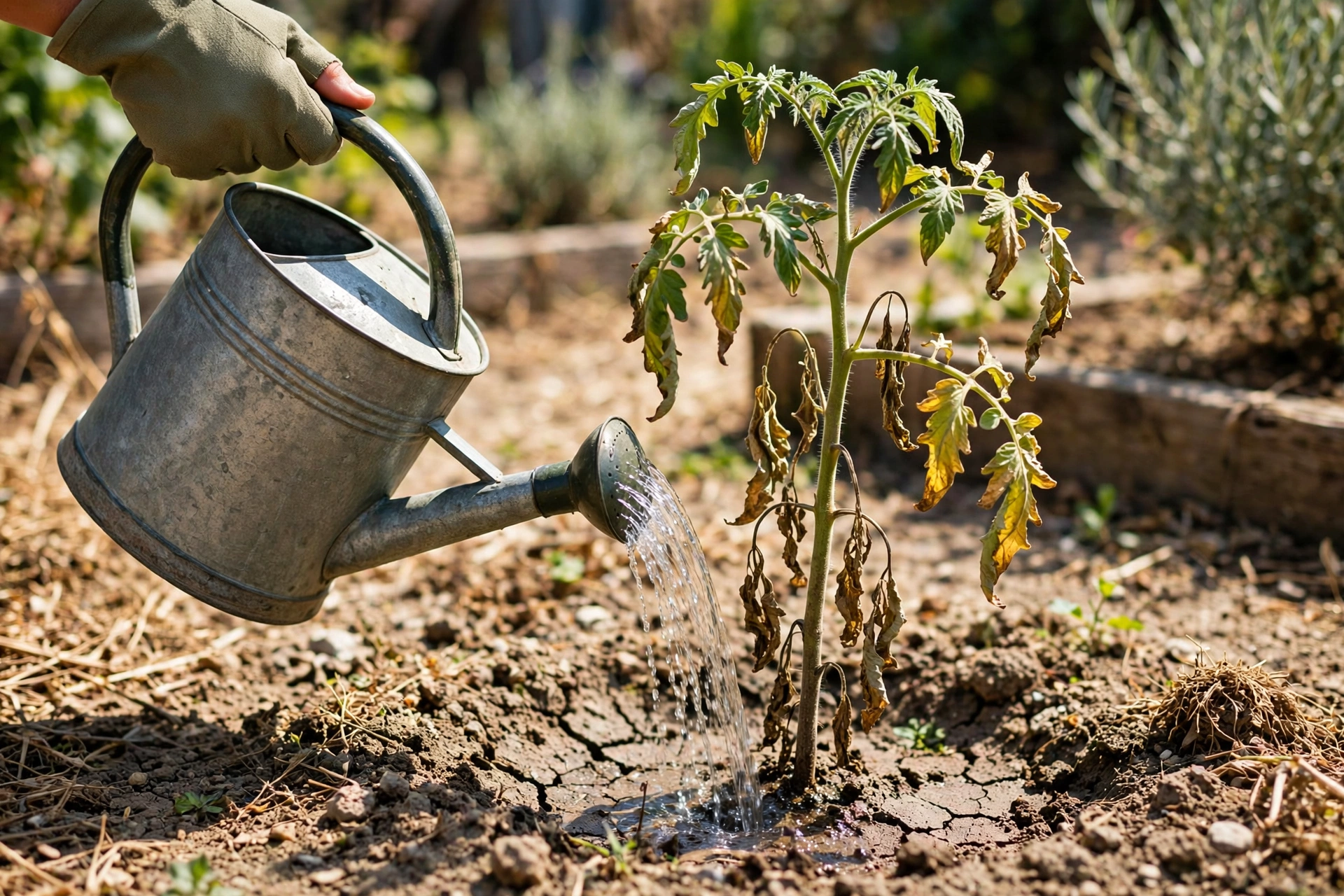
When the soil dries out, the plant cannot replace the water lost from its leaves, so the leaves curl to slow the loss. The soil may have pulled away from the sides of the pot, or it may feel dry several centimetres down. Water deeply, so the water reaches the roots, and then let the top of the soil dry a little before you water again. A single light sprinkle is rarely enough.
4. Too much water and poor drainage
Too much water causes curling too. When soil stays wet, the roots cannot get air, and they start to struggle. Leaves may curl downward, turn yellow, and feel soft or limp. Plants can also wilt when the soil is wet, which is confusing: if your plant wilts even when the soil is wet, read Why Do My Plants Keep Wilting Even When the Soil Is Wet?. Check that pots have drainage holes, empty saucers after watering, and let the soil dry between waterings.
5. A sudden change in light or temperature
Plants moved from shade to full sun, or from indoors to outdoors, can curl their leaves in protest. A cold night can do the same. Move plants in steps: give them a few hours of the new light each day, and bring tender plants in if a cold night is expected. New leaves should grow flat once the plant settles.
Step-by-Step: How to Fix Curling Leaves
Step 1: Look at the whole plant
Note which leaves are curling: new leaves only, old leaves only, or all of them. Note the direction: upward, downward, or along the edges. Note the colour: green, yellow, or brown at the edges. Note the soil: dry, wet, or just right. Write down what you see, and what has changed in the last few days, so you can compare the plant after you make a change.
Step 2: Check the undersides for pests
Turn over several curled leaves and look at the undersides, the leaf joints, and the stem tips. Use a phone camera to zoom in if the insects are very small. If you find pests, wash them off with water, remove the worst leaves, and repeat the wash every few days. If you also see holes in the leaves, the guide Why Are There Holes in My Plant Leaves? can help you find the pest responsible.
Step 3: Test the soil moisture
Push a finger 5 centimetres into the soil. If it feels dry, water deeply. If it feels wet, do not water yet, and check the drainage. If the soil is wet on top but dry deeper down, water slowly so it soaks in instead of running off the surface. A simple moisture routine makes this easier: check before you water, and water only when the soil needs it, as explained in How Often Should You Water Garden Beds? A Simple Moisture Routine.
Step 4: Give shade and shelter from heat and wind
On hot, windy days, move pots to a sheltered spot or add a light shade cover for the middle of the day. Water at the base of the plant, in the morning, so the plant has water before the heat. Do not water the leaves in full sun, because wet leaves can scorch.
Step 5: Feed only if the plant needs it
Do not feed a stressed plant straight away. Too much fertiliser can burn roots and make curling worse. Wait until the plant shows new, flat growth, then feed at half strength if the plant is a heavy feeder and the soil is poor. In most cases, water, shade, and pest control matter far more than food.
Step 6: Wait for new growth
Curled leaves often stay curled. That is normal. Judge the fix by the new leaves: if they open flat and green, the plant has recovered. Remove only leaves that are dead, brown, or badly damaged. Leave the rest, because they still make food for the plant.
Common Mistakes When Leaves Curl
The most common mistake is watering more when the problem is too much water. Always test the soil first. A second mistake is spraying chemicals before checking for pests, which can harm useful insects and the plant itself. A third is feeding a stressed plant, which can burn the roots. A fourth is moving a plant into full sun too fast. A fifth is removing all the curled leaves at once, which leaves the plant with too little leaf to recover. Change one thing at a time, wait a few days, and watch the new growth.
Frequently Asked Questions
Will curled leaves straighten out again?
Often, no. A curled leaf may stay curled even after the cause is fixed. What matters is the new growth. If new leaves open flat, the plant is recovering.
Are curling leaves a sign of disease?
Sometimes, but pests, heat, and watering problems are more common. Look for spots, sticky residue, or insects first. If the whole plant wilts fast and the stem feels soft, that can be a root problem, and you should check drainage and soil moisture.
Should I cut off curling leaves?
Cut off only leaves that are dead, brown, or badly damaged. Leave green curled leaves on the plant, because they still make food and help the plant recover.
Why are only the new leaves curling?
New leaves are soft and easy for pests to damage, and they react fast to heat and dry air. Check the undersides for aphids, and check the soil moisture. New leaves that grow flat after you fix the problem are a good sign.
Can overwatering cause leaves to curl?
Yes. Wet soil stops roots from getting air, so leaves may curl downward and feel limp. Let the soil dry out between waterings, make sure pots drain, and empty saucers after watering.