
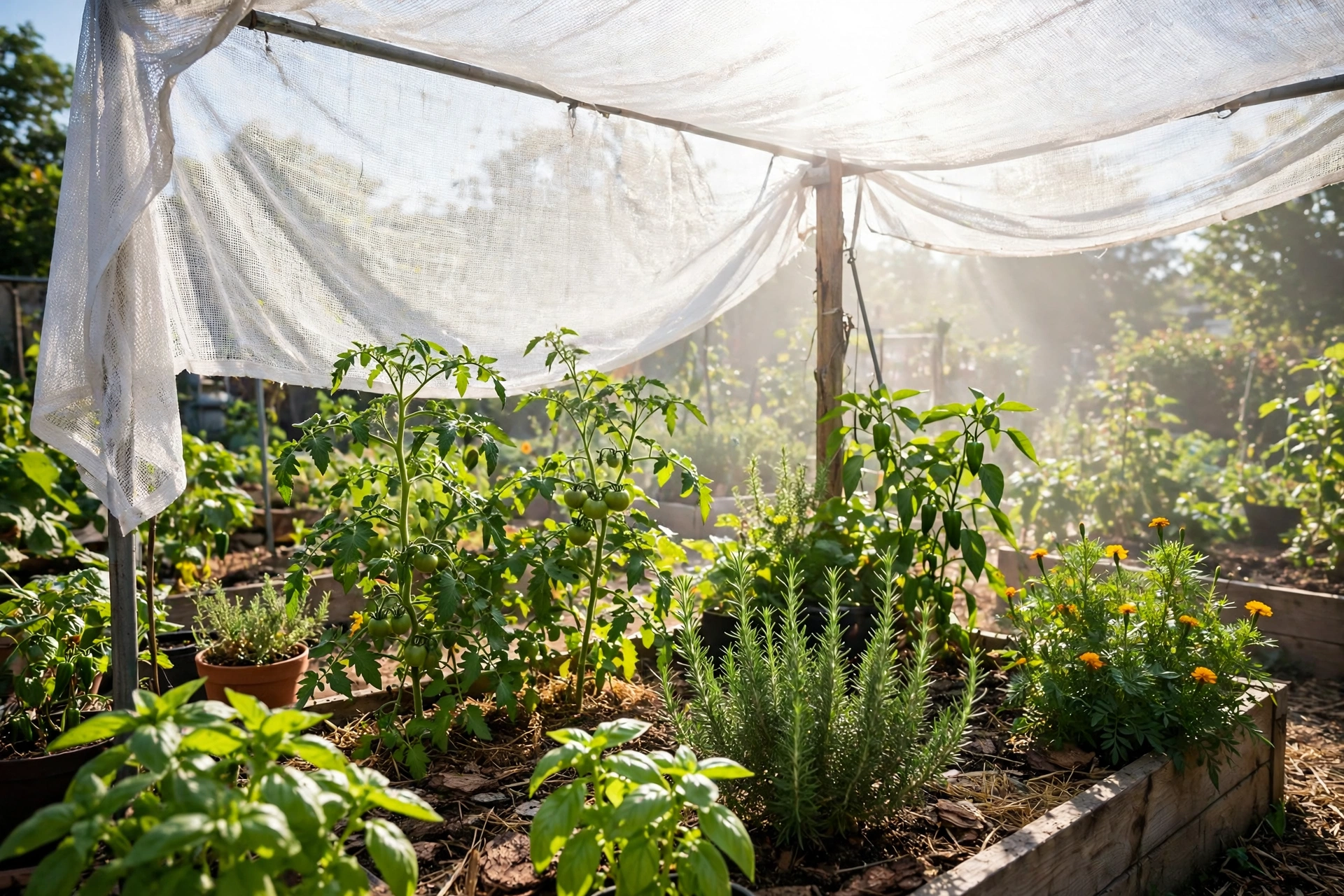
A heatwave can turn a healthy garden into a stressed garden in a few days. Leaves wilt, soil dries out, flowers drop, and young plants can be damaged before they have a chance to recover. The good news is that most plants can survive a hot, dry spell if you water deeply, protect the soil and give them shade at the right time.
The problem is not heat alone. It is heat plus dry soil, strong sun and wind, all at the same time. Plants lose water through their leaves faster than their roots can take it up. When that happens, growth stops, leaves curl or scorch, and fruit and flowers can fail. This guide shows how to keep plants alive in a heatwave with simple watering and shade tactics that work in any climate.
You do not need special equipment to protect your garden. A thick layer of mulch, a light shade cloth, a watering can or hose, and a little planning can make a large difference. The key is to act early in the heatwave, not after plants are already badly wilted.
If heat is making leafy crops bolt or taste bitter, read why lettuce bolts and tastes bitter to understand how heat changes leafy greens. The tactics in this guide will help you slow that damage down.
Why Plants Suffer in a Heatwave
The main cause is water loss. In hot, sunny weather, plants open small pores in their leaves to cool down, and water escapes as vapour. If the soil is dry, the roots cannot replace that water fast enough. Leaves wilt first, then dry at the edges, and finally the whole plant can collapse.
Soil dries from the top down. Bare soil in strong sun can become very hot and dry, even if the soil below is still moist. Shallow watering makes the problem worse, because it wets only the top few centimetres and the roots stay near the surface, where it is hottest and driest.
Young plants and plants in pots are at the greatest risk. Their roots are small and close to the surface, and pots heat up quickly in the sun. A pot that feels warm to the touch is also warming the roots inside it. Mature plants with deep roots usually cope better, but they still need help in a long hot spell.
Heat also affects pollination and fruit set. Flowers may drop without setting fruit, and fruit that does form can be small or split. Shade and steady watering will not fix every flower, but they reduce stress and help the plant recover faster when the hot spell ends.

How to Keep Plants Alive in a Heatwave in 7 Steps
Work through these steps as soon as a hot spell is forecast. The first three steps, watering, mulch and shade, give the biggest benefit, so start with those.
Step 1: Water deeply in the early morning
Water at the base of the plants, slowly, so water soaks deep into the soil. Early morning is the best time, because the soil is cool, evaporation is low, and leaves dry before night. Aim to wet the root zone, not just the surface. A long, slow soak once a day is better than a light sprinkle several times a day.
Step 2: Mulch thickly to protect the soil
Spread a thick layer of straw, leaves or compost around plants, about 5 to 8 centimetres deep, keeping it a little away from stems. Mulch keeps soil cool, slows evaporation and stops the soil from forming a hard crust. Water the soil first, then mulch, so moisture is trapped underneath.
Step 3: Give shade during the hottest part of the day
Use shade cloth, an old sheet, a garden umbrella or a frame with light fabric over the most tender plants. Shade that blocks 30 to 50 percent of the sun is enough for most vegetables. Put shade up in the morning and take it down in the cooler evening, so plants still get morning and late light.
Step 4: Move pots into shade and group them together
Move pots to a shady wall, under a tree or onto a cool surface. Group pots together so they shade each other and lose less water. Check pots twice a day in a heatwave, because they dry out much faster than beds. Water pots in the morning and again in the evening if the soil is dry.
Step 5: Do not feed or prune stressed plants
Wait until the hot spell ends before you feed plants or cut them back hard. Fertiliser can burn dry roots, and pruning removes leaves that shade the plant and the soil. Remove only dead or badly damaged leaves, and leave the rest until the plant recovers.
Step 6: Harvest what is ready and pick flowers that have finished
Pick ripe fruit and vegetables promptly, so the plant does not waste water on overripe produce. Remove spent flowers and damaged fruit, and give the plant a deep drink after harvest. This helps the plant put its energy into new growth when the weather cools.
Step 7: Check plants each evening and plan for the next hot spell
Each evening, check soil moisture with your finger, look for wilted or scorched leaves, and water plants that are still dry at the root. Write a short note about what worked: which plants needed shade, which mulch held moisture best, and what to prepare earlier next time.

Common Mistakes to Avoid
- Watering lightly in the middle of the day. Light watering in strong sun evaporates fast and wets only the surface. Water deeply in the early morning instead, so moisture reaches the roots.
- Leaving soil bare. Bare soil heats up and dries out quickly. A thick mulch layer keeps soil cool and moist, and it also stops weeds from competing for water.
- Using dark, heavy shade all day. Total shade can stop plants from making food and can trap heat under the cover. Use light shade for the hottest hours, and let plants have morning and late light.
- Feeding stressed plants. Fertiliser on dry roots can burn them. Wait until the hot spell ends and the soil is moist again before you feed.
- Forgetting pots and new plants. Pots dry out fastest, and young plants have shallow roots. Check them twice a day, and move them to shade first. If herbs keep struggling, read how to grow herbs that keep dying to fix light, water and soil mistakes.
Frequently Asked Questions
Should I water plants every day in a heatwave?
Most beds need a deep watering once a day in a heatwave, and pots may need water twice a day. Check the soil with your finger first. If the soil is moist a few centimetres down, wait. If it is dry, water deeply at the base.
Is it better to water in the morning or in the evening?
Early morning is usually best, because water soaks in before the heat rises and leaves dry during the day. Evening watering also works, but wet leaves at night can encourage disease in some plants, so water at the base, not over the leaves.
Can shade cloth hurt my plants?
Light shade cloth that blocks 30 to 50 percent of the sun is safe for most vegetables. Do not use dark, heavy covers all day, and take shade down in the cooler hours so plants still get enough light.
How do I know if a plant is too dry or just wilted from heat?
Check the soil first. If the soil is dry, water deeply and see if the plant recovers by evening. If the soil is moist but leaves still wilt in the afternoon and recover at night, the plant is likely stressed by heat, not lack of water, and shade will help more than extra water.
What should I do after the heatwave ends?
Water deeply, remove dead leaves, and give plants a few days to recover before you feed or prune them. Then plan ahead for the next hot spell. A simple plan, like the one in how to plan a month-by-month garden calendar that you will actually follow, helps you prepare mulch and shade before the hot season starts.
Save This Guide for Later
Save this heatwave guide so you can act fast when hot weather is forecast. Deep morning watering, thick mulch, light shade in the hottest hours and daily checks will help most plants survive a hot spell and recover well when the weather cools.
