

Many gardeners start the season with good plans, and then life gets busy. Seeds are sown late, or all at once. Plants are forgotten in dry spells, and tasks pile up until the garden feels hard to manage. A month-by-month garden calendar can solve this problem, but only if it is simple enough to follow in real life.
This guide shows how to build a month-by-month garden calendar that fits your own garden, your climate and your time. You will not need a perfect plan. You need a clear list of small tasks, spread through the seasons, with room to change the plan when the weather changes.
A good calendar does not tell you what to do on one fixed date. It groups tasks by season and by plant stage, so you can work in the right order even when your season starts earlier or later than a garden in another place. If you are new to planning, start with how to plan a garden when you do not know your frost dates and what to plant first when a new growing season starts. Those two guides help you choose the first tasks for your own conditions.
Why Most Garden Calendars Fail
A calendar fails when it asks for too much at once. A long list for one week can feel like a second job. When one task is missed, the next tasks feel late too, and many gardeners stop using the plan. A useful calendar spreads work into small steps that take 15 to 30 minutes.
Another common cause is a plan that was copied from a different climate. Advice tied to one place can put sowing, planting and harvest at the wrong time for your garden. That is why this guide uses seasons and plant signs, not fixed dates from one region. Watch your soil, your light and your plants, and use the calendar as a guide, not a rule.
Calendars also fail when they list only sowing dates. A garden needs watering, feeding, weeding, thinning, support and harvest, week after week. If those jobs are missing, plants may start well and then struggle. A month-by-month garden calendar should include care tasks, not just planting tasks.
Finally, many plans are kept in a place that is hard to see. A calendar inside a closed book or a forgotten file will not help. Put your plan where you will see it each week, on a fridge, a shed wall or a phone note, and check it for two minutes before you go outside.
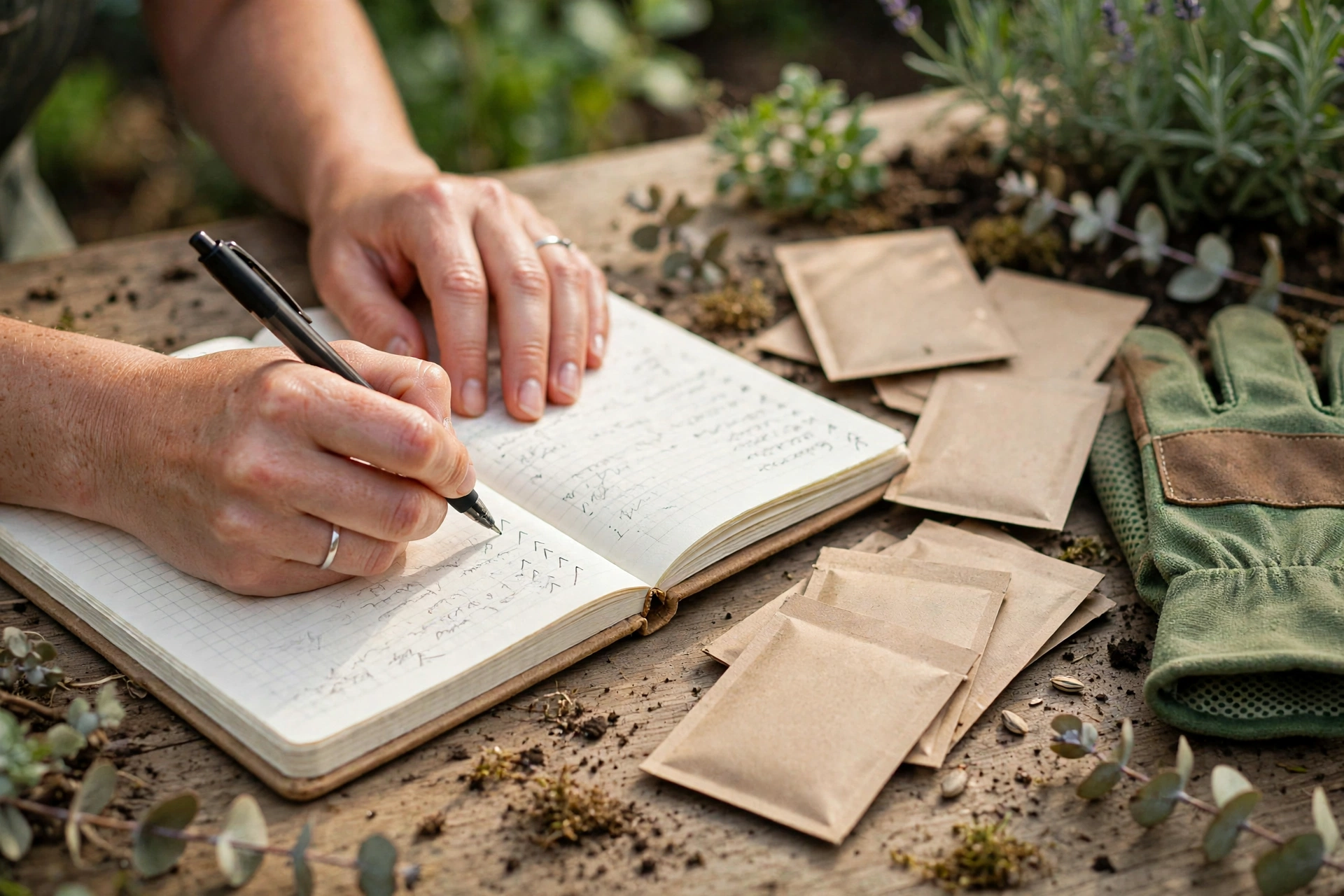
How to Build Your Month-by-Month Garden Calendar in 7 Steps
Follow these steps in order. Do not try to finish the whole year in one day. Build the frame first, then add detail for the next season only. You can fill in later seasons as you learn what works.
Step 1: Map your seasons and your space
Start by noting the shape of your year. When is your cold season, your hot season, your wet season and your dry season? When does light change, and when does growth slow down or speed up? Write one short line for each season. Then list your beds, pots and sunny and shady spots. A small garden with four beds needs a simpler calendar than a large garden, and that is fine.
Step 2: List the plants you really want to grow
Choose 8 to 12 main plants for the year, not 30. Include a mix of fast crops, like leafy greens, and slower crops, like root vegetables or fruiting plants. For each plant, note how long it takes from sowing to harvest, how much space it needs, and whether it likes cool or warm conditions. This list stops you from sowing too much of one crop at once.
Step 3: Work backward from harvest
For each plant, start from the time you want to harvest and work backward. If a crop needs eight weeks to grow, count back eight weeks from the harvest season to find the sowing time. Add one extra week for slow germination in cool soil. This simple step prevents the most common timing mistake: sowing too late for the plant to finish before the season changes.
Step 4: Divide the year into small monthly blocks
Give each month a theme, not a long list. For example, one month can be for soil care and early sowing, the next for planting out and mulching, and the next for regular harvest and new sowings. Inside each month, list only three to five main tasks. If a month has more than five tasks, move one task to the month before or after it.
Step 5: Add care tasks, not just sowing tasks
For every sowing, add the care that follows it. Write down when to thin seedlings, add support, water deeply, mulch and check for pests. Put a simple weekly check in the calendar: water, weed, look at leaves, and harvest what is ready. These small weekly checks keep plants healthy and stop small problems from growing.
Step 6: Plan for gaps and for gluts
Leave one small space in each bed for a second sowing. When the first crop is half grown, sow the next small batch. This spreads the harvest and avoids a week with too much of one vegetable and then nothing. A steady harvest is easier to use in the kitchen, and it keeps the bed full through the season.
Step 7: Review and adjust every month
At the end of each month, spend 10 minutes with your calendar. Cross out what is done, move what is late, and write one short note: what grew well, what was slow, and what to change next time. A calendar that changes with your garden is a tool you will keep using. A fixed calendar that cannot change is soon ignored.

Common Mistakes to Avoid
- Planning too much at once. A calendar with 20 tasks in one week will fail. Keep each month to three to five main tasks, and move the rest to another time.
- Copying dates from another climate. A sowing date that works in a cool place may be too early or too late in a warm place. Use seasons, soil warmth and plant growth as your guide, not a date from another region.
- Forgetting care after sowing. Seeds need water, thinning and protection after they sprout. If you plan only the sowing day, young plants can dry out or crowd each other.
- Leaving no time for harvest. Harvest is work too. If you sow a large crop with no plan to pick, cook or share it, food can spoil on the plant. Plan small, regular harvests instead.
- Ignoring frost and heat. A sudden cold snap or a hot spell can damage tender plants. Keep simple protection ready, and read how to protect plants from an unexpected late frost so you know what to do when the weather changes fast.
Frequently Asked Questions
How far ahead should I plan my garden calendar?
Plan the next season in detail, and sketch the rest of the year in broad themes only. That way you have clear tasks now, but you can change later plans when you learn how your soil and weather behave.
What if I miss a sowing date in my calendar?
Do not give up on the plan. Sow a few days late, choose a faster crop, or move the task to the next small window. Most plants have a range of good sowing times, not one perfect day.
Should my calendar use dates or seasons?
Use seasons and plant stages as the main guide, and add dates only as a rough note for your own place. This keeps the plan useful when a season starts early or late, and it works for readers in both hemispheres.
How much time should a monthly garden plan take each week?
Most small gardens need two or three short sessions a week, of 15 to 30 minutes each. A good calendar breaks work into these small steps, so the garden stays cared for without long, tiring days.
Can I use a digital calendar instead of a paper planner?
Yes. Use the tool you will actually check. A phone calendar with a weekly reminder works well for many gardeners, while others prefer a paper planner on the wall. The best system is the one you see every week.
Save This Guide for Later
Save this month-by-month garden calendar guide so you can check it at the start of each season. A short review each month, a few small tasks each week, and notes about what worked will turn a simple plan into a garden habit that lasts all year.
