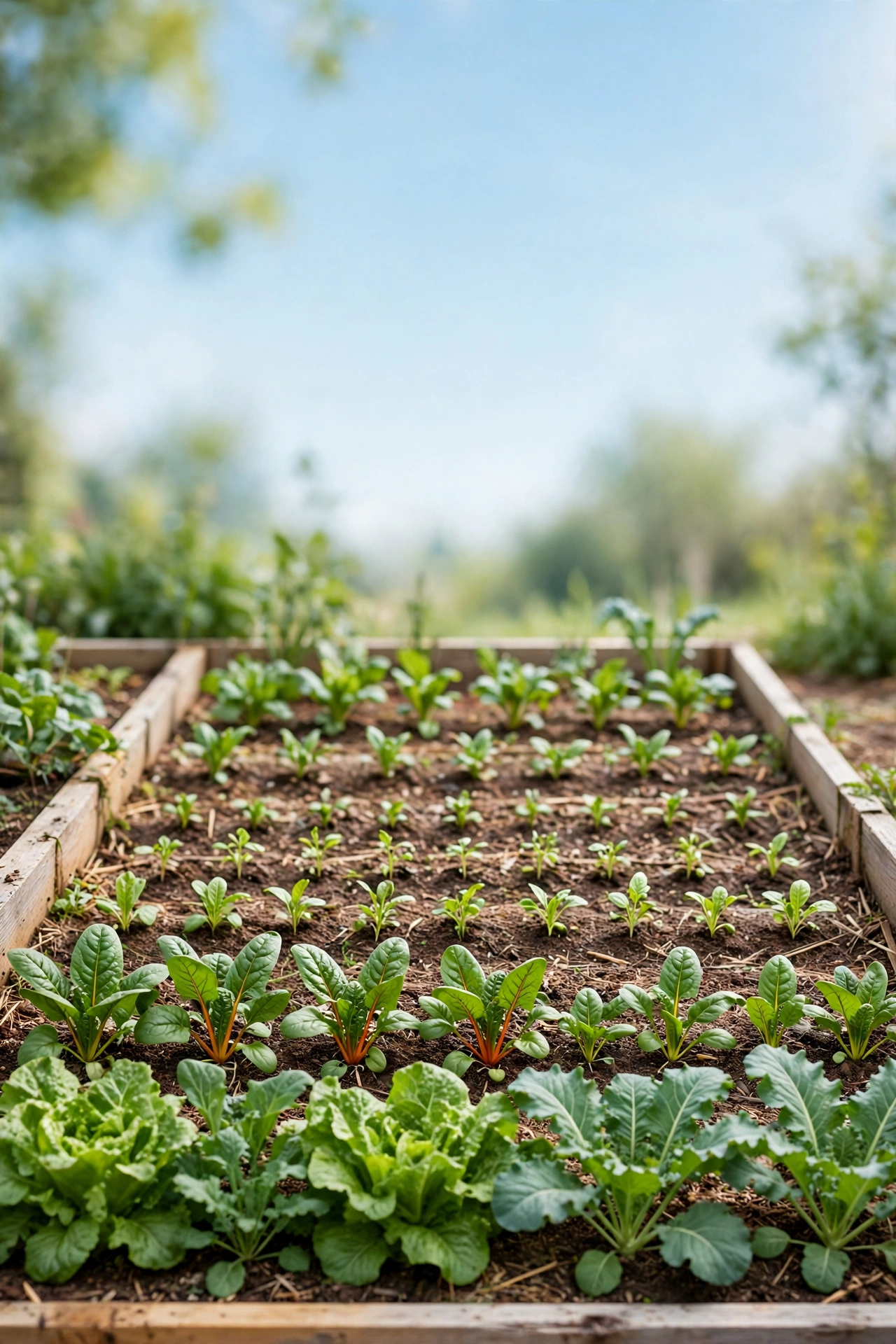

Succession planting is a simple idea with a big result. Instead of sowing all of one crop on one day, you sow small batches at regular intervals. When the first batch is ready to harvest, the next batch is growing, and the batch after that is just starting. The harvest stays steady, and you avoid the feast-or-famine pattern that frustrates many gardeners.
The problem is easy to recognise. One week you have more lettuce, beans or courgettes than your household can use. A few weeks later you have nothing ready, even though the garden looks full. That gap happens because crops sown on the same day tend to ripen on the same day. Succession planting breaks that pattern into small, regular steps.
This guide explains succession planting in plain terms. You will learn why gluts and gaps happen, how to time small sowings through the seasons, and how to build a simple rotation that fits a small garden. The method works for leafy greens, root crops, beans and many herbs, in any hemisphere, because it follows plant growth and seasons, not fixed dates from one place.
If you are still deciding what to grow first, read what to plant first when a new growing season starts before you plan your batches. A short list of priority crops makes succession planting much easier to manage.
Why Gluts and Gaps Happen
The main cause is sowing too much at once. A full packet of seed can fill a long row, and all those plants reach harvest size together. In warm, fast-growing conditions, the harvest window can be as short as one or two weeks. After that, the bed is empty until the next crop is ready.
Weather adds to the problem. A warm spell can speed up growth, so several crops ripen in the same week. A cold or cloudy spell can slow growth, so a planned harvest is late. When you sow in one big batch, you have no plants at a different stage to fill the gap.
Another cause is planting without a plan for the space after harvest. When a crop finishes, the bed is often left empty for days or weeks while the gardener decides what to sow next. That idle time is a lost harvest. Succession planting solves this by preparing the next sowing before the first crop finishes.
Finally, many gardeners sow only once because they think it saves time. In fact, one large sowing often creates more work: a rush to pick, store and use a glut, followed by a long wait. Small, regular sowings spread the work and the harvest across the season.

How to Do Succession Planting in 7 Steps
Start small. Choose one or two crops to practise with, such as leafy greens or beans, and add more crops once the routine feels easy. The steps below work through the seasons, in any climate.
Step 1: Choose crops that suit short, repeated sowings
Fast crops work best for succession planting. Leafy greens, radishes, spring onions, beans and many herbs grow quickly and can be sown again and again. Slow crops, like pumpkins or large root vegetables, are better sown once and left to grow. Pick two or three fast crops for your first plan.
Step 2: Find the days to harvest for each crop
Read the seed packet or a trusted growing guide for the number of days from sowing to harvest. A crop that takes 30 days can be sown every two weeks for a steady supply. A crop that takes 60 days needs a longer gap between sowings, or you will have two batches ready at the same time.
Step 3: Sow a small batch, not the whole row
Divide a row or bed into three or four short sections. Sow only one section at a time. A short row of 10 to 15 plants is enough for many households, and it leaves space for the next batch. If you sow the whole row, you are back to the glut problem.
Step 4: Set a regular sowing rhythm
Choose a simple interval and stick to it. For fast leafy greens, sow a new small batch every two weeks. For beans and root crops, every three to four weeks is often enough. Put the sowing day on your calendar, for example every second weekend, so it becomes a habit.
Step 5: Sow the next batch before the first is finished
Do not wait until the first batch is harvested. When the first plants are about half grown, sow the next batch in the next section. By the time the first batch is picked, the second batch is well on its way. This overlap is the heart of succession planting.
Step 6: Feed and water each batch as it grows
Each new batch needs the same care as the first: water at the base, thin seedlings that are too close, and add mulch to keep the soil moist. A new batch sown into dry, tired soil will grow slowly. Add a little compost to the new section before you sow, so each batch starts in good soil.
Step 7: Replace a finished crop at once
When a batch is harvested, clear the spent plants, add compost, and sow the next crop in that space within a few days. You can sow the same crop again, or a different crop that suits the season. This quick change keeps the bed full and stops weeds from taking over empty soil.

Common Mistakes to Avoid
- Sowing the whole packet at once. This is the fastest way to create a glut. Sow a small section, save the rest of the seed, and use it for the next batch.
- Waiting too long between sowings. If the gap is too long, the first batch will finish before the second is ready. Keep the interval short for fast crops, and sow on a regular day.
- Forgetting to feed the next batch. Each new sowing needs good soil. Add compost before you sow, or the later batches will grow more slowly than the first.
- Ignoring the season change. A crop that grows well in the cool season may bolt or taste bitter in the hot season. Read why lettuce bolts and tastes bitter and choose crops that suit the season you are in.
- Letting the bed stay empty. An empty bed after harvest wastes growing time and lets weeds grow. Clear, feed and re-sow the space within a few days.
Frequently Asked Questions
How often should I sow a new batch?
For fast leafy greens, every two weeks is a good start. For beans, root crops and many herbs, every three to four weeks works well. Adjust the gap if your plants grow faster or slower than you expect.
Which vegetables work best for succession planting?
Leafy greens, radishes, spring onions, beans, peas and many herbs are good choices because they grow fast and can be picked over a long period. Slow, large crops are usually better grown as a single planting.
What if two batches ripen at the same time?
Pick the older batch first and use it fresh, share it, or store what you can. Next time, make the gap between sowings a little longer, or sow a smaller second batch.
Can I do succession planting in pots and small spaces?
Yes. Use one pot per batch, or divide a large container into sections. Small, regular sowings work very well in pots, because you can move them to the best light and water them easily.
Do I need to change crops after each batch?
No, you can sow the same crop again if the season still suits it. Changing crops can help soil health and reduce pests, so try a different crop in the same bed after two or three batches of the same plant. If a crop is slow to start, read how to fix spinach that germinates but never grows before you sow it again.
Save This Guide for Later
Save this succession planting guide so you can check your sowing rhythm at the start of each season. Small batches, a regular sowing day and quick replanting after harvest will give you a steady supply of fresh vegetables, with fewer gluts and fewer gaps.