

Spinach seed is usually easy to start. The tiny seedlings push through the soil, show their first leaves, and then, nothing. They stay small for weeks, turn pale, and never grow into the full leaves you expected. This is one of the most common problems for beginners, and it is also one of the most fixable. Germination is only the first step. After that, spinach needs the right soil, light, water, space, and temperature to keep growing. If one of those is wrong, the seedlings stall. This guide explains why spinach germinates but never grows, how to find the cause in your bed or pot, and how to fix it step by step.
What Stalled Spinach Looks Like
Healthy spinach seedlings grow quickly once they have their first true leaves. The leaves should be green, upright, and getting larger every few days. Stalled seedlings stay at the same size for a week or more. The leaves may be pale yellow, small, or thin. Some seedlings may fall over, and some may simply disappear. The key point is that germination worked, so the seed was alive and the soil was moist enough to start growth. The problem is what happens after germination, not the seed itself.
Why Spinach Germinates but Never Grows
1. The Soil Is Too Cold or Too Warm
Spinach is a cool-season crop. It germinates well in cool soil, but it grows slowly if the soil stays very cold, and it stalls or bolts if the soil is warm. In very cold soil, roots grow slowly and cannot take up nutrients. In warm soil, the plant is stressed and may try to flower instead of growing leaves. The best growth happens when the soil is cool and moist, not cold and wet, and not warm and dry.
2. Not Enough Light
Spinach needs good light to grow leaves. Seedlings in shade, or indoors on a dim windowsill, stretch up, become pale, and then stop growing. They may look tall, but they are weak. A bed that gets only an hour or two of sun is often not enough. Spinach needs several hours of direct sun, or very bright indirect light, to make food for growth.
3. Seedlings Are Too Crowded
Spinach seed is small, and it is easy to sow too thickly. Crowded seedlings compete for light, water, and nutrients. None of them gets enough, so they all stay small. This is the most common cause of spinach that never grows. Thinning feels like wasting plants, but it is the only way to give the remaining plants room to grow.
4. Poor, Dry, or Compacted Soil
Spinach needs soil that is rich in compost, holds moisture, and drains well. Sandy soil loses nutrients quickly. Heavy, compacted soil stops roots spreading, and water sits on the surface. Dry soil also prevents roots taking up nutrients.
5. Uneven Watering
Spinach has shallow roots and needs steady moisture. If the soil dries out between waterings, growth stops. If the soil stays wet, the roots can rot and the seedlings turn yellow. A similar pattern affects other leafy crops when watering is uneven, as explained in the guide to why cucumber leaves turn yellow, where water stress is a common cause of poor growth and yellow leaves.
6. Lack of Nutrients, Especially Nitrogen
Leafy crops need nitrogen to make green leaves. If the soil is low in nutrients, or if the compost was not mixed in before sowing, seedlings will be pale and small. This is different from a disease. The whole bed looks the same, with small, pale plants, rather than a few sick plants among healthy ones.
7. Pests, Slugs, or Root Damage
Slugs, snails, and small insects can eat young spinach leaves at night, so the plants never seem to grow. Birds can also pull up seedlings. Below the soil, root damage from pests or from rough thinning can slow growth. Check the bed in the evening for slugs, and look for chewed leaves or missing seedlings.
How to Fix Spinach That Never Grows: A Step-by-Step Plan
Step 1: Check light and temperature first. Look at how much sun the bed gets, and feel the soil. If the bed is in deep shade, move pots to a sunnier spot, or sow the next batch in a brighter bed. If the soil is very warm, add mulch and water in the morning to keep it cool.
Step 2: Thin the seedlings. When seedlings have two true leaves, thin them to about 10 to 15 centimetres apart for baby leaves, and further apart for large leaves. Remove the weakest seedlings, and water the bed after thinning so the remaining roots settle.

Step 3: Improve the soil. Mix compost into the top few centimetres of soil, being careful not to damage the roots of the remaining seedlings. For the next sowing, mix compost into the bed before you sow, and avoid compacting the soil by walking on it.
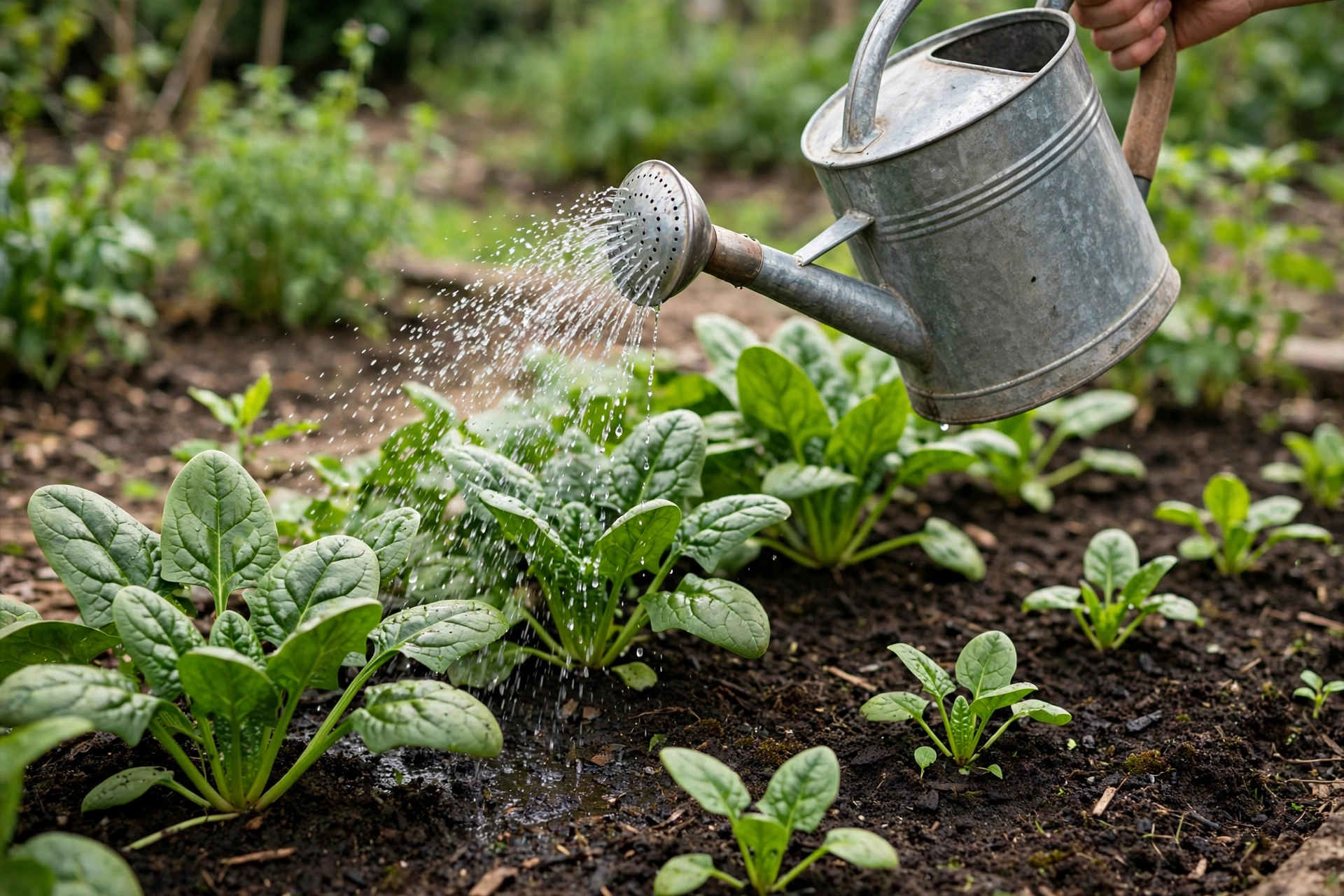
Step 4: Water evenly and gently. Water in the morning, so the soil is moist before the warmest part of the day. Water at the base of the plants, not with a strong jet that washes soil away from the roots. Mulch the bed with straw or shredded leaves to keep the soil moist and cool.
Feed, Protect and Re-Sow
Step 5: Feed lightly if the plants are pale. If the leaves are pale yellow and growth is slow, feed with a balanced liquid feed at half strength, following the packet dose. Do not overfeed, because too much fertiliser can burn young roots. A light feed every two weeks is usually enough.
Step 6: Protect young plants. Use a light cover or netting to keep birds and slugs away, and check for slugs in the evening. Remove any damaged leaves, and keep the bed free of weeds that compete for water and nutrients.
Step 7: Sow again if the first batch is too far gone. If the seedlings have been stalled for several weeks and look pale and weak, it is often faster to clear the bed, add compost, and sow fresh seed at the right spacing. Sow little and often, every two to three weeks, so you always have young plants coming on.
Common Mistakes That Stall Spinach
- Sowing too thickly and never thinning. Crowded seedlings stay small and compete for everything.
- Sowing in poor soil with no compost. Germination does not need much food, but leaf growth does.
- Watering lightly every day. Light watering wets only the surface and leaves roots dry.
- Growing spinach in deep shade. Spinach needs several hours of good light to grow leaves.
- Leaving seedlings in warm soil. Warm soil stresses spinach and slows leaf growth.
- Feeding too late or too strongly. A sudden strong feed can damage young roots instead of helping them.
Many of these mistakes also cause problems for herbs and other leafy crops. For example, the guide to how to grow herbs that keep dying shows the same pattern: light, water, and soil mistakes cause healthy-looking plants to fail, even when the seed or the plant itself was fine at the start.
Frequently Asked Questions
Why does my spinach germinate but stay tiny?
The most common reasons are crowding, not enough light, poor soil, or uneven watering. Thin the seedlings, give them more light, add compost, and water evenly. If the plants have been stalled for weeks, sow a fresh batch.
How long should spinach take to grow?
Spinach usually takes several weeks from sowing to first picking, depending on temperature and light. Baby leaves can be picked earlier than full-size leaves. If the seedlings have not grown for a week or more, something is wrong with light, water, soil, or spacing.
Does spinach need a lot of sun?
Spinach needs several hours of direct sun or very bright light to grow well. In deep shade, seedlings stretch, turn pale, and stall. In very hot weather, light shade during the hottest part of the day can help keep the soil cool.
Can I transplant stalled spinach seedlings?
Spinach does not like its roots disturbed, so transplanting stalled seedlings often makes the problem worse. It is usually better to thin the bed in place, improve the soil and watering, or sow fresh seed directly where it will grow.
Should I feed spinach that is not growing?
If the leaves are pale and the soil is poor, a light, balanced liquid feed at half strength can help. Do not feed strongly, and do not feed if the soil is dry. Water first, feed lightly, and check for other causes such as crowding or shade.
Save This Guide for Later

Spinach that germinates but never grows is usually telling you about light, soil, water, spacing, or temperature. Thin the seedlings, give them good light, add compost, water evenly, feed lightly if they are pale, and protect them from pests. If the first batch is too weak to recover, sow again at the right spacing in improved soil. With steady conditions, spinach grows quickly and gives a regular harvest of fresh leaves.