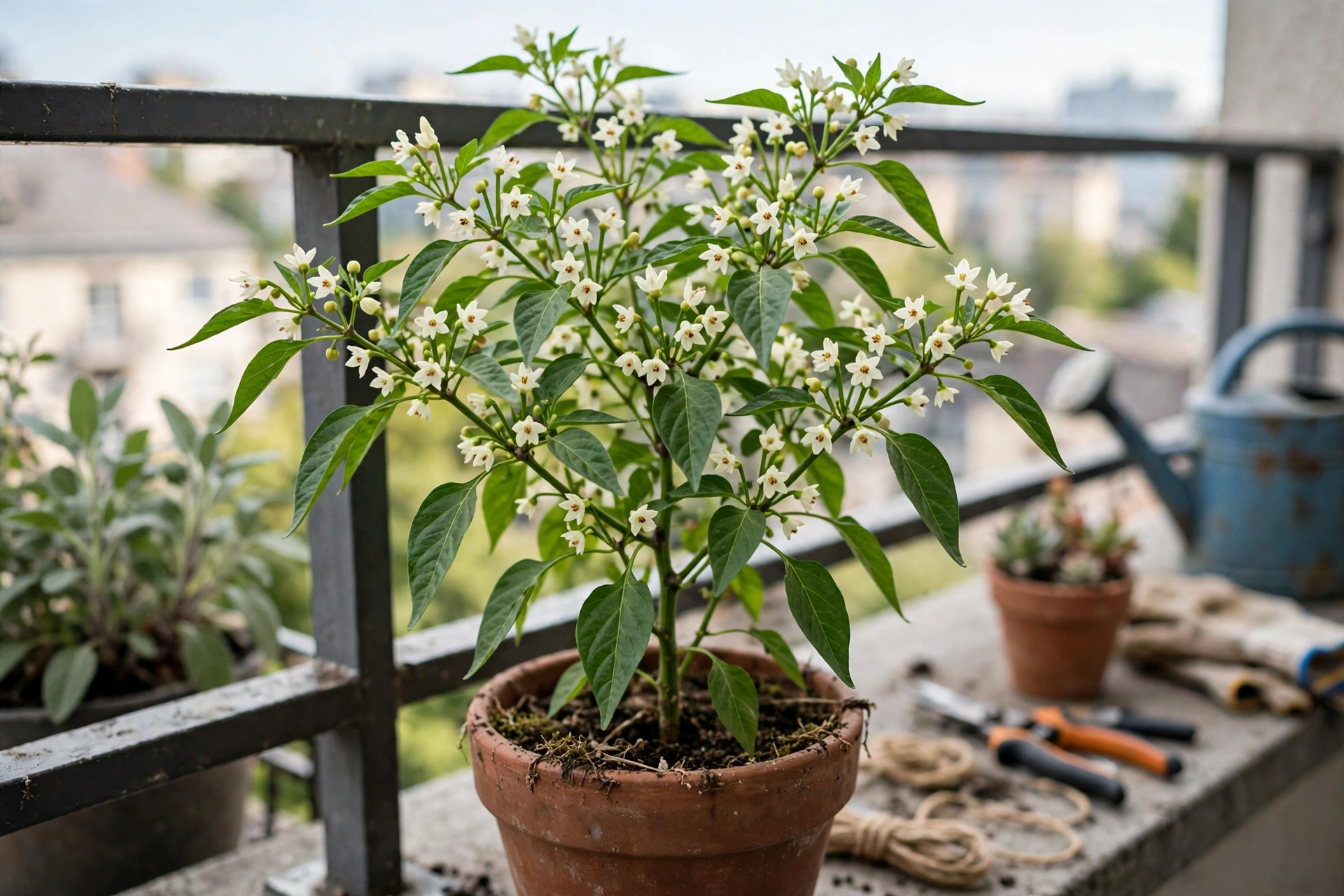
A chilli plant covered in flowers should be a promise of a good harvest. When those flowers open, then drop off one by one without forming a single fruit, it is frustrating. The plant looks healthy, the flowers look normal, and yet nothing follows. This problem is very common indoors and on balconies, where light, wind, heat, and pollination are all different from a garden bed. The good news is that flower drop is usually a signal, not a failure. Once you find which condition is out of balance, most plants start setting fruit within a few weeks. This guide explains why chilli plants do not set fruit indoors or on a balcony, and how to fix each cause step by step.
How Chilli Flowers Become Fruit
Each chilli flower needs to be pollinated before it can become a fruit. Pollen must move from the male part of the flower to the female part. Outdoors, wind and insects do most of this work. Indoors and on a sheltered balcony, there is often little wind and few insects, so pollen stays where it is and the flower drops unfertilised. Even when pollination happens, the plant will only keep the fruit if conditions are right. If the plant is stressed by heat, cold, dry soil, or too much fertiliser, it will drop flowers to save energy. Understanding this helps you check pollination first, then the growing conditions.
Why Chilli Plants Do Not Set Fruit
1. Not Enough Light
Chilli plants need a lot of bright light to make fruit. A window that looks bright to a person may still be too dim for a chilli plant, especially if the sun only reaches it for a few hours. On a balcony, a wall, a roof, or a neighbouring building can block the sun for much of the day. Plants in low light grow tall and leafy, flower weakly, and drop most of their flowers. The plant simply does not have enough energy to support fruit.
2. No Pollination Indoors
Indoors, there are usually no bees and very little moving air. A chilli flower can pollinate itself, but it still needs a small shake or movement to release the pollen. Without that, many flowers open and fall without ever being fertilised. On a balcony, strong wind can also be a problem, because it can dry the flowers out or knock them off before pollination happens. A gentle breeze is ideal.
3. Heat or Cold Stress
Chilli flowers are sensitive to temperature. Very hot days, especially above about 32 degrees Celsius, can make pollen less able to fertilise the flower, and the plant may drop flowers to protect itself. Cold nights below about 12 to 15 degrees can have the same effect. On a balcony, pots heat up in the sun and cool down quickly at night, so the roots feel these changes more than plants in the ground. A plant that is hot during the day and cold at night will often flower well but set almost no fruit.
4. Uneven Watering
Pots dry out fast, especially on a sunny balcony. If the soil dries out completely, then is soaked, the plant is stressed and drops flowers. If the soil stays wet all the time, the roots cannot get enough air, and the plant also drops flowers. Chilli plants need soil that is moist but not wet, with regular watering that does not swing from dry to soaked.
5. Too Much Nitrogen Fertiliser
A plant fed with a lot of high-nitrogen fertiliser will grow many soft, dark green leaves and few flowers, and the flowers it does make often drop. The plant is putting energy into leaves, not fruit. A balanced feed, or a feed higher in potassium once flowers appear, supports fruiting better than a strong leaf feed.
6. The Pot Is Too Small
A chilli plant in a very small pot has little soil to hold water and nutrients. It dries out quickly, heats up quickly, and the roots run out of space. The plant may flower, but it cannot support fruit, so it drops the flowers. A pot of at least 20 to 30 centimetres across, with drainage holes, gives a much better chance of fruiting.
7. The Plant Is Still Young
Young chilli plants often drop their first flowers. This is normal. The plant is still building roots and leaves, and it is not ready to support fruit. If the plant is small, be patient. Once it is larger and stronger, later flowers are much more likely to set fruit. Removing the very first flowers on a small plant can even help it grow stronger before it starts fruiting.
How to Fix Chilli Plants That Do Not Set Fruit: A Step-by-Step Plan
Step 1: Move the plant to the sunniest spot. Give the plant at least six hours of direct sun a day if possible. On a balcony, that usually means the sunniest corner, not a shaded wall. Indoors, place it at the brightest window, and turn the pot every few days so all sides get light.

Step 2: Hand-pollinate the flowers. Every day or two, gently shake the plant, or tap each flower stem with your finger. You can also use a small, soft brush to move pollen from flower to flower. Do this in the morning, when the flowers are open and the pollen is dry. This simple step often makes the biggest difference indoors.

Step 3: Water evenly. Check the soil daily in warm weather. Water when the top few centimetres feel dry, and water until a little comes out of the drainage holes. Do not let the pot sit in water. Mulch the surface with straw or compost to slow drying on a hot balcony.
Step 4: Protect the plant from extreme heat and cold. Move pots into shade during the hottest part of a very hot day, and move them to a sheltered spot at night if nights are cold. A light-coloured pot heats up less than a dark pot. Grouping pots together can also reduce drying and temperature swings.
Step 5: Change the feeding. Stop using a strong high-nitrogen feed. Feed lightly with a balanced liquid feed, and once flowers appear, use a feed that supports flowering and fruiting. Follow the dose on the packet, and do not feed more often than suggested.
Step 6: Give the roots more room. If the plant is in a small pot, move it to a larger one, handling the root ball gently. Use fresh compost, water well after moving, and keep the plant out of strong sun for a day or two while it settles.
Step 7: Be patient with the first flowers. If the plant is young, allow it to grow for a few more weeks. Keep the conditions steady, hand-pollinate the later flowers, and watch for small green fruit forming behind the flower. Once the first fruit sets, later fruit usually follows more easily.
Common Mistakes That Stop Chilli Fruit Setting
- Keeping the plant in a dim room. Chilli plants need bright, direct light, not just a bright room.
- Never shaking or hand-pollinating indoor flowers. Without movement, most indoor flowers are never pollinated.
- Watering only when leaves wilt. By then the plant is already stressed and will drop flowers.
- Feeding heavily to force growth. Too much nitrogen gives leaves, not fruit.
- Using a tiny pot on a hot balcony. Small pots dry out and heat up fast.
- Moving the plant often. Chilli plants like steady conditions. Find a good spot and keep it there, apart from short moves for heat or cold.
Flower drop is not unique to chilli plants. Pepper plants dropping flowers often have the same causes, because peppers and chillies are close relatives and react to heat, water, and pollination in similar ways. The same checks for light, temperature, and watering help in both cases. A similar pattern also appears in tomato plants flowering but not producing fruit, where flowers form but fruit does not follow when conditions are out of balance.
Frequently Asked Questions
How do I hand-pollinate chilli flowers?
Gently shake the plant each morning, or tap the flower stems with your finger. You can also use a small, soft brush to move pollen between flowers. Do this when the flowers are open and dry, and repeat every day or two while the plant is flowering.
Why do my chilli flowers fall off without fruit?
The most common reasons are no pollination, not enough light, heat or cold stress, uneven watering, or too much nitrogen fertiliser. Check light and pollination first, then water and temperature.
Do chilli plants need bees to set fruit?
No, bees help outdoors, but chilli flowers can pollinate themselves. Indoors, a gentle shake or a soft brush does the same job as wind or insects.
How long does it take for chilli fruit to appear after flowering?
After a flower is pollinated, a small green fruit usually appears behind the flower within a few days. If the flower drops and leaves a clean stem with no swelling, it was not pollinated or the plant dropped it because of stress.
Should I remove the first flowers from a young chilli plant?
Removing the first few flowers on a small plant can help it grow stronger roots and leaves first. Once the plant is larger, let later flowers set fruit. This is optional, but it often leads to a larger harvest later.
Save This Guide for Later

Chilli plants that flower but do not set fruit are usually telling you about light, pollination, temperature, water, or feeding. Give the plant the sunniest spot, hand-pollinate the flowers, water evenly, protect it from extreme heat and cold, feed lightly, and give the roots room to grow. With steady conditions, most indoor and balcony chilli plants start setting fruit within a few weeks.