

At the start of a new growing season, the hardest choice is often not what to grow, but what to plant first. With seed packets, seedlings and a clean bed in front of you, it is tempting to plant everything on the same day and hope for the best. That rush is also the most common reason for a slow, patchy start. Tender plants can be hurt by a late frost, seeds can sit in cold soil and rot, and seedlings started indoors can become weak before they ever reach the garden.
This guide gives you a simple priority order that works in any climate. It is based on what plants can handle, not on a fixed date. Hardy plants go first, because they can cope with cool soil and a light frost. Tender plants wait until the soil is warm and the risk of a late frost has passed. When you follow that order, fewer plants are lost, beds fill in a steady way, and the work is spread over several weeks instead of one exhausting weekend.

Why Planting Everything at Once Goes Wrong
Plants do not all need the same conditions. Some grow well in cool soil and can handle a cold night. Others stop growing, or die, when the soil is still cold. When everything is planted on the same day, the plants that need warmth are put out too early, while the plants that could have used the cool season lose valuable growing time. The result is often uneven growth, gaps in the bed, and a second round of sowing that could have been avoided.
Cold soil is one of the main causes. Many seeds need soil that is warm enough for steady germination. In cold, wet soil, seeds can rot before they sprout, or they can sprout very slowly and become food for slugs and other pests. If your seeds have failed to sprout in the past, the cause may have been timing rather than bad seed. Read our guide on why seeds do not germinate and how to fix each cause before you sow again.
- A late frost can damage tender leaves and stems in a single night, even after several warm days.
- Cold soil slows germination and root growth, so seeds and young plants stay weak for longer.
- Crowded beds make it hard to water, weed and check plants, and disease spreads more easily.
- Seedlings started indoors can become tall and weak if they wait too long for a place outside.
- Planting too much at once leaves no time to fix problems, such as poor drainage or dry soil.
Light and space cause problems too. Seedlings that are kept indoors for too long often stretch toward a window and become long and weak. That is why it helps to know how to fix leggy seedlings and to move plants out at the right stage, rather than holding them back. A clear order also protects young plants from strong wind, heavy rain and hot sun in the first days after planting, when they are most at risk.
How to Plant in the Right Order, Step by Step
Step 1: Prepare the beds before you plant anything
Start by clearing old stems, weeds and debris from the beds. Loosen the top soil with a fork, add a layer of compost, and level the surface. Check that water drains well and does not sit in puddles after watering. This step matters because hardy seeds sown into a cold, wet bed will struggle, while seeds sown into loose, well-drained soil have a much better chance. Take time here, and do not rush to sow into soil that is still waterlogged.
Step 2: Sow hardy seeds first
Hardy seeds are the first group to plant. These are the seeds that can germinate in cool soil and cope with a light frost. Sow them directly where they will grow, in rows or in small groups, and cover them lightly with soil. Water gently so the seeds are not washed away. Label each row, because young seedlings can look alike, and it is easy to pull out the wrong plants when weeding later.
Step 3: Plant hardy seedlings next
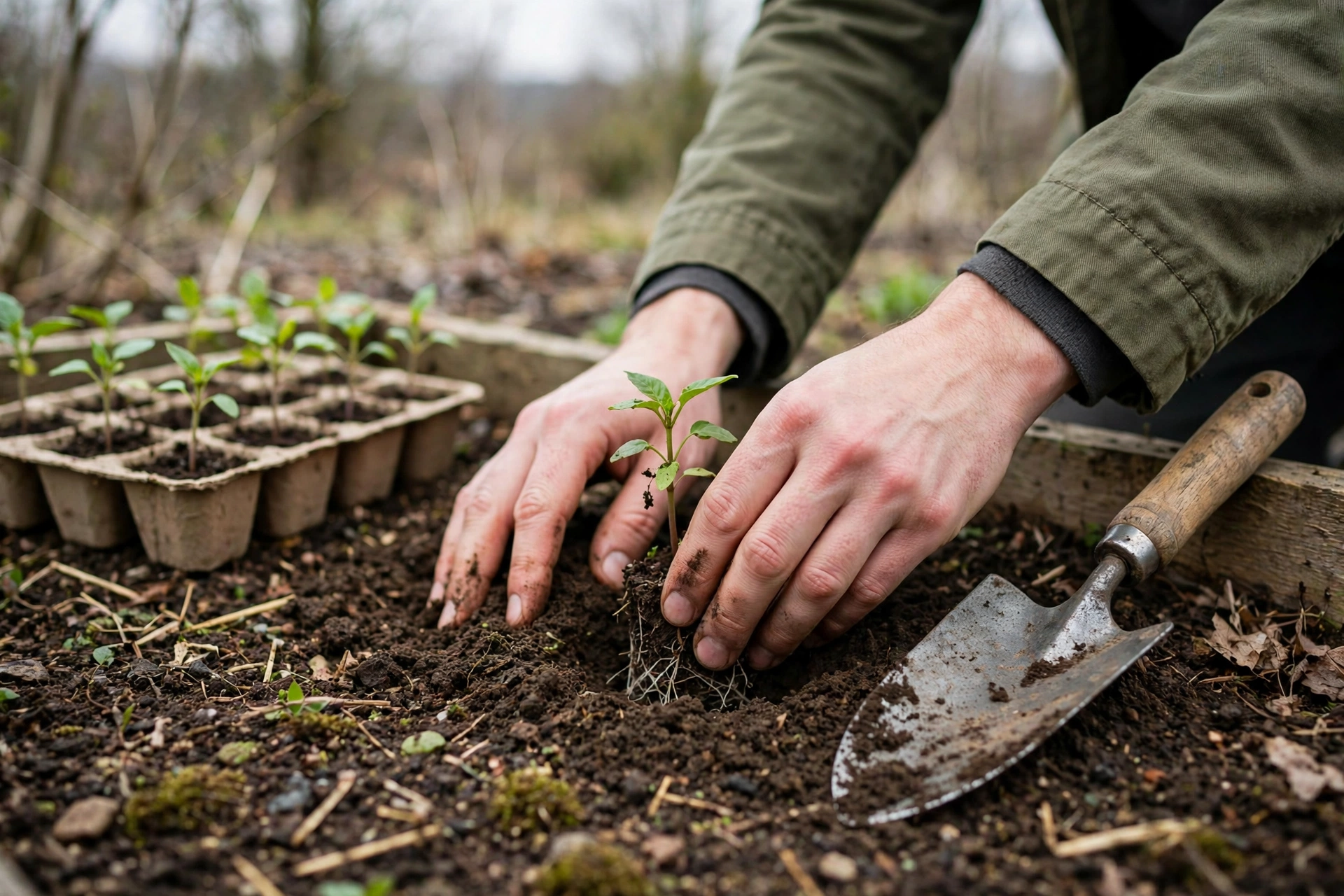
Next, move out the hardy seedlings you started indoors, or plants bought from a nursery. Harden them off first by placing them outside for a few hours each day, in a sheltered spot, for about a week. Then plant them on a calm, cloudy day if you can, and water them well at the base. Give them space to grow, and add a light mulch around them to keep the soil moist and steady in temperature.
Step 4: Sow the next group as the soil warms
As the days become warmer and the soil feels warmer to the touch, sow the next group of seeds. These are plants that need warmer soil to germinate well, but can still handle a cool night. Check the soil with your hand or a soil thermometer, and wait until it is no longer cold and wet. Sow in small batches a week apart if you can, so that not all of your plants mature at the same time and you have a longer harvest.
Step 5: Plant tender seedlings last
Tender seedlings are the last group to move outside. These plants are easily damaged by a late frost, so wait until the nights are reliably mild and the soil is warm. Harden them off carefully, and keep a cover ready in case a cold night is forecast. Plant them in the warmest, most sheltered part of the bed, water them well, and protect them from strong wind in the first week. For more on this, see our guide on how to protect young plants from heat, wind and heavy rain.
Step 6: Fill gaps and sow fast growers
Once the main plants are in, look for gaps. Fill them with fast-growing seeds that can be sown directly and mature quickly. These are useful because they use space that would otherwise grow weeds, and they give you an early harvest while slower plants are still growing. Keep notes on what you planted and where, so you can plan the next round of sowing and avoid planting the same crop in the same spot again too soon.
Step 7: Water, mulch and check every few days
After planting, the work is not over. Water new seeds and seedlings gently, and keep the soil evenly moist, not wet. Add mulch to hold moisture and reduce weeds. Check the beds every few days for signs of pests, dry soil or plants that need support. Early checks are important, because a small problem, such as a dry patch or a slug attack, is easy to fix when it is found early, but can cause a lot of damage if it is left for a week.
Common Mistakes to Avoid
The most common mistake is planting tender plants too early because of a few warm days. Warm days do not mean the cold nights have ended, and one late frost can undo weeks of work. Another mistake is sowing seeds too deep. Most seeds need only a light cover of soil, and seeds sown too deep may never reach the surface. A third mistake is planting too close together. Plants need air and light, and crowded plants grow weak and are more likely to suffer from disease.
- Do not plant everything on one day; spread planting over several weeks.
- Do not skip hardening off seedlings before moving them outside.
- Do not sow into cold, wet soil and hope the seeds will wait.
- Do not forget to label rows and keep a simple garden plan.
- Do not leave new plants without water in the first week after planting.
Another common mistake is to ignore the soil. If the soil is hard, dry or waterlogged, even healthy plants will struggle. Add compost, loosen the surface, and make sure water can drain. Finally, do not plant more than you can care for. A smaller bed that is well looked after will give you more food and flowers than a large bed that is left to weeds and dry soil.
Frequently Asked Questions
What should I plant first at the start of the growing season?
Plant hardy seeds and hardy seedlings first. They can handle cool soil and a light frost. Save tender plants for last, when the soil is warm and the risk of a late frost has passed. This order gives every plant the conditions it needs to grow well.
How do I know when the soil is warm enough to plant?
Check the soil with your hand or a soil thermometer. For hardy seeds, cool soil is fine. For tender plants, wait until the soil feels warm, not cold, and stays warm for several days. If the soil is still wet and cold, wait a little longer, because seeds can rot in cold, wet soil.
Can I plant everything on the same day?
You can, but it is not a good idea. Tender plants may be damaged by a late frost, and hardy plants may lose growing time. Spreading planting over several weeks is safer, and it also spreads the work and the harvest, so you are not overwhelmed at one time.
What should I do if a late frost is forecast after I have planted?
Cover tender plants in the evening with fabric, a bucket or a box, and remove the cover in the morning when the temperature rises. Water the soil in the evening, because moist soil holds heat better than dry soil. Hardy plants will usually cope, but tender plants need that extra protection.
How can I stop my seedlings from becoming long and weak?
Give seedlings as much light as you can, and move them outside at the right time after hardening them off. Do not keep them indoors for too long, and do not crowd them in small pots. Strong light, good air flow and a timely move outside help seedlings grow short and sturdy.
Save This Guide for Later
Keep this simple priority order in mind at the start of every growing season: hardy seeds first, hardy seedlings next, then the warmer-season seeds, and tender seedlings last. Save the guide below so you can check the order again when you are ready to plant.
