

At the end of the season, the garden looks tired. Some plants have finished, some are diseased, and weeds have grown where crops once stood. It is tempting to clear everything at once, but a rushed cleanup can remove plants and shelter that are still useful, and it can disturb soil that needs rest.
End-of-season garden cleanup is not about making the garden look empty. It is about deciding what to remove, what to leave, and why, so the garden stays healthy, wildlife has shelter, and the soil is ready for the next growing season. A careful cleanup saves work later and protects the living things that help your garden.
This guide explains the cleanup step by step. You will learn which plants must go, which can stay, how to handle diseased material safely, and how to leave the beds in good shape without stripping them bare. The advice follows seasons and plant stages, so it works in any hemisphere and in any garden.
Before you start, think about what comes next in your garden. If you are planning the next season, how to plan a month-by-month garden calendar that you will actually follow will help you fit cleanup into your yearly plan, so beds are cleared, fed and ready in the right order.
Why End-of-Season Cleanup Matters
The main reason to clean up is plant health. Spent and diseased plants left in the bed can carry pests and disease into the next season. Leaves that are wet and rotting can spread fungal problems, and old stems can hide slugs and other pests. Removing that material breaks the cycle.
Cleanup also frees space and light. When finished crops are removed, the soil can be fed, covered and rested. Weeds that are removed now will not set seed and spread next season. A tidy bed is easier to water, mulch and plant in the next season.
At the same time, a garden that is stripped completely loses value. Bare soil dries out, washes away in rain, and loses the living roots and shelter that support soil life and wildlife. Seed heads, dry stems and leaf litter provide food and shelter for birds and insects through the cold or dry season. A good cleanup keeps that balance.
Finally, cleanup is a chance to learn. As you clear each bed, you can see which plants grew well, which struggled, and where the soil needs more compost. Those notes will make next season easier.
How to Do End-of-Season Garden Cleanup in 7 Steps
Clean one bed at a time, so the work stays manageable. Start with the bed that has the most finished or diseased plants, and finish each bed before you move to the next.
Step 1: Remove finished and diseased plants first
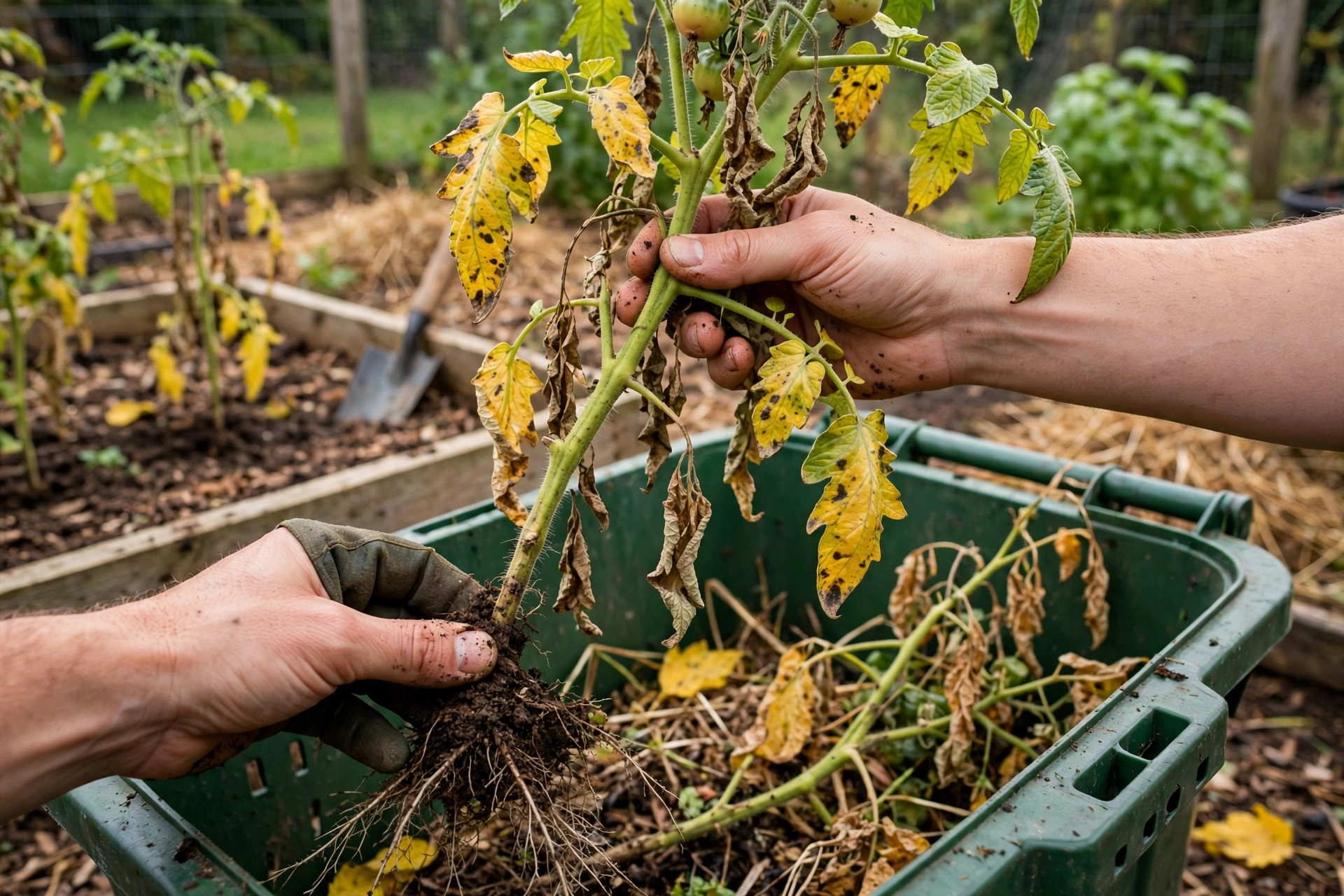
Pull out crops that have stopped producing and plants with signs of disease, such as spotted, mouldy or rotting leaves. Put diseased material in garden waste or household waste, not in a home compost pile, because home compost may not get hot enough to kill disease. Healthy spent plants can go in the compost pile.
Step 2: Pull weeds before they set seed
Remove weeds with their roots, while the soil is moist. Pay special attention to weeds with seed heads, and put them in garden waste, not compost. A few minutes of weeding now can save hours next season.
Step 3: Decide what to leave for wildlife
Leave some seed heads, dry flower stems and a small pile of leaves in a quiet corner. These give food and shelter to birds and insects through the cold or dry season. Mark the plants you leave, so you do not remove them by mistake in a later tidy-up.
Step 4: Cut back perennials and tidy edges
Cut back dead stems on perennials that will regrow next season, and leave healthy green growth in place. Tidy the edges of beds and paths, and remove fallen fruit that can attract pests. Do not cut everything to the ground; leave some structure for wildlife and for winter interest.
Step 5: Feed the soil with compost
Spread a layer of compost over the cleared beds, about 3 to 5 centimetres deep. Do not dig it in deeply; let worms and rain work it into the soil over time. Compost feeds soil life, improves soil structure and holds moisture for the next season.
Step 6: Cover bare beds with mulch or a cover crop
Cover bare soil with straw, leaves or a simple cover crop that suits your season. A cover protects soil from rain and wind, stops weeds, and adds organic matter when it is dug in later. Leave the cover in place until you are ready to plant again.
Step 7: Clean, store and note what you learned
Clean tools, pots and supports, and store them dry so they last longer. Wash pots that held diseased plants before you use them again. Finally, write a short note for each bed: what grew well, what had disease, and what to plant next time.

Common Mistakes to Avoid
- Clearing everything at once. A bare garden loses shelter for wildlife and leaves soil open to rain and wind. Leave some seed heads, stems and leaf litter in a quiet corner.
- Composting diseased plants at home. Home compost piles often do not get hot enough to kill disease. Put diseased material in garden waste instead, so problems do not return next season.
- Leaving weeds to set seed. Weeds left with seed heads will spread through the garden next season. Pull them with their roots before they finish seeding.
- Leaving soil bare all season. Bare soil dries, crusts and loses life. Cover cleared beds with mulch or a cover crop until you plant again.
- Forgetting bulbs and perennials. Some plants need to be left in place to grow again. If bulbs did not come up last time, read why spring bulbs did not come up before you clear a bed, so you do not remove plants that are still alive underground.
Frequently Asked Questions
When should I do end-of-season garden cleanup?
Start when most crops in a bed have finished and growth has slowed. Clean one bed at a time, as each crop finishes, rather than waiting for the whole garden to finish at once.
What should I remove first?
Remove diseased and finished plants first, then weeds with seed heads. Those two jobs protect next season the most. Leave healthy perennials and useful seed heads until later in the cleanup.
Should I leave leaves on the beds?
Yes, a layer of leaves makes a good mulch and shelter. Keep leaves in place, or move them to beds that need cover. Remove only thick, wet mats of leaves that block light and air from plants still growing.
Can I put spent plants in the compost pile?
Healthy spent plants can go in the compost pile. Diseased plants should go in garden waste, not home compost. If you are unsure, put the material in garden waste to be safe.
How do I know what to leave for next season?
Leave perennials, bulbs and self-sown seedlings that you want to keep, and leave seed heads for wildlife. Mark them with a small stick or label. For crops like garlic, check how to tell when garlic is ready to harvest so you lift bulbs at the right time, not during a rushed cleanup.
Save This Guide for Later
Save this end-of-season garden cleanup guide so you can check it each year as the season ends. Remove what is finished or diseased, leave what helps wildlife and soil, feed the beds and cover them, and your garden will start the next season in good shape.
