
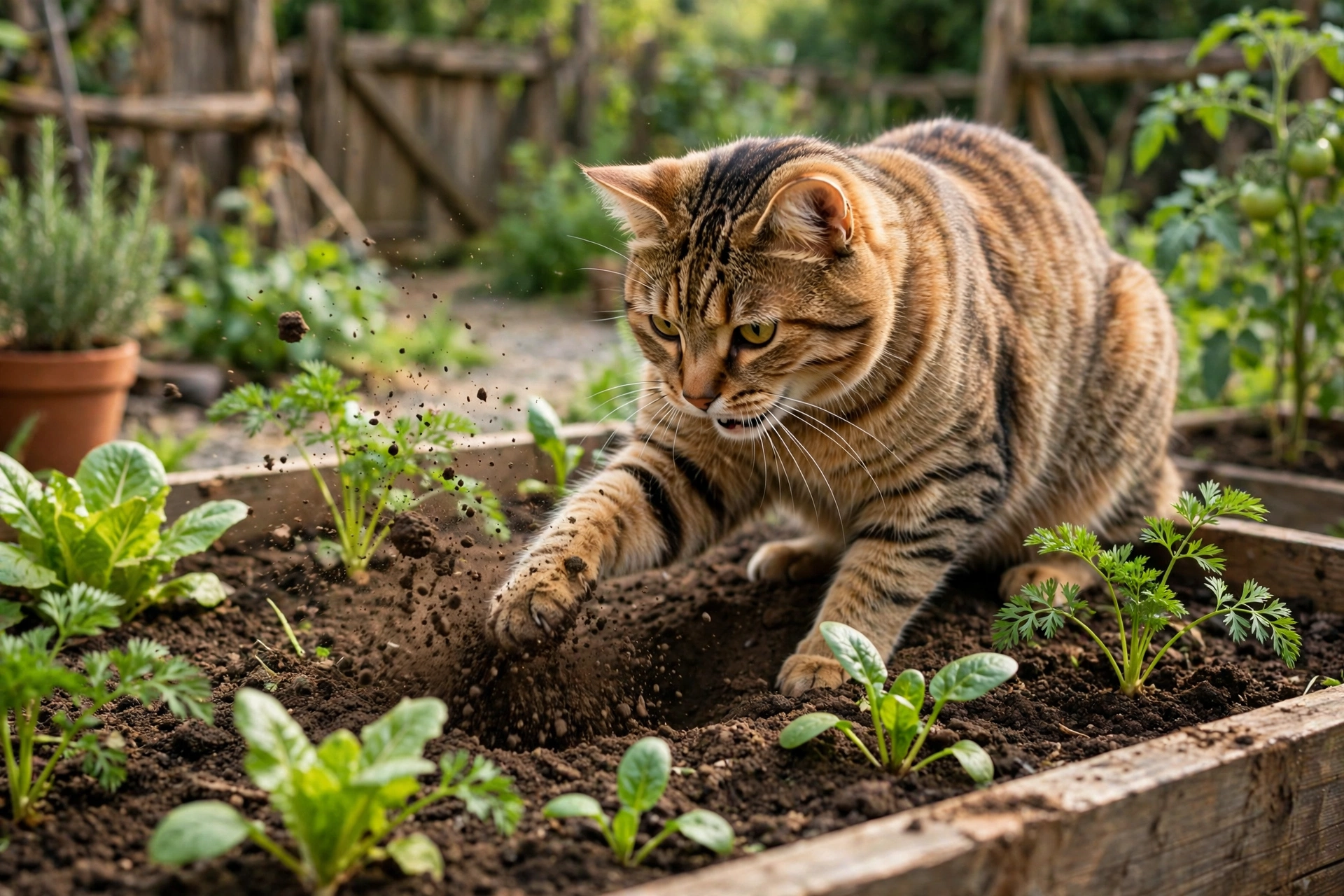
You sow seeds, water the bed, and wait for green shoots. Then you find the soil dug up, the seeds scattered, and a smell you did not expect. Cats love garden beds. The soil is loose, soft, and easy to dig, and a raised bed is warm, sheltered, and close to the ground. For a cat, a fresh bed looks like the perfect litter box.
This is a common garden problem, and it is also a health problem. Cat waste can carry germs that do not belong in a vegetable bed, and digging damages roots and seedlings. The good news is that you can stop cats without harming them. Cats choose a bed because it is easy and safe. If you make the bed less easy and less safe, and give them a better place to go, most cats will move on.
This guide explains why cats use garden beds, and how to stop them step by step with covers, mulch, water, and scent. The methods are kind, simple, and safe for cats, plants, and people.
Why Cats Choose Garden Beds
Cats look for loose, dry soil that is easy to dig, and a quiet spot where they can bury waste. A new bed fits that list perfectly: you have just loosened the soil, watered it, and left it bare. A raised bed is even better for a cat, because it is warm in the sun and easy to reach. Beds near walls and fences are popular too, because a cat can watch for other animals while it uses them.
Cats are creatures of habit. Once a cat has used a bed, it will return to the same spot, because the smell tells it this is the right place. That is why cleaning the bed well is part of the fix. If you only cover the bed for a day and then leave it bare again, the cat will come back. You need to break the habit by making the bed hard to use for a few weeks.
What Makes the Problem Worse
1. Bare, loose soil
Bare soil that you have just dug over is the easiest place for a cat to dig. The looser the soil, the more the cat likes it. Covering the soil, even with a simple mulch, makes the bed much less inviting.
2. A quiet, sheltered bed
Beds that are hidden from people and dogs are safer for a cat. If your beds are in a quiet corner, cats will use them more. A bed next to a busy path is less attractive, although it is not a full fix on its own.
3. Waste left in the bed
If waste is left in the bed, the smell brings the cat back, and it can also attract other cats. Clean the bed as soon as you find waste, and do not put it in the compost. Wear gloves, put the waste in a bag, and wash your hands well after.
Step-by-Step: How to Stop Cats Using Your Beds
Step 1: Clean the bed and remove the smell
Put on gloves and remove any waste and soiled soil. Do not use bleach on the soil. Water the bed well and let it dry, then add a layer of fresh compost or soil to the top. Cleaning well is important, because the smell is what brings the cat back to the same spot.
Step 2: Cover the soil with mulch
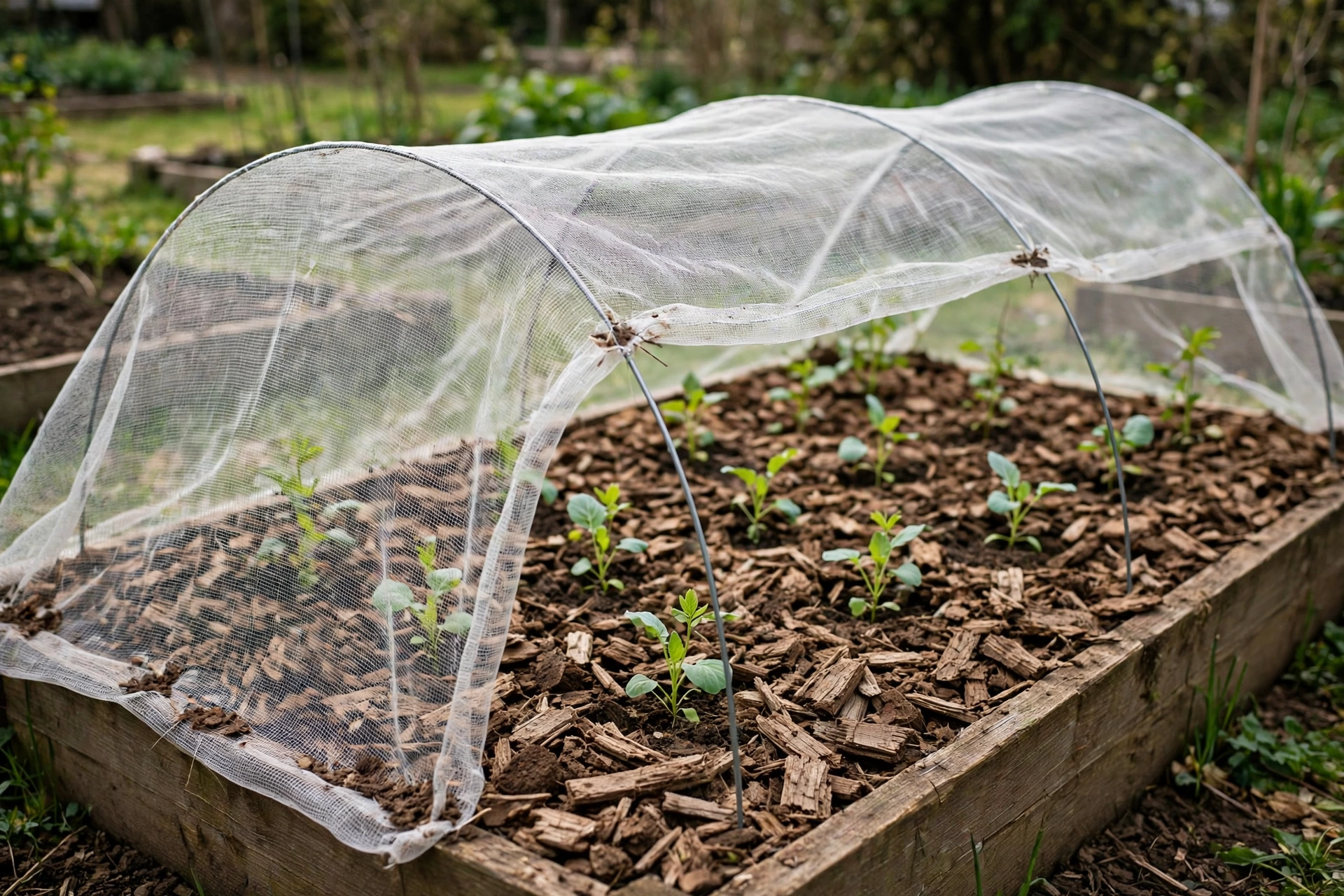
Cover bare soil with a thick layer of mulch, such as bark, straw, or coarse compost. Cats do not like digging through rough mulch. Mulch also helps the soil hold moisture and stops weeds. If you want to use mulch well, read How to Use Mulch Correctly: Common Mulch Mistakes to Avoid, and keep mulch a little away from plant stems so they do not rot.
Step 3: Use a physical cover
A mesh cover, wire grid, or net over the bed is one of the most reliable fixes. Lay it flat over the soil, or raise it on small hoops so seedlings can grow under it. The cat cannot dig through the mesh, and after a few visits it will stop trying. Remove the cover only when the plants are large and the soil is well covered by leaves.
Step 4: Add prickly or rough material
Cats like soft soil under their paws. A layer of pine cones, small stones, or prickly cuttings between plants makes the bed uncomfortable to walk on. Do not use sharp objects that could hurt the cat or your hands. Rough, natural material is enough. Move it aside when you need to work in the bed, and put it back when you finish.
Step 5: Use water to teach the cat to stay away
A motion-activated sprinkler gives a short burst of water when a cat enters the bed. Cats do not like getting wet, and they soon learn to avoid the area. Set the sprinkler to cover the bed, and move it now and then so the cat does not learn the safe spots. This method is kind, it does not harm the cat, and it also waters the garden.

Step 6: Use scent the cat dislikes
Cats dislike strong citrus smells. Scatter orange or lemon peel around the edge of the bed, and replace it after rain. Some gardeners plant herbs with a strong scent near the bed. Scent alone is not enough for a determined cat, but it helps when used with a cover or mulch. Do not use mothballs or chemicals, which can harm cats, plants, and soil.
Step 7: Give the cat a better place to go
If the cat belongs to you, give it a simple outdoor litter area in a quiet corner, away from the beds, with loose sand or soil. Clean it often. If the cat is a neighbour’s cat, talk to the owner: a clean litter tray indoors may fix the problem. A wildlife-friendly corner can also draw animals away from the beds, as explained in How to Build a Simple Wildlife Corner Without Creating a Mess.
Common Mistakes That Let Cats Keep Coming Back
The most common mistake is covering the bed for only a day or two, then leaving it bare again, which lets the cat return. A second mistake is cleaning the bed badly, so the smell stays and brings the cat back. A third is using harmful methods, such as mothballs, chilli powder, or traps, which can hurt cats and soil life. A fourth is blaming the wrong animal: ants, slugs, and birds can also damage beds, and each needs a different fix. Ants build hills in beds, as explained in Why Do Ants Keep Building Hills in My Lawn and Garden Beds?, and slugs eat plants overnight, as explained in How to Stop Slugs and Snails From Eating Your Plants Overnight. Check the signs before you act, keep the bed covered for a few weeks, and combine two or three kind methods at once.
Frequently Asked Questions
Is cat waste safe for the vegetable garden?
No. Cat waste can carry germs that are not safe in food beds, and it should not go in compost. Remove it with gloves, wash your hands, and keep cats out of beds where you grow food.
Will a motion-activated sprinkler scare all animals away?
It will give any animal that walks past a short burst of water, including birds and pets. Place it so it covers the bed, not the whole garden, and turn it off when you are working in the bed.
Do citrus peels really keep cats away?
They help, but they are not a full fix on their own. Cats dislike the smell, so peels work best with a cover or mulch. Replace them after rain, because the smell fades fast.
How long should I keep the bed covered?
Keep the cover on for at least two to three weeks, until the cat has formed a new habit. After that, you can lift it when the plants are large and the soil is well covered by leaves.
What if the cat is my own cat?
Give your cat a clean litter tray indoors and a simple outdoor litter area away from the beds. Keep the beds covered with mulch or mesh, and clean the litter area often so the cat prefers it to the beds.
