
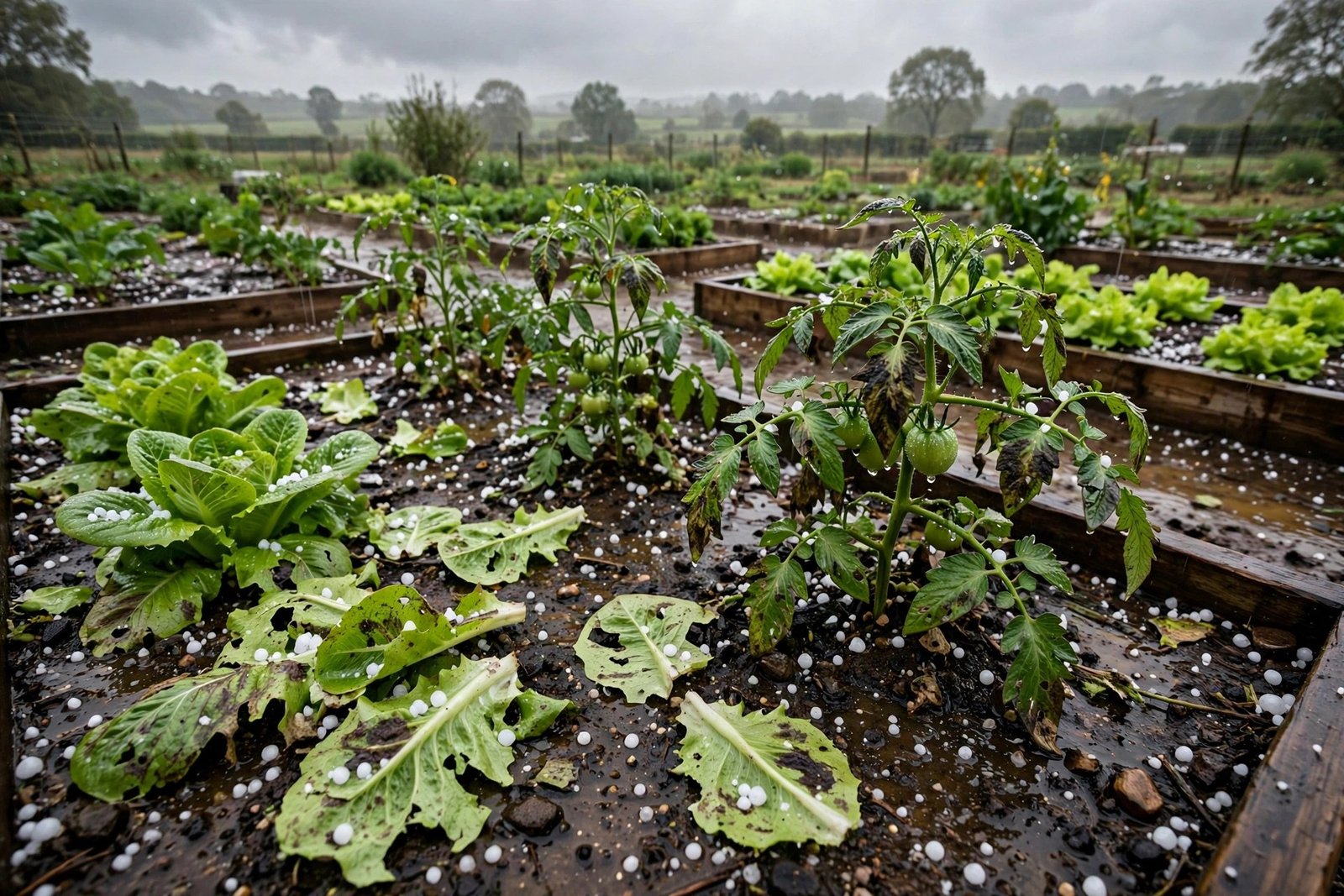
A hailstorm can undo weeks of careful garden work in less than ten minutes. One moment your tomato plants are green and full of fruit, and the next they are torn, bruised and lying flat on the soil. Leaves are shredded, stems are snapped, and young seedlings can be wiped out completely. The good news is that hail damage is one of the most preventable garden problems. With a little preparation and a fast response after the storm, most plants recover. This guide explains why hail hurts plants, how to protect your garden from hail before a storm, and what to do afterwards to help your plants bounce back.
Why Hail Damages Plants So Quickly
Hail is not like rain. Rain falls softly and soaks into the soil, but hailstones are solid balls of ice that hit plants at high speed. Even small hailstones the size of peas can tear soft leaves and bruise fruit. Larger stones can snap stems, strip bark from young branches and punch holes through leaves. Covers that protect your garden from hail can stop most of that damage.
The damage depends on three things. First, the size of the hailstones: bigger stones hit harder. Second, the length of the storm: a short burst may only mark a few leaves, while ten minutes of steady hail can flatten a whole bed. Third, the type of plant: soft, leafy plants such as lettuce, basil and young seedlings suffer most, while woody shrubs and established trees usually escape with minor damage. Fruit is also at risk. A bruised tomato or apple may look fine on the outside but rot quickly once the skin is broken.
Hail often arrives with strong wind and heavy rain, which makes the damage worse. Wind drives the stones sideways into stems and trunks, and the extra water can flood beds that are already struggling. That is why the same protection that helps against heavy rain often helps against hail too.
How to Protect Garden From Hail Before a Hailstorm
You cannot stop a hailstorm, but you can be ready for one. The best protection is set up before the storm season starts, so you are not rushing outside when the sky turns dark. Follow these steps in order.
Step 1: Watch the weather every day during storm season
Check the forecast each morning when storms are common in your area. Most weather apps give a hail warning an hour or two before a storm arrives. That is enough time to cover your most valuable plants. Make it a habit, just like checking whether your plants need water.
Step 2: Cover vulnerable plants with hail netting
Hail netting is a strong, lightweight mesh that sits above your plants and absorbs the impact of falling stones. It is the single most effective protection for vegetable beds. Drape it over hoops, stakes or a simple frame so it sits at least 15 to 20 centimetres above the leaves. If the netting rests directly on the plants, the stones can still bruise the leaves through it. Fix the edges firmly with pegs or heavy stones so wind cannot lift it. Shade cloth can work as a cheaper short-term cover, but proper hail netting lasts longer and lets more light through. It is one of the best ways to protect your garden from hail.
Step 3: Move pots and containers under cover
Potted plants are the easiest to save because you can move them. When a storm is forecast, carry pots under a roof, a carport, a sturdy table or even indoors near a bright window. Small seedlings in trays should always be moved first, because they are the most fragile. If you cannot move a heavy pot, tip it on its side against a wall so the hail hits the pot instead of the plant.
Step 4: Protect fruit and young trees
Young fruit trees and plants carrying ripe fruit need extra care. Wrap the canopy of a small tree in netting or an old bed sheet before the storm, and tie it loosely so it does not snap branches. For fruiting plants such as tomatoes and peppers, a simple frame of stakes with netting on top works well. Pick any ripe fruit before the storm if you can. A tomato that is already picked cannot be bruised, and it will ripen safely indoors.
Step 5: Strengthen plants before the season
Healthy, well-fed plants survive hail better than weak ones. Feed your plants regularly, water them deeply so their roots grow strong, and prune away dead or damaged growth. A plant with a thick stem and a deep root system can lose some leaves and still recover, while a weak plant may not. Think of it as building the plant’s strength before it is tested.
Step 6: Keep covers ready and easy to reach
The biggest reason gardeners lose plants to hail is not a lack of covers. It is that the covers are buried in a shed when the storm arrives. Store your netting, pegs, old sheets and frames in one place near the garden, ready to grab. Practice putting them up once, so you know it takes five minutes and not half an hour. That readiness helps you protect your garden from hail when minutes matter.

What to Do Right After a Hailstorm
Once the storm has passed and it is safe to go outside, act quickly. Even the best plans to protect your garden from hail cannot stop every stone, so the first day after hail is the most important for recovery.
Step 1: Check every plant and remove what is broken
Walk through the garden and look at each plant. Remove leaves that are completely shredded and stems that are snapped, using clean, sharp secateurs. Cut just above a healthy leaf joint. Do not pull at torn parts, because that can tear healthy tissue too. Clear fallen leaves and hailstones from the beds so air can move around the plants again.
Step 2: Leave damaged leaves that are still partly green
Not every marked leaf needs to come off. A leaf with a few holes or bruises can still make food for the plant. Only remove leaves that are more than half destroyed or hanging limp. Plants need all the healthy leaf area they can keep while they recover.
Step 3: Water gently and feed lightly
Hail-stressed plants need water, but do not flood them. Water the soil at the base of the plant, not the damaged leaves, and give a light liquid feed a few days later to support new growth. Avoid heavy fertiliser straight after the storm. It pushes soft new growth that is weak and easy to damage again. If hot, dry weather follows the storm, the advice for keeping plants alive through a heatwave also applies here: water deeply, water early, and shade the worst-hit plants for a few days.
Step 4: Watch for disease in the following weeks
Torn leaves and bruised stems are open doors for fungal disease. Check your plants every few days for dark spots, mould or leaves that turn yellow and drop. Remove any diseased leaves straight away and put them in the bin, not the compost. Good airflow helps a lot, so thin out crowded growth and keep the soil surface clear of debris.
Step 5: Be patient before deciding a plant is dead
Many plants look terrible the day after a hailstorm but recover within two or three weeks. Wait at least two weeks before pulling a plant out, unless the main stem is broken at the base or the roots are exposed. New shoots often appear from the base or from leaf joints you thought were dead. If a cold snap follows the storm, remember that a late frost can finish off already weakened plants, so cover them again at night until the danger passes.

Common Mistakes to Avoid
The most common mistake is waiting too long to cover plants. By the time the first hailstones fall, it is too late to go outside safely. Cover early to protect your garden from hail, even if the forecast is only a chance of hail. A false alarm costs you ten minutes. A missed storm can cost you a whole bed.
Another mistake is removing too much damaged growth at once. Stripping a plant bare leaves it with no way to make food, and it may never recover. Cut away only what is clearly dead, and let the plant keep the rest.
A third mistake is forgetting the fruit. Gardeners often protect the leaves but leave ripe tomatoes, berries and soft fruit exposed. Bruised fruit rots fast, so pick what you can before the storm and check what is left afterwards. Use bruised but unbroken fruit the same day, and throw away any fruit with deep cuts or mould.
Finally, do not ignore the soil. Hail compacts the top layer of soil and can wash mulch away. Once the storm passes, loosen the surface gently with a fork and replace any mulch that has been scattered, so the roots stay cool and moist.
Frequently Asked Questions
Can plants recover from hail damage?
Yes, most plants can. Leafy vegetables and herbs usually grow new leaves within two to three weeks if their stems and roots are intact. The key is to remove only the badly damaged parts, water gently and give the plant time. Plants with a broken main stem or exposed roots are less likely to survive.
Is hail netting worth buying?
For most gardeners, yes. It is the most reliable way to protect your garden from hail, and it also shields vegetable beds and fruit plants. One roll can last several seasons. It also keeps birds and large insects off your crops. If you grow food you depend on, netting pays for itself the first time it saves a bed.
How do I protect garden from hail if I have no warning before a storm?
If a storm arrives with no warning, stay indoors until it passes. Your safety comes first. Afterwards, follow the recovery steps above. For the future, keep netting and covers ready near the garden, and set up a permanent frame over your most valuable beds so protection is always in place.
Should I prune hail-damaged plants straight away?
Remove snapped stems and shredded leaves on the first day, but do not do a heavy prune. Wait two weeks and see what regrows before cutting more. A light trim now and a proper tidy-up later gives the plant the best chance to recover.
Does hail damage the soil?
Hail itself does not poison the soil, but it can compact the surface and wash away mulch. It can also leave the soil cold and wet for a few days. Loosen the top layer gently after the storm, replace the mulch, and avoid walking on wet beds, which makes compaction worse.
