
A backyard should feel like a private place to relax, eat outside, or spend time with family. When neighbours can see straight into the yard from a window, a balcony, or a higher garden, that feeling disappears. Many people sit less often outside, keep curtains closed, or avoid using a seating area altogether. The problem is common in places where houses are close together, and it can be fixed without building a high, solid wall that blocks light and air.
This guide explains why an overlooked backyard feels uncomfortable, what causes the lack of privacy, and a clear step-by-step plan to create screening that still looks natural. The ideas use plants, screens, and simple changes to layout. They work for a small yard as well as a larger one, and they can be started in stages, so the cost and work stay manageable.
Why an Overlooked Backyard Feels Uncomfortable
Privacy is not only about being seen. It is about feeling relaxed enough to use a space. When a seating area faces a neighbour’s window, people feel watched, even if no one is looking. They sit in a stiff way, keep their voices low, and leave sooner. Children may play less freely, and evening meals outside can feel awkward. Over time, a good backyard can become a space that is rarely used, even though it is close to the house.
The causes are usually simple. A neighbour’s upper window may look down into the yard. A fence may be low, or it may have gaps. A seating area may be placed in the most open part of the garden, with no plants or screens around it. A yard on a slope can also be overlooked from higher ground nearby. In many cases, the yard has no clear layers, so there is nothing between the seating area and the view from outside. The fix is to add layers at the right height and in the right places, rather than trying to block every view at once.
Good privacy also needs light and air. A solid, tall wall can block a view, but it can also make a yard dark, hot, and closed in. It can trap damp air and make plants grow poorly. A better plan uses a mix of tall plants, screens with gaps for air, and lower planting in front. This gives privacy where it matters most, around seating and eating areas, while keeping the rest of the yard open and bright.
Step-by-Step Fix: Create Privacy Without Losing Light
Step 1: Find the Main Overlooked Spots
Start by sitting in the places where you actually spend time, such as a chair, a bench, or a dining table. Look around and note where a neighbour could see you. Check from a standing position too, and at different times of day, because the light changes. Make a simple list of the two or three views that matter most. These are the places to screen first. Trying to screen the whole boundary at once is costly and often unnecessary. Focus on the seating area, the eating area, and any path that is used often.
Step 2: Add Tall Plants for Natural Screening
Tall plants are one of the best ways to add privacy, because they grow, change with the seasons, and soften a hard boundary. Choose plants that suit the amount of sun and water in the yard, and that will reach the height you need without growing too wide. Bamboo in containers, tall grasses, and slim evergreen shrubs are common choices. Plant them in a row or in a small group where the view needs to be blocked, and leave space for air to move between them. Water new plants well in the first months, and give them time to fill out. A tall plant screen takes time, but it is a long-term fix that improves with age.
Step 3: Use a Trellis Screen With Climbing Plants
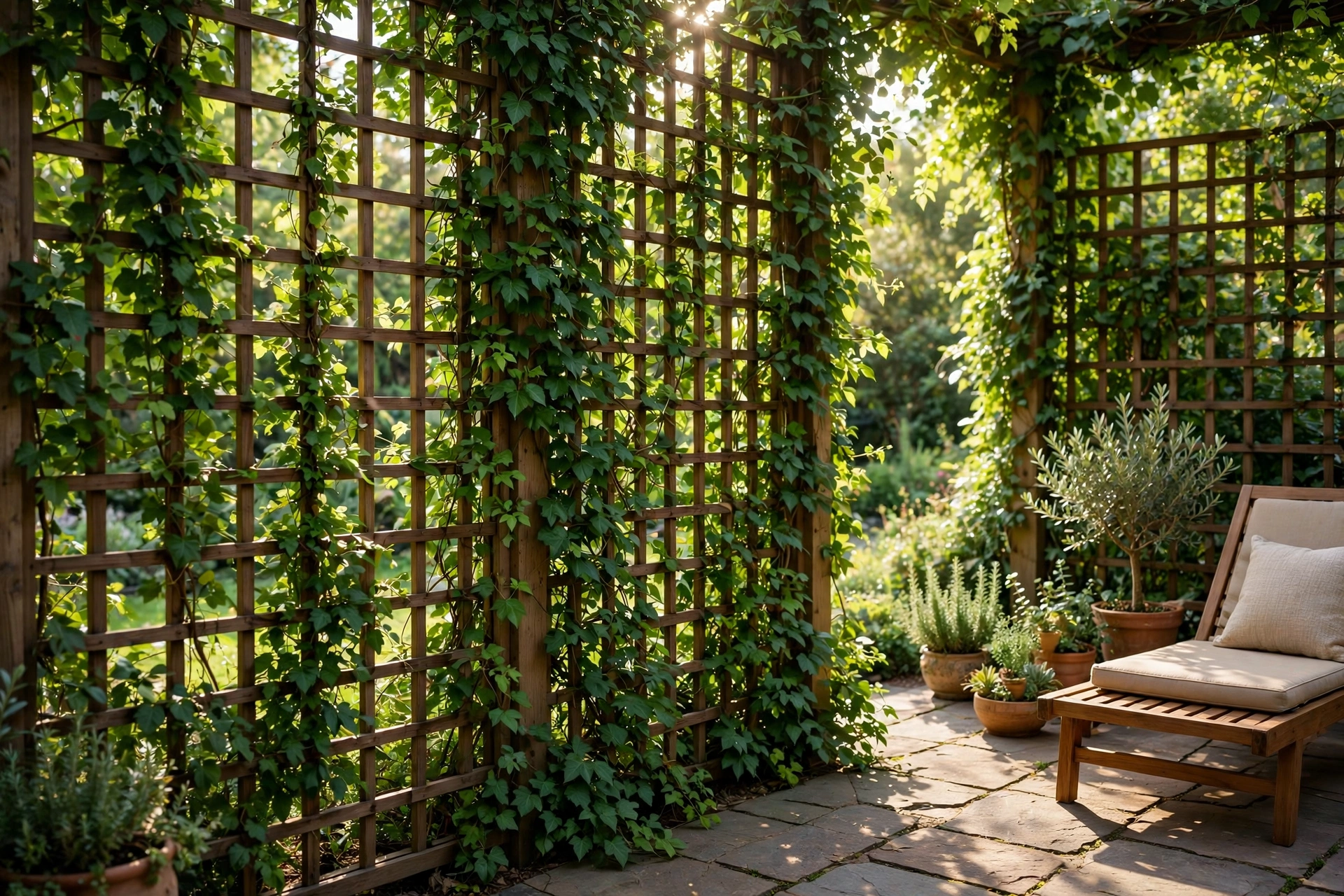
A trellis is a frame with a grid that climbing plants can grow over. It gives privacy faster than plants alone, because the frame itself blocks part of the view from the start. Place a trellis along a fence, beside a seating area, or as a free-standing screen. Choose a height that blocks the main view without making the space feel closed in. Plant a climber at the base, such as jasmine, clematis, or a light vine, and guide the stems along the frame as they grow. Keep the trellis firm and stable, and leave a gap at the bottom for air and for cleaning. This is also a good way to add shade and scent to a seating area.
Step 4: Build Layers With Shrubs and Grasses
Layered planting means using plants of different heights in front of each other. Tall plants stand at the back, near the boundary. Medium shrubs stand in the middle, and lower grasses or flowers stand in front. This creates a deep, natural border that blocks views from more angles than a single row of plants. It also looks better than a straight hedge, and it gives birds and insects more places to live. When planning layers, leave a path behind the plants for care and watering, and do not plant too close to a fence, because the plants need air and room to grow. A guide on how to keep plants alive through a heatwave can help with watering and shade choices for new planting.

Step 5: Move the Seating Area to a Better Spot
Sometimes the easiest fix is to move the seating area, not the fence. A chair placed in the middle of an open lawn is easy to see from all sides. The same chair placed near a corner, behind a shrub, or under a pergola feels much more private. Try moving the table or bench for a few days and see how it feels at different times. A corner near a house wall, a large plant, or a screen can give a sense of shelter without any building work. Keep the seating area close enough to the house for easy use, but far enough from the most open view.
Step 6: Add a Simple Screen, Pergola, or Shade Sail
A screen, a pergola, or a shade sail can add privacy from above as well as from the side. A pergola with a light cover or climbing plants gives shade and blocks a view from an upper window. A shade sail stretched over a seating area can do the same, while keeping the space bright. A simple wooden or metal screen can be placed beside a table to block one direct view. Choose a screen that lets some air through, so the area does not become hot and still. For ideas on shade, see the guide on how to keep mosquitoes away from your backyard, which also explains why air movement and a clean, dry patio make an evening seating area more comfortable.
Step 7: Keep the Screen in Good Condition
Privacy plants and screens need regular care. Water new plants, trim them so they stay full and do not grow into a neighbour’s space, and tie climbing plants to the trellis before they grow in the wrong direction. Clean screens, check fixings after strong wind, and remove dead leaves that can block air. A screen that is well cared for will last longer and look better. If a plant dies or a screen breaks, replace it soon, because a gap in a screen draws the eye and makes the whole yard feel less private.
Common Mistakes to Avoid
One common mistake is to plant a single tall hedge right against a fence and expect instant privacy. A new hedge takes time to grow, and a single row can have gaps that let people see through. Layered planting and a trellis give better cover sooner. Another mistake is to build the tallest possible screen everywhere. This can block light, make the yard dark, and create damp, still air where mosquitoes and mould can thrive. Screen only the views that matter, and keep the rest open.
Many people also choose plants that do not suit the yard, such as a plant that needs full sun in a shady corner, or a plant that grows too wide for a small space. Check the sun, water, and space before buying, and choose plants that will reach the height you need. Finally, do not forget the view from above. A low fence may be enough at ground level, but an upper window can still see over it. A pergola, a shade sail, or tall plants can help with that higher view.
Frequently Asked Questions
How fast can I get privacy in my backyard?
A trellis, a screen, or a pergola gives some privacy at once, because the structure itself blocks part of the view. Plants take longer, often one to three growing seasons, depending on the plant and the care it gets. A mix of a screen now and plants for the long term gives the best result.
Do I need to screen the whole boundary?
No, in most cases it is better to screen only the places where you sit, eat, and walk often. Screening the whole boundary can be costly, block light, and make the yard feel closed in. Start with the two or three main views, and add more later if needed.
What plants are best for privacy?
The best plants depend on sun, water, and space. Tall grasses, slim evergreen shrubs, and bamboo in containers are often used because they grow tall without taking up too much width. Climbing plants on a trellis are also useful. Choose plants that suit the local conditions and that you can care for, and avoid plants that spread too fast in open soil.
Will a privacy screen make my yard dark?
It can, if the screen is solid and very tall. To keep light, use a screen with gaps, a trellis with climbing plants, or layered planting that lets air and light through. Place the screen only where it is needed, and keep the rest of the yard open. A pergola or shade sail can block a view from above while still letting light in from the sides.
Can I create privacy in a small backyard?
Yes. In a small yard, move the seating area to a corner, use a trellis or a screen beside the table, and plant in pots and containers. Tall, slim plants take up little ground space but give good height. Layered planting in pots can also work, with tall plants at the back and lower plants in front.
