If every plant you bring home seems to die within a few weeks, you are not alone. Most beginners lose plants, and most of the time it is not because they have no talent for gardening. It is because a few common mistakes are working against them, and no one told them what those mistakes were.
The good news is that plant care is a skill, not a gift. The same seven mistakes cause most plant deaths, and each one has a simple fix. Once you know what to look for, you can keep the plants you already have alive and choose new ones with more confidence.
This guide explains the seven beginner mistakes that kill plants, what to do instead for each one, and a simple weekly routine that keeps plants healthy. It also covers how to tell if a struggling plant can be saved.
7 Beginner Mistakes and What to Do Instead
1. Overwatering
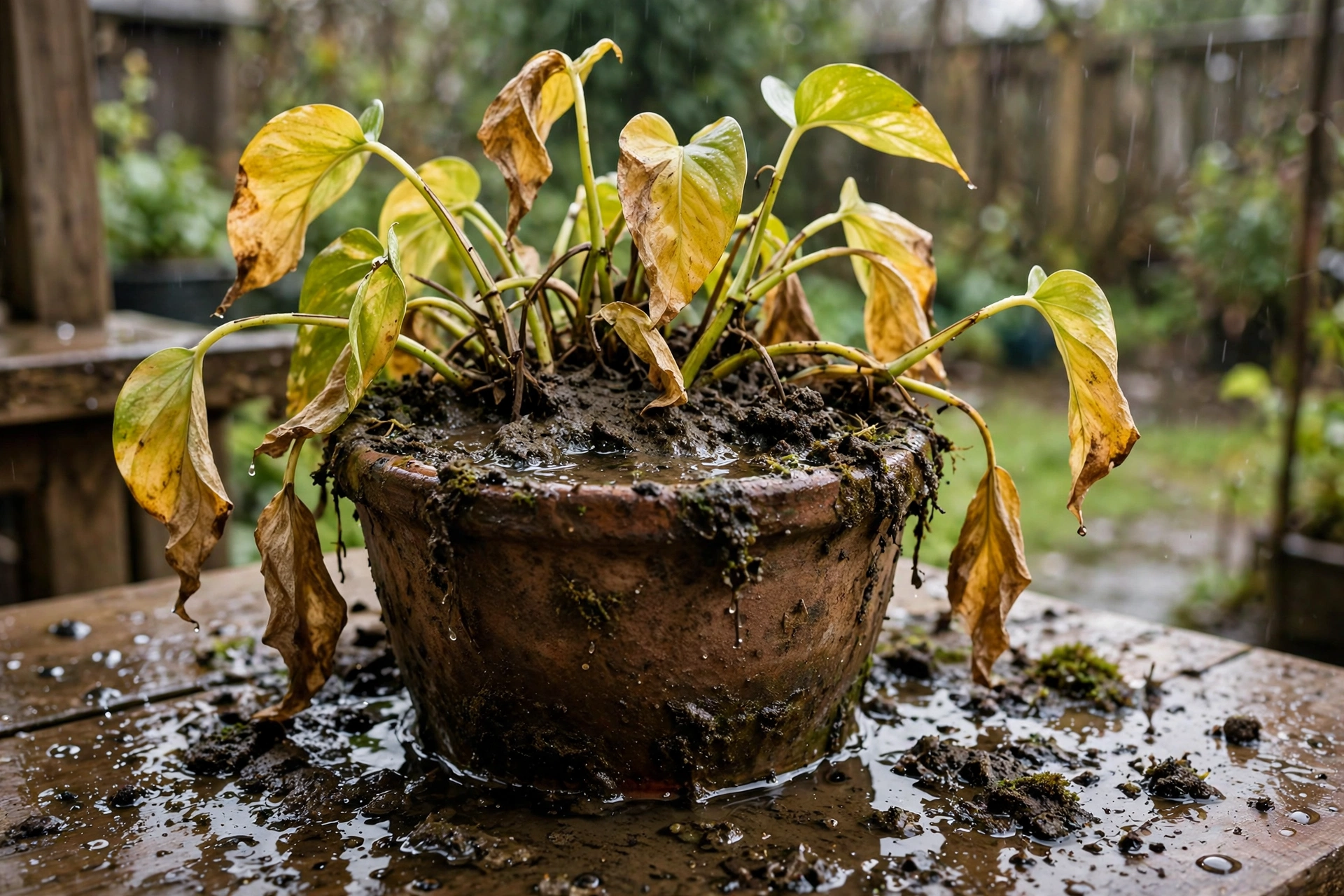
Overwatering is the most common way beginners kill plants. When soil stays wet, air cannot reach the roots, and the roots rot. The plant wilts, the leaves turn yellow, and the stem may go soft at the base. Many people see a wilting plant and water it more, which makes the problem worse.
What to do instead: Check the soil with your finger before you water. Water only when the top few centimetres feel dry, and make sure the pot has drainage holes. Let the extra water drain away, and never leave the pot standing in water. Our guide on how often beginners should water new plants explains the simple finger-test rule in detail.
2. Underwatering and forgetting to check
At the other end of the scale, some plants die simply because they are forgotten. A plant in a small pot in a bright spot can dry out in a few days. By the time the leaves droop, the roots may already be damaged.
What to do instead: Build a simple habit. Check your plants on the same day each week, and more often in warm weather. Touch the soil, look at the leaves, and water deeply when the soil is dry. A plant that is checked every week is rarely forgotten for long enough to die.
3. Putting the plant in the wrong light
Light is food for plants, and the wrong amount of light slowly starves them or burns them. A plant that needs bright light will grow weak and leggy in a dark corner. A plant that needs shade will get scorched leaves in strong direct sun. Both problems are common, and both are easy to miss until the damage is done.
What to do instead: Read the label when you buy a plant, and match it to a spot in your home. Bright, indirect light suits most houseplants. If a plant starts to stretch toward the window or its leaves fade, it needs more light. If the leaves turn brown at the edges or develop pale patches, move it out of direct sun. If your seedlings are tall and weak, read our guide to fixing leggy seedlings, because the cause is usually light.
4. Using a pot with no drainage, or the wrong size
A pot without drainage holes is a trap. Water has nowhere to go, so it sits at the bottom and rots the roots. A pot that is far too big is a similar problem: the soil stays wet for too long because the small root system cannot use all the water.
What to do instead: Always use a pot with drainage holes, and put a saucer under it to catch the extra water. Choose a pot only slightly bigger than the one the plant came in. When you repot, go up one size at a time.
5. Never checking the plant
Many plants die slowly, and the early signs are small: a few yellow leaves, tiny insects under a leaf, or soil that stays wet for days. If no one looks closely, these signs are missed until the plant is too far gone to save.
What to do instead: Give each plant a quick check once a week. Look at the top and the underside of the leaves, touch the soil, and look for insects or mould. Catching a problem early is the difference between a plant that recovers and a plant that dies.

6. Repotting too often, or at the wrong time
Repotting is stressful for a plant. Some beginners repot a new plant the day they bring it home, then repot it again a few weeks later. Each move damages roots and sets the plant back. A plant that is repotted too often spends all its energy recovering instead of growing.
What to do instead: Leave a new plant in its pot for a few weeks so it can settle in. Repot only when you can see roots coming out of the drainage holes, or when the plant dries out very fast after watering. When you do repot, handle the roots gently and water the plant in well.
7. Feeding too much, or feeding a sick plant
Fertiliser is not medicine. Giving a struggling plant a strong dose of fertiliser can burn its roots and finish it off. Feeding too often has the same effect: salts build up in the soil, the leaf tips turn brown, and the plant weakens.
What to do instead: Feed lightly, and only when the plant is growing well. A weak dose once a month during the growing season is enough for most plants. Do not feed a plant that is sick, dry, or newly repotted. Water it first, let it recover, and feed it only when it shows new growth.
A Simple Weekly Routine That Keeps Plants Alive
You do not need to spend hours on plant care. This short weekly routine takes about ten minutes and prevents most problems.
- Check the soil. Push your finger into the soil of each plant. Water only the ones that feel dry at the top.
- Look at the leaves. Check the top and the underside for yellow leaves, spots, or insects. Remove any dead leaves.
- Turn the pots. Give each pot a quarter turn so the plant grows evenly toward the light.
- Wipe the leaves. Dust on the leaves blocks light. Wipe large leaves with a damp cloth.
- Water deeply when needed. Water at the base of the plant, slowly, until the soil is damp all the way through. Let the extra water drain away.
- Note any changes. If a plant looks worse than last week, move it, check the drainage, or look up the problem before it gets worse.
How to Tell If a Plant Can Be Saved
Not every struggling plant is lost. A plant can often be saved if the stem is still green and firm, the roots are pale and firm when you check them, and there is at least one healthy leaf or a small new shoot. Cut away the dead parts, fix the cause, and give the plant time. New growth is the sign that it is recovering.
A plant is probably beyond saving if the stem is soft and mushy all the way down, the roots are black and smell bad, or there are no leaves and no new growth at all. In that case, it is better to start again with a fresh plant and use what you learned. That is not failure. It is how every gardener learns.
Frequently Asked Questions
Why do my plants keep dying even though I water them?
Watering is only one part of plant care. The most common cause is overwatering, which rots the roots even though the plant looks thirsty. Check the soil with your finger before you water, make sure the pot drains, and check the light and the leaves too. A plant can also die from too little light, poor drainage, or pests.
How do I know if I am overwatering or underwatering?
Look at the soil and the leaves together. If the soil is wet and the leaves are yellow and soft, you are probably overwatering. If the soil is dry and pulling away from the pot, and the leaves are dry and crisp, you are probably underwatering. The finger test is the fastest way to tell.
Should I repot a plant as soon as I buy it?
Usually not. Let the plant settle in its new home for a few weeks first. Repot only if the roots are coming out of the drainage holes, the plant dries out very fast, or the soil is in poor condition. When you repot, go up only one pot size.
Do I need to feed my plants?
Most plants need only a small amount of fertiliser during the growing season. A weak dose once a month is enough for most houseplants and garden plants. Do not feed a sick plant, a dry plant, or a newly repotted plant, because fertiliser can burn damaged roots.
What is the easiest plant for a beginner?
There is no single easiest plant for everyone, because it depends on the light in your home. The best choice is a plant that suits the light you have. Ask at the garden centre, read the label, and start with one plant. Learn to keep it healthy before you buy more.
Save This Guide for Later
If this guide helped you work out what was killing your plants, save the image below so you can check the seven mistakes again when you bring a new plant home. You can also learn more about this site on our About page.
