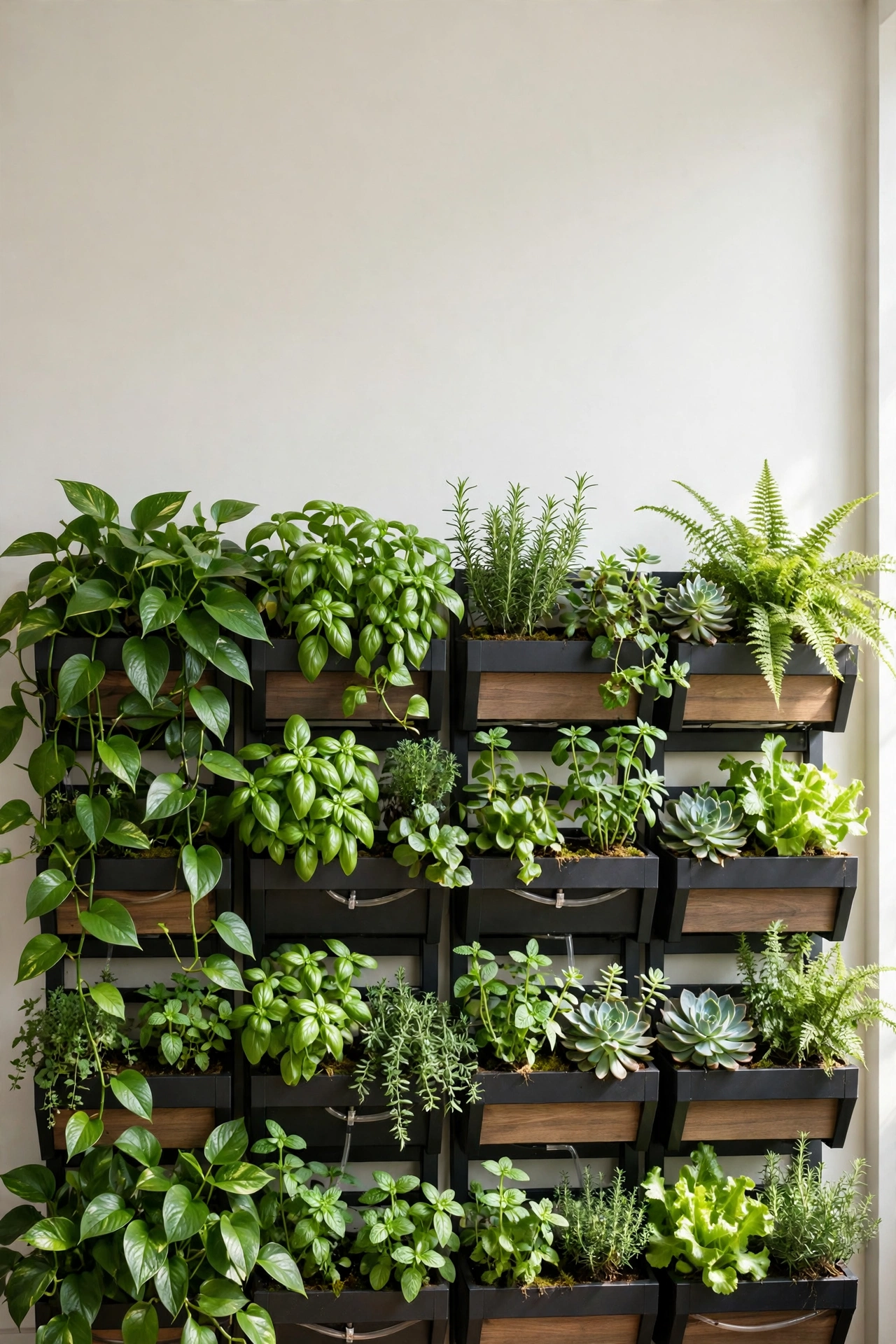
Vertical gardening looks like the perfect answer for a small space. Instead of spreading plants across the floor, you grow them up a wall, on shelves or on a tiered stand. In theory, it saves space and makes a small balcony feel like a garden. In practice, many vertical gardens waste more space and light than they save. The most common vertical gardening mistakes are easy to make, and they are also easy to fix once you know what to look for.
The problem is not the idea of growing upwards. The problem is the layout. Plants are placed too close together, tall plants shade small plants, the top rows dry out while the bottom rows stay wet, and the structure blocks light from the plants behind it. This guide explains the most common vertical gardening mistakes, why they waste space and light, and how to plan a vertical garden that actually works.
Why Vertical Gardens Waste Space and Light
The first cause is poor planning. Many people buy a vertical planter, fill every pocket with plants and hope for the best. Without a plan, the plants compete for light, water and nutrients. The plants at the top get the most sun and dry out first. The plants at the bottom get the least sun and stay damp. The plants in the middle are squeezed and cannot grow properly.
The second cause is shading. A vertical garden is a wall of plants, and a wall casts a shadow. Tall plants on the top row shade the plants below them. A shelf above shades the shelf below. A plant with large leaves shades the small plants next to it. Light is the most important resource in a small space, and shading wastes it.
The third cause is water. Water runs down in a vertical garden, so the top rows dry out while the bottom rows collect the extra water. If every row is watered the same way, some plants will be dry and others will be drowned. Balcony plants dry out fast in the top rows of a vertical garden for this reason, while the bottom rows can stay wet for days.
The fourth cause is choosing the wrong plants for the wrong row. A tall, fast-growing plant in a small pocket will soon outgrow its space and shade its neighbours. A plant that needs full sun will fail in a shaded bottom row. A plant that needs a lot of water will fail in a dry top row. Matching the plant to the row is just as important as choosing the planter.
Step-by-Step: How to Plan a Vertical Garden That Saves Space and Light
Step 1: Map the Light Before You Plant Anything
Watch the wall or the stand for a day and note where the sun falls, and for how long. The top of a vertical garden usually receives the most sun, and the bottom receives the least. The side that faces the sun receives more light than the side that faces a wall. Put sun-loving plants at the top and on the sunny side, and put shade-tolerant plants, such as leafy herbs and salad leaves, at the bottom. This is the first step to avoid vertical gardening mistakes that waste light.
Step 2: Leave Space Between Plants
Leave more space than you think you need. Young plants look small, but they grow quickly, and crowded plants shade each other and block air flow. Follow the spacing on the plant label, and leave a gap between rows so light can reach the lower plants. A vertical garden with fewer, healthy plants produces more than a crowded garden where most plants are shaded and stressed. Growing vegetables in a tiny space works best with this same rule: give each plant room to grow, even if the garden looks empty at first.
Step 3: Put Tall Plants at the Bottom or the Back, Not at the Top
Tall plants should not go at the top of a vertical garden, where they will shade everything below them. Put tall plants at the bottom, at the back or on the side where they block the least light. Put short, low plants at the top, where they can receive sun without shading others. If a plant grows taller than expected, prune it back or move it to a larger pot on the floor.

Step 4: Water Each Row According to Its Needs
Do not water every row the same way. Check the soil in each row before watering. The top rows usually need water more often, because they dry out faster in sun and wind. The bottom rows usually need water less often, because they receive water that drains down from above. Water slowly, so the water soaks into the soil instead of running straight through. A drip system or a self-watering planter can help, but it still needs to be checked regularly.
Step 5: Choose the Right Plants for Each Row
Choose compact, slow-growing plants for small pockets, and save large or fast-growing plants for larger pots on the floor. Herbs, salad leaves, strawberries and small flowers usually do well in vertical planters. Large tomatoes, squash and other big plants need a large pot and a strong support, and they are usually a poor choice for a small vertical pocket. Match the plant to the light, the water and the space in its row, not just to the look of the garden.

Step 6: Make Sure the Structure Is Strong and Stable
A vertical garden full of wet soil is heavy. Make sure the wall, the stand or the frame can hold the weight, and fix it firmly to the wall or the floor. Use a strong, level base, and do not overload the top rows. Check the fixings regularly, especially after wind or rain. A structure that leans or falls can damage the plants and create a safety risk. Pots overheating on a sunny balcony is also a risk for vertical planters, because dark, shallow pockets heat up quickly in sun, so choose light-coloured planters where possible.
Step 7: Prune, Harvest and Rearrange Regularly
A vertical garden needs regular care. Prune plants that are shading their neighbours, harvest salad leaves and herbs often so new growth can come through, and move plants that are not doing well to a different row. Remove dead or yellow leaves promptly, so air can move between the plants. Check the soil, the water and the light every week, and adjust the layout as the season changes.
Common Mistakes That Waste Space and Light in a Vertical Garden
The most common mistake is filling every pocket at once. A vertical garden that looks full on the first day will be overcrowded within a few weeks. Start with fewer plants, leave gaps, and add more plants only when the first plants are growing well.
Another mistake is putting tall plants at the top. Tall plants shade everything below them, and they also dry out faster at the top. Put tall plants low, short plants high, and keep the rows open so light can reach every plant.
A third mistake is watering all rows the same way. The top rows dry out, the bottom rows stay wet, and plants in both rows suffer. Check each row separately, water only when the soil needs it, and remember that water drains down. Self-watering fixes for watering plants while away can help, but they still need to be checked, because the top and bottom rows use water at different rates.
A final mistake is choosing plants for their looks instead of their needs. A plant that needs full sun will not grow in a shaded bottom row, no matter how good it looks there. A plant that needs a lot of space will not grow in a small pocket. Choose plants that match the light, the water and the space in each row, and the garden will look better in the long run.
Frequently Asked Questions
What is the biggest mistake in vertical gardening?
The biggest mistake is crowding plants too closely and letting tall plants shade small plants. Vertical gardening mistakes like this waste both space and light, because the shaded plants grow slowly and produce little, while the tall plants use up the light and water. Leave space, put tall plants low and prune regularly.
How much space should I leave between plants in a vertical garden?
Follow the spacing on the plant label, and leave a gap between rows so light can reach the lower plants. As a guide, leave at least a few centimetres between small herbs and salad leaves, and much more for larger plants. It is better to leave too much space than too little, because young plants grow fast.
Why do plants at the bottom of my vertical garden stay wet?
Water drains down from the top rows, so the bottom rows receive extra water. They also receive less sun and less wind, so they dry out more slowly. Check the soil in the bottom rows before watering, water less often there, and use a free-draining mix so the roots are not left wet for days.
Can I grow vegetables in a vertical garden?
Yes, many vegetables grow well in a vertical garden, especially salad leaves, herbs, strawberries, bush beans and compact chillies. Choose compact varieties, give each plant enough space and light, and put larger vegetables in large pots on the floor instead of in small vertical pockets.
How do I stop my vertical garden from shading itself?
Put short plants at the top, tall plants at the bottom or the back, leave gaps between rows and prune plants that are shading their neighbours. Choose a structure that lets light through, such as an open shelf or a tiered stand, instead of a solid wall of pockets. Check the light at different times of day and move plants if a row is always in shade.