

Weak, floppy stems are one of the most common problems in the garden. A plant that looked healthy a few weeks ago starts to lean, bend, or fall over. Its stems feel soft, its leaves may droop, and the whole plant looks tired even when the soil is damp. The good news is that most weak stems can be fixed. The first step is to find the cause, because the right fix depends on what made the stem weak in the first place.
What Weak, Floppy Stems Look Like
A weak stem bends easily and does not spring back when you let go. It may lean toward the light, flop onto the soil, or curve at the base. In some plants, the stem is long and thin with large gaps between the leaves. This is often called leggy growth. In other plants, the stem feels soft or wet near the soil, and the leaves turn yellow or drop off.
Start by looking closely. Is the stem thin and pale, or soft and dark at the base? Is the plant leaning in one direction, or falling in every direction? Are the lower leaves yellow, or are the leaves still green? These small details point to different causes. Also check the soil: push a finger about 5 cm into it. If it feels wet and cold, the roots may be getting too much water. If it feels dry and hard, the plant may not be getting enough water or food.
Why Plant Stems Become Weak and Floppy
1. Not Enough Light
Light is the most common cause. When a plant does not get enough light, it grows fast and thin as it reaches for the light. The stem stretches, the leaves are small and far apart, and the plant cannot hold itself up. This happens often with plants grown indoors, in shade, or behind other tall plants.
2. Too Much Water
Wet soil pushes air out of the gaps around the roots. Without air, roots cannot take up water and food properly, and they may start to rot. The stem then goes soft at the base and the plant flops over. If the soil stays wet for days after watering, overwatering is a likely cause. For more on this, read the guide on why plants keep wilting even when the soil is wet.
3. Too Much Fertiliser
Too much fertiliser, especially fertiliser high in nitrogen, can make a plant grow fast but soft. The stems grow long and weak, and the leaves are large and dark green but floppy. The plant looks full, but it cannot support its own weight. This is common after a heavy feed, or when fertiliser is used too often.
4. No Wind or Movement
Plants grown indoors or in a very sheltered spot often have weak stems. Outdoors, gentle wind moves the plant, and the plant responds by growing a thicker, stronger stem. A plant that never moves stays thin and soft. Seedlings grown indoors often fall over when they are first moved outside, because their stems were never tested by wind.
5. Crowding and Competition
When plants are too close together, they compete for light, water, and food. Each plant stretches upward to reach the light, and the stems grow thin. Air cannot move freely between crowded plants, so the stems stay damp and soft. Thin out crowded seedlings early, and give each plant enough space to grow.
6. Root Damage or Root Rot
If the roots are damaged or rotting, the stem cannot get the water and food it needs, even if the soil looks fine. Root rot often follows long periods of wet soil, poor drainage, or a pot with no drainage holes. Learn the warning signs in the guide on what root rot is and how to rescue a plant.
7. Pests and Disease
Some pests feed on stems and roots, and some diseases attack the base of the stem. Look for small insects, sticky leaves, holes, or dark spots on the stem. If the stem is soft, dark, and wet at the base, and the plant falls over suddenly, a stem disease may be the cause. Remove the damaged parts, improve air flow, and do not overwater while the plant recovers.
Step-by-Step Fix for Weak, Floppy Stems
- Check the soil first. If it is wet, do not water again until the top few centimetres feel dry. If it is dry and hard, water slowly and deeply so the water reaches the roots.
- Move the plant to better light. Move it to a brighter spot, or trim back a plant that is shading it. Turn a potted plant a quarter turn every few days so it grows straight instead of leaning.
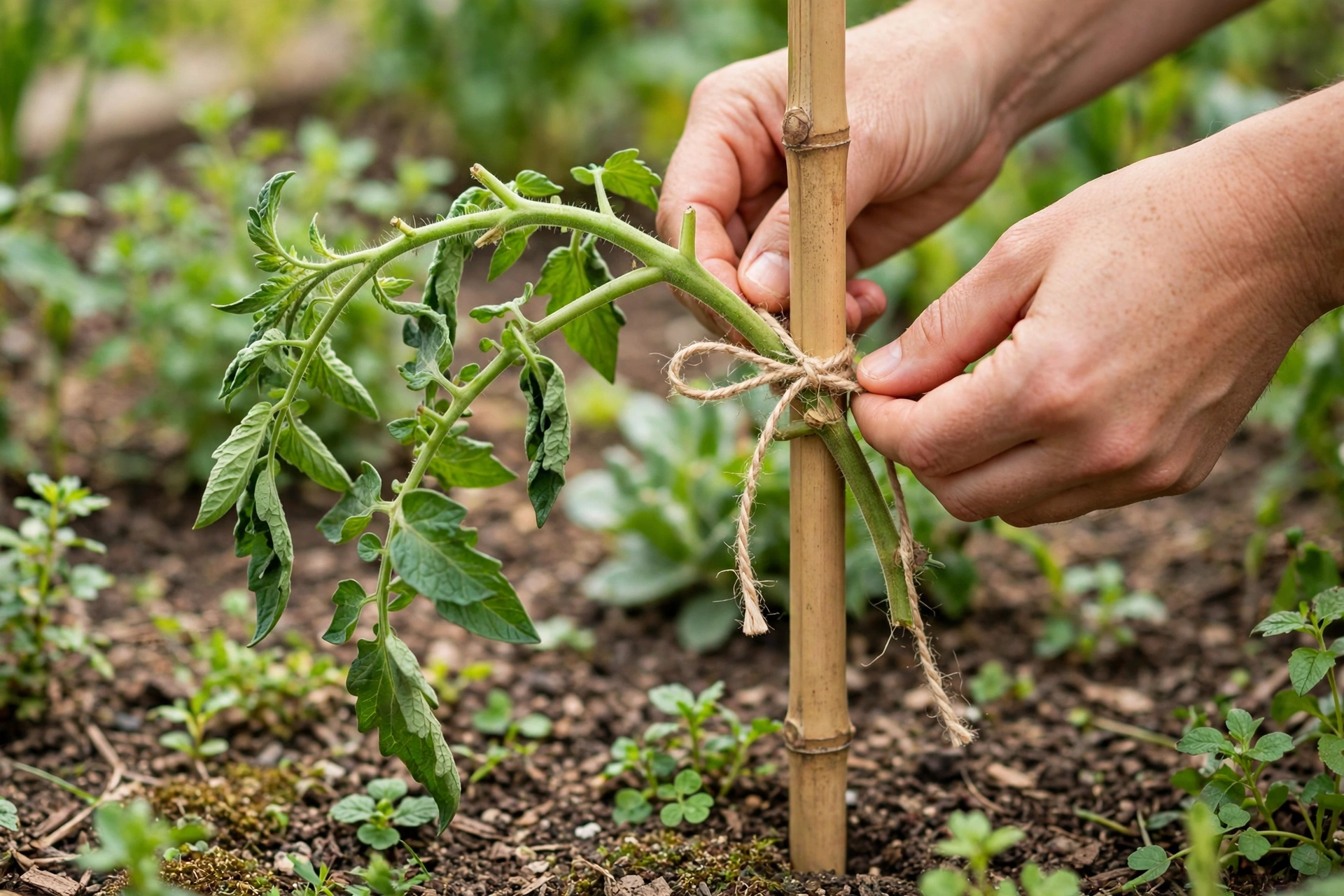
- Support the stem. Push a bamboo cane or a thin stake into the soil a few centimetres from the stem, taking care not to damage the roots. Tie the stem to the stake loosely with soft string or cloth in a figure-of-eight shape. Add a second tie higher up if the plant is tall.
- Improve air flow. Space plants further apart, and remove dead or crowded leaves around the base. Good air flow helps stems dry out and grow stronger, and it lowers the risk of disease.
- Check the roots. If the plant is in a pot, lift it out gently and look at the roots. Healthy roots are firm and pale. Dark, soft, or smelly roots are a sign of rot. Trim away the damaged roots with clean scissors, and repot the plant in fresh, free-draining soil mix.
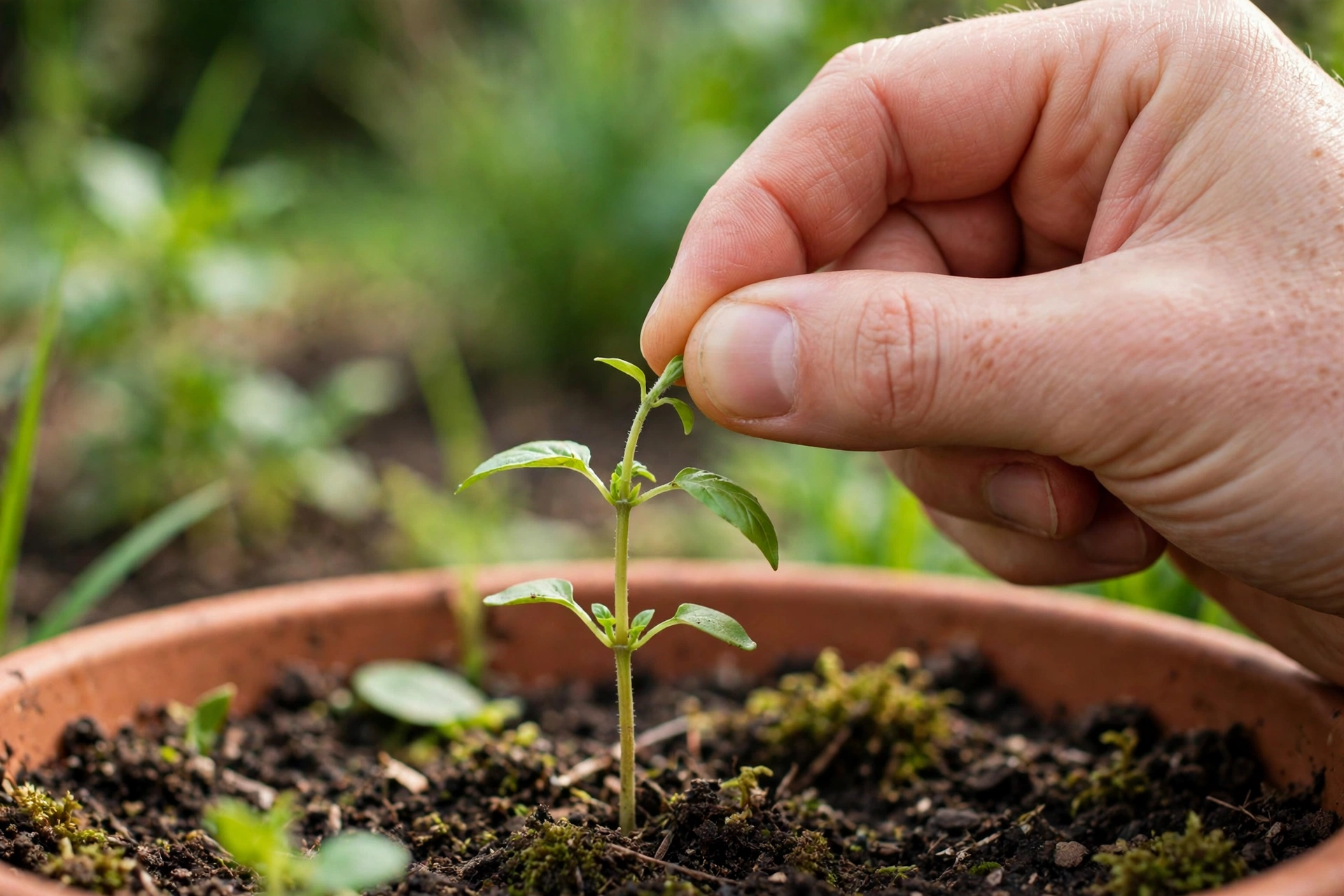
- Pinch out the tip. For many leafy plants, pinching out the soft tip encourages side shoots and a bushier, stronger plant. Remove the top few centimetres of a leggy stem, just above a leaf joint. Do not pinch a plant that is already very weak or diseased.
- Feed lightly, if needed. If the plant has not been fed for a long time and the leaves are pale, feed it at half the usual strength. Do not feed a plant that is already growing fast and soft, and do not feed a plant with root rot until it starts to recover.
- Harden off indoor plants slowly. Before moving an indoor plant outside, place it in a sheltered spot for a few hours each day, and bring it back inside at night. Increase the time outside over one to two weeks.
Common Mistakes That Make Weak Stems Worse
- Tying the stem too tightly. A tight tie cuts into the stem as it grows, blocks the flow of water and food, and can kill the stem above the tie. Always tie loosely, and check the ties every week.
- Watering on a fixed schedule. Watering every day, whether the soil needs it or not, keeps the soil wet and the roots weak. Check the soil first, and water only when the top layer is dry.
- Feeding a weak plant heavily. More fertiliser does not fix a weak stem. It often makes the plant grow faster and softer. Feed lightly, and only after the cause is fixed.
- Leaving a plant in deep shade. Support helps, but the stem will stay weak if the light is still too low. Move the plant to a brighter spot as well.
- Removing too much growth at once. Cutting back a large part of a weak plant can stress it further. Pinch a little at a time, and let the plant respond before you cut more.
- Ignoring the roots. A plant with a soft stem at the base may have root rot. If you only tie the stem up and keep watering, the plant will keep getting worse. Check the roots and the drainage first.
Yellow leaves often appear together with weak stems, because both can be caused by poor light, too much water, or a lack of food. The diagnostic guide on why leaves turn yellow can help you work out which cause fits your plant.
Frequently Asked Questions
Can a weak, floppy stem recover?
Yes, in many cases. If the stem is still green and firm, and the roots are healthy, the plant can recover once the cause is fixed. Support the stem, give the plant better light and the right amount of water, and new growth should be stronger.
Should I cut off a floppy stem?
Not always. If the stem is green and healthy, support it and let it recover. Cut it back only if it is broken, rotten, or so long and thin that it cannot be supported. When you do cut, use clean scissors and cut just above a leaf joint.
Why are my seedlings falling over?
Seedlings fall over when they do not get enough light, when they are kept too warm, or when the soil stays too wet. They stretch toward the light and grow thin stems that cannot hold them up. Give seedlings bright light, good air flow, and water only when the soil surface starts to dry.
Will a stake fix a weak stem on its own?
A stake holds the plant up, but it does not fix the cause. If the plant still gets too little light or too much water, the new growth will stay weak. Use a stake as short-term support, and fix the light, water, and air flow at the same time.
How long does it take for stems to get stronger?
New growth can start to look stronger within two to three weeks, once the plant gets better light and the right amount of water. The old, stretched stem may stay thin, but new shoots and leaves should be shorter, thicker, and greener.
Save This Guide for Later

Weak, floppy stems are a warning sign, not the end of the plant. Check the light, the water, and the roots, support the stem while it recovers, and avoid the common mistakes above. With the right care, most plants grow back stronger, with thicker stems and healthier leaves.