
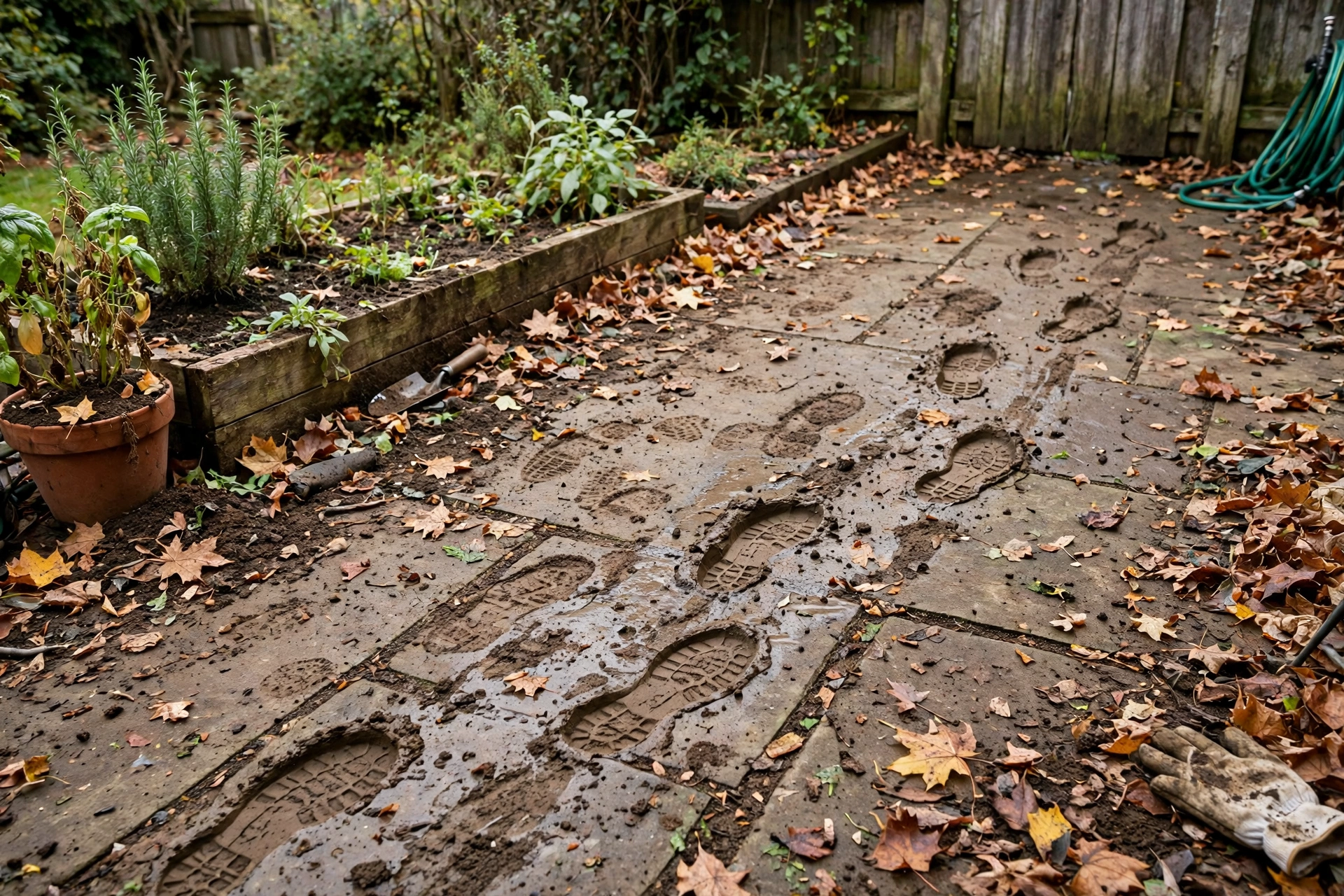
You sweep the patio. You wash it. Two days later, it looks dirty again. Leaves, dust, and muddy footprints cover the stones. The corners turn green. The joints fill with grit. Why is a patio always dirty, even after you wash it? You are not alone. Patios collect dirt from every side. Wind blows dust in. Rain splashes soil onto the stones. Shoes carry mud from the lawn. Pots leak soil. Trees drop leaves and sap. As a result, a patio can look dirty even when you clean it often. This guide explains where patio dirt comes from, the cleaning mistakes that keep it dirty, and how to wash it properly step by step. It also shows how to stop dirt at the door, so the patio stays clean for longer.
Why Patios Get Dirty So Fast
A patio sits at the lowest point of many yards. Dust settles on it. Rain runs across it. Soil from beds splashes onto it. In addition, feet bring dirt in from the lawn and the street. Shoes pick up mud, grit, and grass. Pets add more. Their paws carry soil onto the stones. Pots and planters add their share too. Water drains from pots and leaves dark rings. Soil spills when you water or repot plants. Over time, a thin film builds up on the surface. That film holds dust and helps algae grow.
Shade and damp make the problem worse. A patio that stays damp grows algae and moss. Algae turns stones green and slippery. Moss grows in joints and cracks. Leaves left on the patio rot in wet weather. They stain the stones below. In contrast, a sunny, dry patio stays cleaner for longer. The stone type matters too. Rough stone holds dirt in its surface. Smooth stone is easier to sweep. Light stone shows every mark. Dark stone hides dust but shows pollen and bird droppings. However, the main cause is rarely the stone itself. It is the mix of dirt sources, damp, and cleaning habits.
Step-by-Step: Clean Your Patio Properly
Work through these steps in order. Start with dry cleaning. Then wash. Then treat stains. Finally, stop dirt at the door. Most patios take one or two hours to clean well.
Step 1: Clear and sweep the patio
First, move pots, furniture, and mats off the patio. Sweep leaves and loose dirt into a pile. Use a stiff outdoor broom. Sweep in one direction, toward the edge. Do not sweep dirt into joints. Instead, lift it out with a dustpan. Next, use a hand brush on the corners and edges. Those spots collect the most dirt. Finally, sweep the whole patio once more. A good sweep removes half the dirt before you use any water. Skipping this step is a common mistake. Wet leaves and dust turn to mud when you wash them.
Step 2: Wash with a stiff brush and water
Wet the patio with a hose or a watering can. Do not flood it. Then scrub one section at a time with a stiff brush. Work in small squares. Push the brush back and forth. Lift the dirt out of the stone surface. Rinse each section as you go. Use plain water first. For most patios, plain water and a stiff brush are enough. Also, avoid harsh chemicals. They can damage stone, kill plants, and harm pets. If you use soap, choose a mild outdoor cleaner. Rinse it off fully. Soap left on stone leaves a film. That film attracts more dirt.

Step 3: Treat stains and green algae
Treat stains after the main wash. For green algae, scrub with water and a stiff brush. Work on a dry day if you can. Algae comes off more easily when the stone is damp, not soaking wet. For dark leaf stains, make a paste of baking soda and water. Spread it on the stain. Leave it for 20 minutes. Then scrub and rinse. For rust or oil marks, use a cleaner made for stone. Test it on a small, hidden spot first. Therefore, never use bleach on stone. It can change the colour and harm plants nearby. In addition, never use a very high-pressure washer on soft stone. It can blast the surface away and make it rougher. Rough stone holds more dirt later.
Step 4: Clean the joints and edges
Joints hold more dirt than the stones themselves. Pull weeds from joints by hand. Use a narrow weeding tool for tight gaps. Brush loose grit out with a small brush. Then rinse the joints with water. If joints are empty, refill them with dry sand or jointing sand. Brush the sand in. Water it lightly so it settles. Full joints stop weeds and dirt from settling in. They also stop ants from nesting. Check the edges of the patio too. Soil from the lawn often washes onto the edge stones. Sweep it back. Add a low edge stone or a gravel strip if soil keeps washing in. For example, a gravel strip also helps with drainage. Our guide on how to stop your backyard from flooding after heavy rain explains how to keep water moving away from hard surfaces, so patios dry faster after rain.
Step 5: Stop dirt at the door
Prevention keeps a clean patio clean. Put a large doormat at every door to the patio. Add a shoe scraper or a boot brush by the main door. Ask family to wipe shoes before they step onto the patio. Keep a pair of outdoor shoes by the door. That way, muddy shoes stay off the stones. Place mats under pots to catch soil and water. Move pots a little now and then. Check for rings underneath. Clean the rings before they stain. In addition, trim overhanging branches. Fewer leaves fall on the patio. That simple step cuts cleaning time in half in leafy yards.

Step 6: Set a simple cleaning routine
Set a routine that is easy to keep. Sweep the patio once a week. Pick up leaves before they rot. Wash the patio once a month in the warm season. Wash it less often in the cold season. Check joints and mats each month. Fix small problems early. A weekly sweep takes ten minutes. A monthly wash takes an hour. That routine is far easier than a deep clean after months of neglect. In rainy weather, sweep more often. Rain splashes soil onto stones, as our guide on how to stop heavy rain from ruining your garden explains. In addition, a quick sweep after rain stops mud from drying onto the patio.
Common Outdoor Cleaning Mistakes to Fix
The biggest mistake is washing a patio before you sweep it. Wet dust turns to mud. Mud dries in the stone surface. It is much harder to remove later. As a result, always sweep first. Another mistake is using too much water. A flooded patio washes soil into joints. It also leaves the stones wet for hours. Wet stones grow algae faster. Use just enough water to rinse. A third mistake is using the wrong brush. A soft broom will not lift dirt from rough stone. Use a stiff brush for washing. Keep a soft broom for daily sweeping.
Many people also clean too rarely, then try to fix months of dirt in one day. That deep clean takes hours and often damages the stone. A short weekly sweep works better. Another mistake is ignoring the source of the dirt. Fix the bed edge when soil washes in from a bed. Trim back a tree that drops leaves. Add a mat where shoes bring mud in. Cleaning without fixing the source is a short-term fix. The patio will be dirty again in days. Finally, do not use a pressure washer on every clean. It can damage joints and roughen stone. Save it for rare deep cleans, and keep the pressure low.
Frequently Asked Questions
Why is my patio always dirty even after I clean it?
Dirt comes back from shoes, pets, pots, leaves, and rain splash. If you clean the stones but do not stop dirt at the door, the patio will look dirty again in days. For example, add a doormat, sweep weekly, and fix soil that washes in from beds.
How often should I clean my patio?
Sweep it once a week. Wash it once a month in the warm season. Wash it less often in the cold season. Sweep more often after rain or wind, when leaves and soil land on the stones.
What is the best way to wash a patio without a pressure washer?
Sweep first. Then wet the stones and scrub with a stiff brush and plain water. Work in small sections and rinse as you go. For stains, use baking soda paste or a mild stone cleaner. That method works well on most patios.
How do I remove green algae from patio stones?
Scrub the green areas with water and a stiff brush. Work when the stone is damp, not soaking wet. Rinse well. Then let the patio dry in the sun. Keep leaves off the stones, because damp leaves help algae grow back.
Can a doormat really keep a patio clean?
Yes. A large doormat and a shoe scraper catch most mud and grit before it reaches the patio. Clean the mat often. A dirty mat does not help. Place mats at every door to the patio for the best result.
A patio stays dirty when dirt keeps arriving faster than you remove it. Sweep first. Wash with a stiff brush. Treat stains. Clean the joints. Stop dirt at the door with a mat and a shoe scraper. Then keep a short weekly routine. With those steps, your patio will stay clean for longer. You will spend less time cleaning it, and more time enjoying it.
