
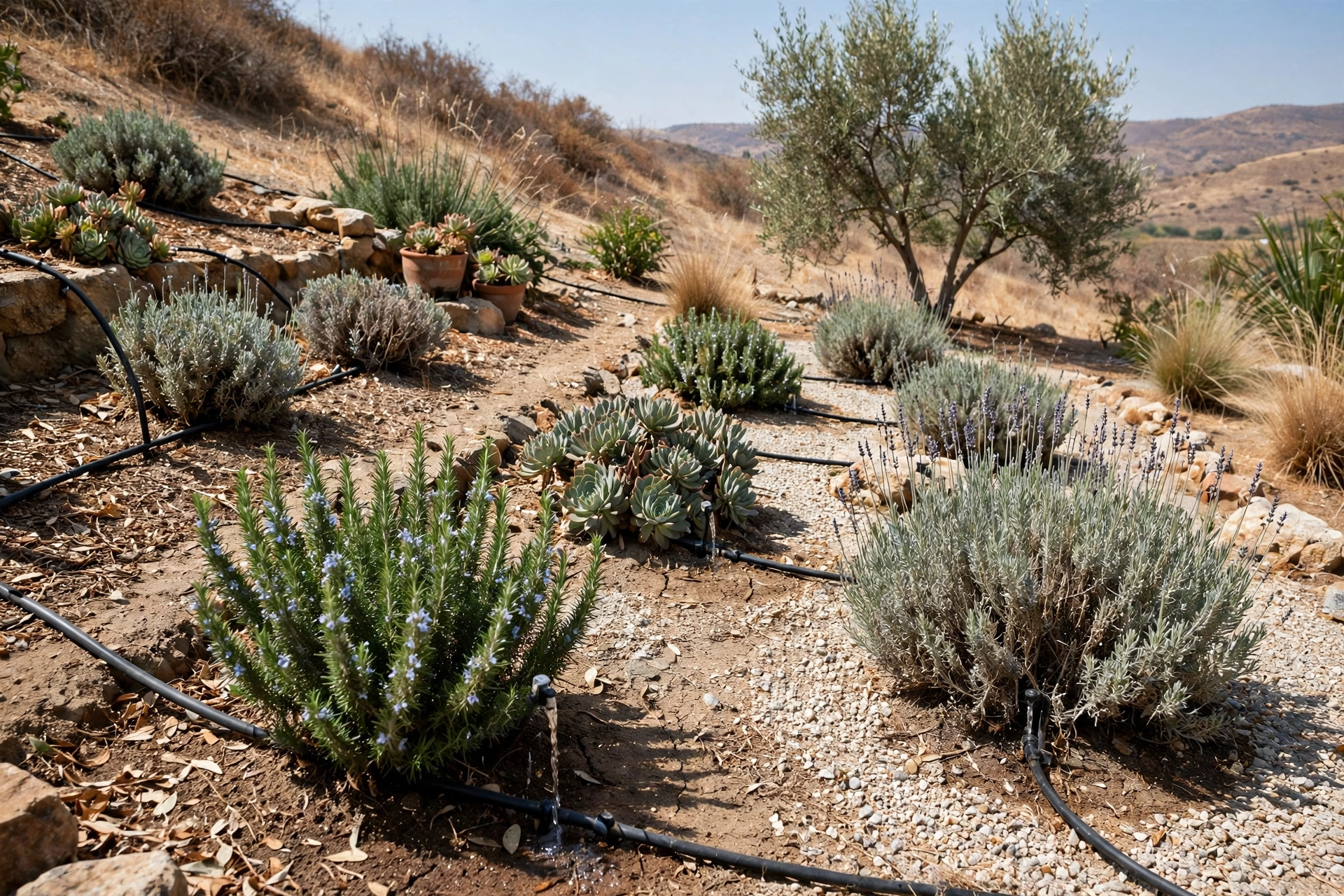
Saving water in the garden is not about letting plants go thirsty. It is about giving them the water they need, where they need it, and losing as little as possible along the way. Many gardens use far more water than the plants can take in, and the extra water runs off, evaporates, or sinks past the roots.
This guide explains how to save water in the garden without letting plants suffer. You will learn why gardens waste water, which watering habits save the most, and a simple step-by-step fix that uses drip lines, mulch, and rainwater. The fixes work in dry summers and in mild weather, and most of them cost very little.
The best part is that water-wise plants are often healthier plants. Water that reaches the roots slowly, in the cool of the morning, helps roots grow deep and strong. Shallow, wasteful watering does the opposite: it keeps roots near the surface, where they dry out fast. If your soil dries out quickly, our guide to why garden soil dries out so fast explains how to hold moisture for longer.
Why Gardens Waste So Much Water
Most waste comes from watering the wrong place at the wrong time. A sprinkler that sprays paths, walls, and leaves loses much of its water to the air before it ever reaches the soil. Watering in the heat of the day is even worse: the sun dries the drops before they soak in, and the plants get very little.
Bare soil is another cause of waste. Without mulch or ground cover, the sun heats the soil surface and the water in it evaporates quickly. Shallow watering adds to the problem: a light sprinkle wets only the top few centimetres, and the water dries out before the roots can use it. Leaks in hoses and taps waste water silently, a little at a time, all season.
The result is a garden that needs more and more water to stay green, while the plants still look thirsty. The fix is not to water more. The fix is to water better, so every drop counts.
How to Save Water in the Garden: A Step-by-Step Fix
Work through these steps in order. Each one saves water on its own, and together they can cut garden water use by a large amount without any loss in plant health.

- Water at the base, not from above. Aim the water at the soil around the roots, and keep the leaves dry. Leaves do not take in much water, and wet leaves can spread disease. A watering can with a narrow spout gives you the best control.
- Water early in the morning. The air is cool, the wind is low, and the water has time to soak in before the sun gets strong. Our guide to morning and evening watering explains why morning usually works best.
Watering Methods That Waste Less
- Use drip lines or a soaker hose. These deliver water slowly, drop by drop, right at the roots, so almost nothing escapes into the air. A simple drip line costs little, and you can move it from bed to bed.
- Cover the soil with mulch. A layer of bark, straw, or leaves 5 to 8 cm thick keeps the soil cool and moist, and cuts evaporation by a large amount. Our guide to using mulch correctly explains how much to use and what to avoid.
- Water deeply and less often. Give the soil a good soak, then wait until the top few centimetres dry out before watering again. Deep watering trains roots to grow down, where the soil stays moist for longer. A simple moisture routine will help you judge when to water.
- Collect rainwater in a barrel. Place a barrel under a roof gutter and use the water for the garden. Rainwater is free, and plants prefer it to tap water because it has no added chemicals. A barrel with a lid and a tap is easy to use and keeps insects out.
- Group plants by their water needs. Put thirsty plants together and dry-loving plants together, so you water each group only as much as it needs. This stops you from watering the whole garden for the sake of a few plants.

After these steps, check the soil with your finger before each watering. If the top 3 to 5 cm feels dry, it is time to water. If it still feels moist, wait another day. This simple check alone can cut water use by a third.
Common Mistakes That Waste Water
These habits waste water without helping the plants at all.
- Watering in the middle of the day, when most of the water evaporates before it reaches the roots.
- Using a sprinkler on a windy day, which blows the water away from the garden.
- Watering a little every day, which keeps the roots shallow and the soil surface wet.
- Leaving the hose running while you do other jobs.
- Watering the leaves instead of the soil, which wastes water and can spread disease.
- Ignoring leaks in hoses, taps, and joints until they become a flood.
Fixing even one of these mistakes can save a surprising amount of water over a season.
Small Changes That Save a Lot of Water
A few small changes can save more water than any single big fix. Fix a dripping tap, and you save water every day without thinking about it. Put a bucket under a downpipe, and you have free water for pots. Water new plants by hand for the first few weeks, so the water goes exactly where the roots are.
These small habits add up over a season. A garden that wastes less water is also easier to care for: the soil stays moist for longer, the plants grow deeper roots, and watering takes less time. Start with the easiest change, and add the next one when the first becomes a habit.
Frequently Asked Questions
How often should I water my garden in hot weather?
It depends on the soil and the plants, but most garden beds need a deep watering every two to three days in hot weather, not a light sprinkle every day. Check the soil with your finger: if the top 3 to 5 cm is dry, it is time to water. Our guide to a simple moisture routine shows how to build a watering habit that works.
Is it better to water in the morning or the evening?
Morning is usually better. The water soaks in before the heat of the day, and the leaves dry quickly, which helps prevent disease. Evening watering also works, but the soil stays wet overnight, which can suit some plants and not others.
Questions About Rainwater and Drip Lines
Do drip lines really save water?
Yes. Drip lines deliver water slowly, drop by drop, right at the roots, so almost nothing evaporates or runs off. A garden on drip lines can use half as much water as a garden on a sprinkler, and the plants usually grow better too.
Can I use rainwater for all my plants?
Yes. Rainwater is soft, free of added chemicals, and most plants prefer it to tap water. Collect it in a barrel with a lid, and use it within a few weeks so it stays fresh. In a long dry spell, use tap water as well, and save the rainwater for the plants that need it most.
Will my plants suffer if I water less?
Not if you water well. Deep watering at the base, in the morning, with mulch on the soil, gives plants more usable water than frequent light watering. Plants with deep roots handle dry spells far better than plants that get a little water every day. If your plants wilt in heat, our guide to keeping plants alive through a heatwave has more ways to help them.
Saving water is not about doing less for the garden. It is about doing the right things: watering at the roots, in the morning, with mulch on the soil and rainwater in the barrel. Each step saves a little, and together they keep the garden green with far less water.
