
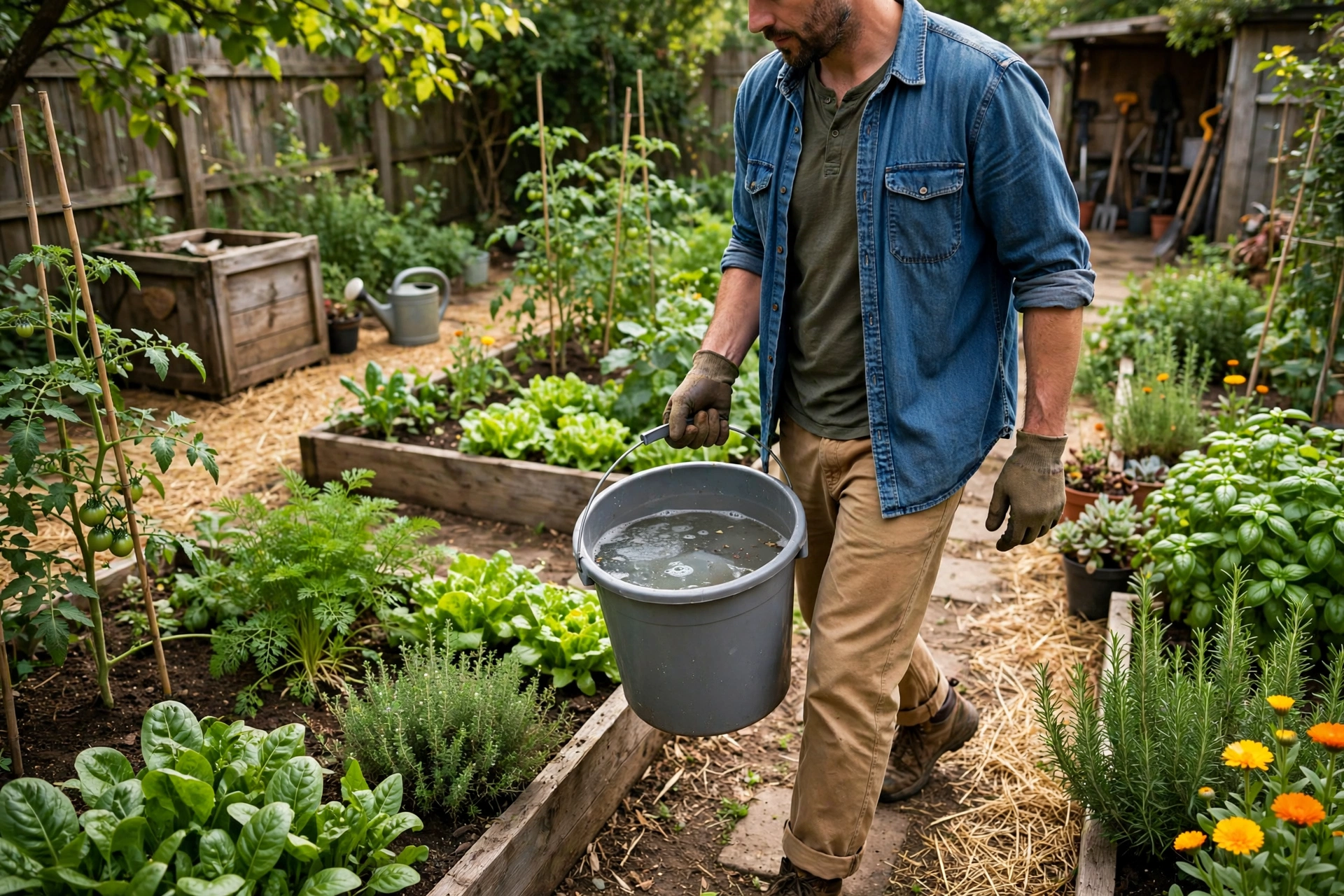
Every home sends a surprising amount of water down the drain each day. Water from showers, baths, hand washing and laundry flows away, even though much of it is still clean enough to help plants grow. That used water can look like an easy answer, but grey water is not the same as clean water, and using it in the wrong way can harm soil, damage plants and create smells.
To reuse grey water in the garden safely, you need to know which water is safe, which water to keep out of the garden, and how to apply it in a simple, careful way. This guide explains the problem, gives a step-by-step system you can follow, and lists the mistakes that cause most grey water problems. It is written for a normal home garden, with buckets, a watering can and a little patience.
If you already try to save water in the garden, grey water can be one more part of that plan. It works best when it is one part of a wider habit: watering at the right time, mulching the soil and choosing plants that suit the water you have. Used well, it can cut the amount of fresh water your garden needs. Used badly, it can do more harm than good.
What Is Grey Water, and What Is It Not?
Grey water is used household water that does not contain toilet waste. It usually comes from showers, baths, bathroom sinks, washing machines and kitchen sinks used only for washing hands and dishes with mild soap. It is called grey because it often looks cloudy, even though it is much cleaner than the water that leaves a toilet. That toilet water is called black water, and it must never be used in a home garden.
Grey water still carries soap, skin oils, hair, food crumbs, dirt and small amounts of cleaning products. A bath with a mild, plain soap gives very different water from a load of laundry washed with a strong detergent, bleach or fabric softener. That is why the first rule is simple: the cleaner the source, the safer the water.
- Usually safe to consider: shower and bath water, water from washing hands, and rinse water from a washing machine when you have used a mild, plant-friendly detergent.
- Use with great care: kitchen sink water, which may contain grease, food and strong dish soap, and the first wash water from a very dirty laundry load.
- Never use in the garden: toilet water, water that has touched nappies or sick people, water with bleach, disinfectant, drain cleaner or strong chemicals, and water used to wash paint, fuel or other chemicals.
Why Reusing Grey Water Can Go Wrong
Most grey water problems come from what is in the water, not from the idea itself. Soap and detergent leave salts behind in the soil. A little salt may not matter, but salt builds up over weeks and months, especially in dry weather when rain does not wash it away. Salty soil holds water less well, and plant roots find it harder to take up water. Leaves may turn brown at the edges, and young plants may suffer first.
Grease and food waste cause a second problem. They coat the soil surface, block air and water, and feed germs that cause bad smells. Water that sits in a bucket for a day or two can also turn stale very fast. Warm, still water with soap and food in it is a good place for germs to grow. That is why grey water should be used fresh, on the same day it is collected, and never stored for long.
A third problem is where the water lands. Grey water poured over leaves, flowers and fruit can leave soap on the plant and carry germs to parts you may later touch or eat. It can also burn leaves in strong sun. The safest place is the soil at the base of the plant, where soil organisms can break down soap and dirt before they reach the roots.

How to Reuse Grey Water in the Garden Safely: Step by Step
Follow these steps in order. The system is simple on purpose, so you can repeat it without extra tools or cost.
- Step 1: Choose only mild, safe water. Use shower, bath or hand-washing water, or laundry rinse water with a mild detergent. Skip any water with bleach, disinfectant, strong chemicals, grease or toilet waste. When in doubt, throw the water away.
- Step 2: Collect the water in clean buckets. Keep one or two buckets near the bath or shower, and a separate bucket for laundry water. Wash the buckets often so old soap and dirt do not build up. Do not use a bucket that held paint, fuel or chemicals.
- Step 3: Strain out hair, food and dirt. Pour the water through a fine sieve or an old cloth into a second bucket. This removes the solids that block soil, cause smells and attract flies. Throw the strained solids in the bin.
- Step 4: Use the water the same day. Grey water should be used within a few hours, and never kept for more than a day. If you cannot use it today, pour it away. Storing it makes it stale, and stale water is more likely to smell and to harm soil.
- Step 5: Water the soil, not the plant. Pour the water slowly at the base of shrubs, trees and ornamental plants, so it soaks into the soil. Keep it off leaves, stems, flowers and fruit. Water in the morning or evening, when the sun is low.
- Step 6: Rotate the beds you water. Do not use grey water on the same bed every day. Give each bed a rest, and use fresh water on it at least once a week. Rotation stops salt building up in one place.
- Step 7: Mulch after watering. A layer of mulch helps the water soak in, keeps the soil moist for longer and protects soil life. Learn how to use mulch correctly first, because mulch piled against stems can cause rot. Keep mulch a few centimetres away from stems and trunks.
- Step 8: Watch the plants and the soil. Check leaves, growth and soil smell once a week. If leaves turn brown at the edges, or the soil smells sour, stop using grey water for two weeks and water with fresh water only. Learning to make compost in a small space can improve soil so it copes better with mild grey water.

What to Avoid When You Reuse Grey Water
Some uses of grey water are never safe in a home garden, even when the water looks clean. Keep these rules in mind every time.
- Do not water food you eat raw. Do not use grey water on leafy salads, herbs, strawberries or other crops eaten without cooking, or on any plant close to harvest time.
- Do not use it on seedlings and young plants. Young roots are tender and are hurt first by salt and soap. Use fresh water for seedlings, cuttings and new plants until they are strong.
- Do not spray it. Sprinklers and sprays throw grey water onto leaves and into the air. Always pour it gently at soil level.
- Do not let it pool or run off. Puddles of grey water smell, attract flies and can run onto paths. Water slowly, and stop when the soil is moist.
- Do not use it in a pond or near a stream. Soap and detergent harm fish, frogs and other water life. Keep grey water well away from ponds, drains and waterways.
- Do not use it if someone in the home is ill. Water from a sick person, or water used to wash soiled clothes or nappies, can carry germs. Pour it away.
Common Mistakes That Harm Plants and Soil
Mistake 1: Using every drop of grey water, every day. It is tempting to save all the water you can, but too much grey water is worse than none. Salt and soap build up, and the soil has no time to recover. Use grey water as a supplement, not as the only water your garden gets.
Mistake 2: Storing grey water for days. A bucket left in the sun for two or three days will smell bad, and the water inside will be worse for plants than fresh grey water. Collect only what you can use the same day.
Mistake 3: Choosing the wrong soap. Strong detergents, bleach, fabric softener and antibacterial products are not made for soil. Switch to a mild, plain soap and a simple detergent if you plan to reuse water, and use less product than before.
Mistake 4: Watering leaves and fruit. Many people pour grey water over the whole plant, as they would with a hose. That spreads soap and germs where they do not belong, and it can scorch leaves in the sun. Always water the soil at the base.
Frequently Asked Questions
Is grey water safe for all plants?
No. Grey water suits established shrubs, trees and ornamental plants best. It is not safe for seedlings or food eaten raw. Start with a small area, watch the plants for two weeks, and only then use it more widely.
Can I use washing machine water in the garden?
You can use rinse water if you use a mild detergent and no bleach, fabric softener or strong chemicals. The first wash water from a very dirty load is best avoided. When in doubt, use shower or bath water instead.
How long can I store grey water?
Use it within a few hours, and never keep it for more than a day. Warm, still water with soap and dirt in it changes fast, and stored grey water can smell and harm soil. If you cannot use it today, pour it away.
Does grey water harm the soil?
It can harm soil if it is used too often, or if the water contains a lot of salt, grease or strong chemicals. Used in small amounts, rotated between beds, and balanced with fresh water and compost, mild grey water is much less likely to cause harm.
Can I use grey water on vegetables?
Be very careful with vegetables. Do not use grey water on salads, herbs or other crops eaten raw, or on any crop close to harvest. Water all food crops with fresh water.
Save This Guide for Later
Pin this guide so you can check the safe sources, the step-by-step plan and the warning signs again before you start reusing water in your garden.
