
You bring a plant home, full of hope. It looks green and healthy in the shop, with fresh leaves and strong stems. A few weeks later the leaves turn yellow, droop or fall off, and soon the plant is dead. If this has happened to you more than once, you are not alone. Many gardeners ask why the plants they buy keep dying, and the answer is rarely bad luck.
Most plants die for a few clear reasons: the wrong plant for the place, a poor choice in the shop, a sudden change in light and water, or care that does not match what the plant needs. The good news is that all of these can be fixed. Once you learn to choose plants that actually last, and to settle them in slowly, far more of them will survive and grow.
This guide explains the main causes in plain terms, shows you how to inspect a plant before you buy it, and gives a step-by-step plan for bringing a new plant home. It is written for ordinary gardeners, in simple English, with no special tools and no need to know plant science.
Why Do the Plants I Buy Keep Dying?
The first cause is a poor match between the plant and your garden. Every plant needs a certain amount of light, water and space. A plant that needs full sun will fade in deep shade, and a plant that needs shade will burn in hot sun. A plant that needs little water will rot if it is watered every day, while a thirsty plant will wilt if it is left dry. When the match is wrong, even good care cannot save the plant.
The second cause is the plant itself. Some plants for sale are already weak, even if they look good at first glance. They may have damaged roots, hidden pests, or soil that is dry, wet or full of roots with no room to grow. A plant that is already stressed in the shop has a much harder time settling into a new home.
The third cause is shock. A plant moves from a warm, sheltered shop to a bright garden, a windy balcony or a dry room in one day. Light, temperature, wind and watering all change at once. Leaves drop, growth stops, and the plant looks as if it is dying, even though it is only trying to adjust. Many plants recover from shock if they are given time, but many are pushed too hard, too fast.
The fourth cause is watering, and it is the most common of all. Too much water is just as harmful as too little. Roots need air as well as water, and soil that stays wet all the time can rot the roots. On the other hand, a plant that dries out again and again will lose leaves and weaken. The right amount depends on the plant, the pot, the soil and the weather, so a fixed rule such as watering every day does not work for every plant.
How to Choose Plants That Actually Last
Choosing well starts before you leave home. Look at the place where the plant will live, and note how much sun it gets, how much wind it faces, and how much room there is. A small balcony, a shady corner and a sunny border need very different plants. Choose a plant that suits that place, not just a plant that looks pretty in the shop.
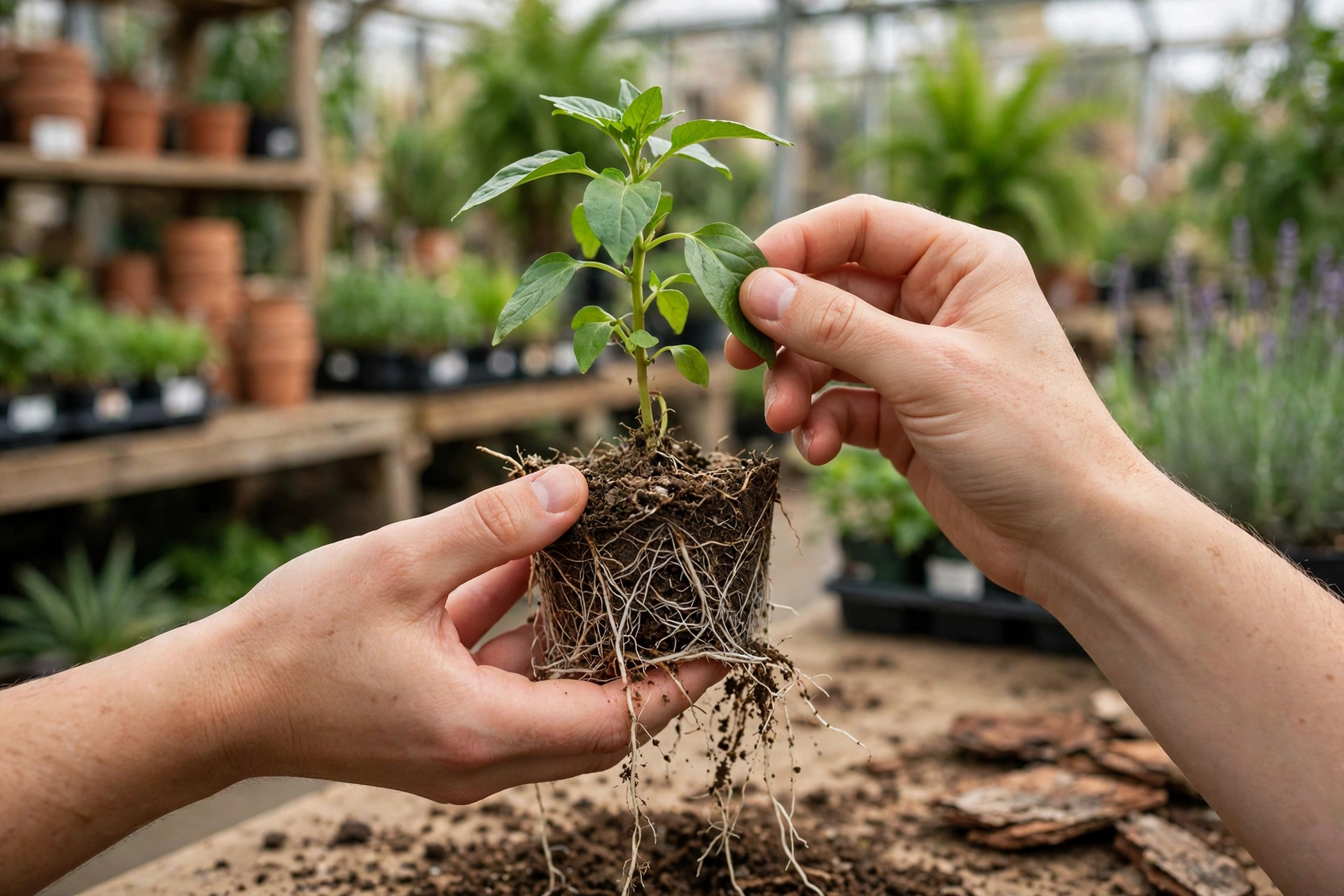
In the shop, take time to inspect the plant. Look at the leaves first: they should be firm, clean and evenly coloured, with no yellow patches, brown edges, spots or sticky marks. Turn a leaf over and check for tiny insects or fine webbing. Check the stems: they should be firm, not soft or broken. Lift the pot and look at the roots if you can. A few roots at the drainage holes are normal, but a thick mat of roots means the plant has been in the pot too long.
Check the soil as well. It should be damp, not bone dry and not soaking wet. Very dry soil that has pulled away from the pot is a warning sign, and so is soil that smells sour. Choose a plant with a strong shape and new growth at the tips, rather than the tallest plant or the one with the most flowers. A plant with new leaves is growing, and that is a good sign.
Think about the long term, too. A plant that grows very fast may soon outgrow its pot or its space. A plant that needs a lot of care may not suit a busy home. Hardy, slow-growing plants often last longer for beginners than delicate plants that need perfect conditions. If you want a garden that supports wildlife as well, a strong, healthy plant will also help bees and pollinators visit your garden, because weak, stressed plants give them little food.
Step by Step: Bring a New Plant Home Safely
- Step 1: Give it a sheltered start. Place the new plant in gentle light, out of strong sun and wind, for the first few days. This lets it rest after the move.
- Step 2: Check the water. Water only if the top of the soil feels dry. Pour water slowly until a little runs out of the drainage holes, then empty the saucer so the plant is not sitting in water.
- Step 3: Move it into more light slowly. Over one or two weeks, move the plant a little closer to its final place each few days. Sudden sun can scorch leaves that grew in shade.
- Step 4: Repot only when it is ready. Do not repot on the first day unless the roots are badly crowded. Wait until the plant looks settled, then move it to a pot one size larger, with fresh soil and good drainage.
- Step 5: Feed lightly, not heavily. A new plant does not need strong fertiliser. Wait a few weeks, then feed at half strength, if the plant type needs it at all.
- Step 6: Keep a simple routine. Check the soil with your finger twice a week, and water only when needed. Look at the leaves each week for pests, yellow marks or new growth, and act early if you see a problem.

Common Mistakes That Kill New Plants
Mistake 1: Buying on looks alone. A plant covered in flowers may be at the end of its best growth, and a very tall plant may be weak and leggy. Choose health and new growth over flowers and size.
Mistake 2: Watering on a fixed schedule. Watering every day, whatever the weather, is one of the fastest ways to rot roots. Check the soil first, and water only when the top feels dry. Pots in sun dry faster than pots in shade, so each plant needs its own check.
Mistake 3: Putting a shade plant in full sun. The leaves may look fine for a day, then turn pale, brown or crisp. Always match the plant to the light in its final place, and move it there slowly.
Mistake 4: Repotting too soon, or into a pot that is too big. A huge pot holds too much wet soil around small roots, and that can cause rot. A pot one size larger is enough, and a plant needs time to settle before it is moved.
Mistake 5: Ignoring the first warning signs. Yellow leaves, drooping stems and spots are early signals, not a reason to give up. Check water, light and roots, remove dead leaves, and adjust one thing at a time. Many plants recover if the problem is found early.
Mistake 6: Using the wrong soil. Heavy garden soil in a pot holds too much water, and very light soil dries too fast. Use a soil mix that suits the plant, with good drainage. If you are unsure, ask in the shop what mix the plant was grown in, and do not change it all at once. The same care matters when you grow from seed: learn why saved seeds never grow, because many seed problems come from the same causes as plant problems, such as wrong soil, wrong water and wrong light.
Frequently Asked Questions
Why do my plants die a few weeks after I buy them?
The most common causes are shock, wrong light and wrong watering. The plant moves from a sheltered shop to a new place, and light, water and temperature all change at once. Give it a sheltered start, move it into light slowly, and water only when the soil feels dry.
How can I tell if a plant is healthy before I buy it?
Look for firm, clean leaves, strong stems and new growth at the tips. Check under the leaves for pests, and check the soil: it should be damp, not dry or soaking wet. Avoid plants with yellow leaves, brown edges, spots or a thick mat of roots.
Should I repot a new plant straight away?
Usually no. Let the plant settle for one or two weeks first, unless the roots are badly crowded or the soil is very poor. When you do repot, choose a pot only one size larger, with fresh soil and drainage holes.
How often should I water a new plant?
There is no fixed number of days that works for every plant. Check the soil with your finger twice a week. If the top feels dry, water slowly until a little runs out of the bottom. If it still feels damp, wait.
What soil should I use for potted plants?
Use a light, free-draining mix that suits the plant type, not heavy garden soil in a pot. Peat is a common soil ingredient, but it has a high environmental cost, so learn whether peat compost is bad and what to use instead before you buy a new bag. A good peat-free mix holds water without staying wet.
Save This Guide for Later
Pin this guide so you can check the plant inspection list and the step-by-step settling plan again before your next plant shopping trip.
